TranscriptionAI
TranscriptionAI is an advanced AI-powered platform designed to automate the transcription, analysis, and understanding of business calls. It …
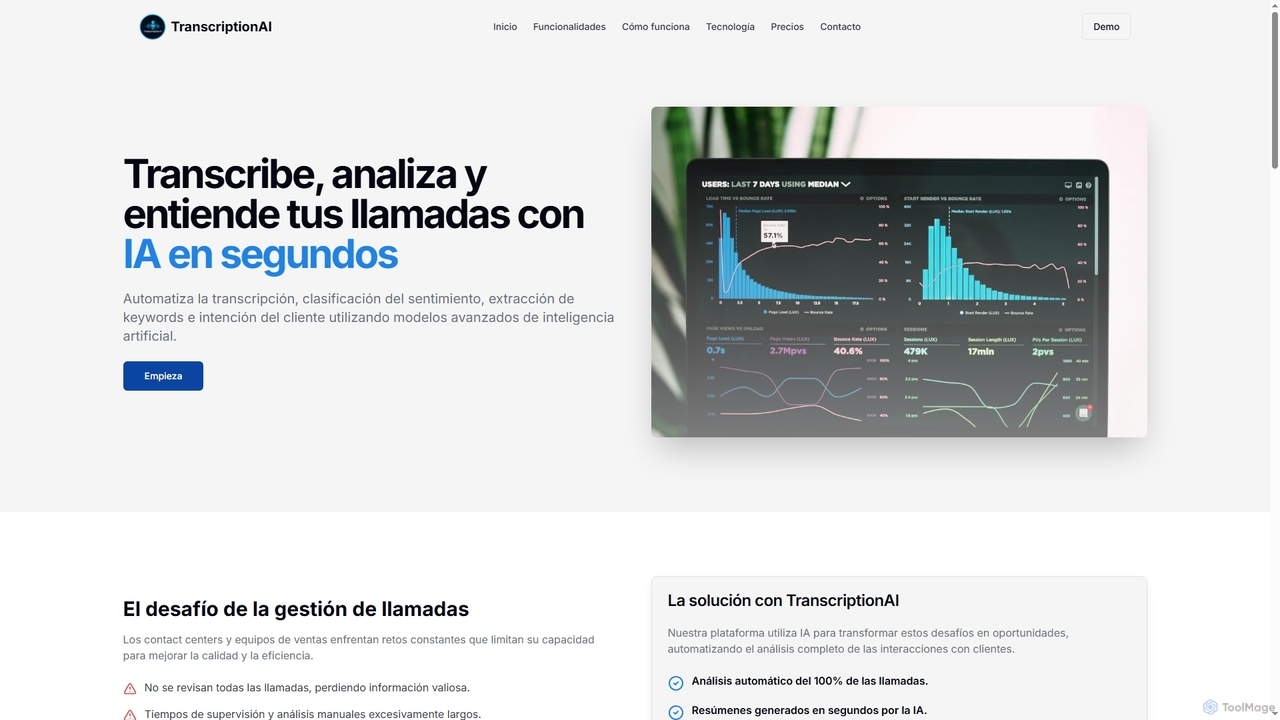
TranscriptionAI is an advanced AI-powered platform designed to automate the transcription, analysis, and understanding of business calls. It helps contact centers and sales teams gain valuable insights by classifying sentiment, extracting keywords, identifying customer intent, and generating concise summaries, significantly improving operational efficiency and customer satisfaction.
About Call Analysis
Call Analysis tools are AI-powered solutions designed to automatically process, transcribe, and extract actionable insights from spoken conversations, primarily business calls. Leveraging advanced natural language processing (NLP) and speech recognition technologies, these tools transform raw audio data into structured information. They enable businesses to understand customer interactions, monitor agent performance, and identify critical trends, significantly enhancing operational efficiency and strategic decision-making within the business context.
Core Features
- Speech-to-Text Transcription: Converts spoken words into accurate, searchable text transcripts.
- Sentiment Analysis: Identifies and quantifies the emotional tone and sentiment (positive, negative, neutral) of callers and agents.
- Keyword and Topic Detection: Automatically flags specific words, phrases, or recurring themes within conversations.
- Call Summarization: Generates concise summaries of call content, key decisions, and action items.
- Agent Performance Monitoring: Evaluates agent adherence to scripts, talk-to-listen ratios, and overall communication effectiveness.
Use Cases
Businesses across various sectors utilize Call Analysis to gain a deeper understanding of their customer interactions and internal operations. This includes customer service centers improving agent training, sales teams refining their pitches based on successful call patterns, and product development gathering direct customer feedback on features and pain points. It provides an objective lens into thousands of conversations that would otherwise remain untapped data.
How to Choose
When selecting a Call Analysis tool, prioritize accuracy in transcription and sentiment detection, as this forms the foundation of all insights. Consider its integration capabilities with existing CRM or contact center platforms for seamless workflow. Evaluate scalability for your call volume and ensure it supports the languages relevant to your customer base. Finally, assess customization options for keywords, dashboards, and reporting to align with specific business objectives.
Call AnalysisUse Cases
Improving Customer Service Quality
Customer service managers use call analysis to identify common customer pain points, frequently asked questions, and areas where agents might need additional training. By analyzing sentiment, keywords, and talk-time across thousands of calls, they can pinpoint systemic issues, refine support scripts, and provide targeted coaching to agents, leading to improved customer satisfaction and reduced resolution times.
Enhancing Sales Performance and Strategy
Sales managers leverage call analysis to understand what makes a sales call successful or unsuccessful. Tools can analyze calls for effective opening statements, objection handling techniques, product mentions, and closing strategies. This data helps in refining sales scripts, identifying top-performing agent behaviors, and providing actionable feedback to improve conversion rates and overall sales team effectiveness.
Gathering Market and Product Insights
Product managers and marketing analysts utilize call analysis to gather direct, unfiltered customer feedback. By detecting mentions of specific product features, competitor names, common requests, or emerging trends within customer calls, businesses can gain valuable insights into market demand, product gaps, and customer preferences. This informs product development roadmaps and targeted marketing campaigns.
Ensuring Compliance and Risk Management
Compliance officers in regulated industries use call analysis to monitor conversations for adherence to legal and regulatory requirements. The tools can automatically flag calls containing specific compliance phrases, legal disclaimers, or suspicious keywords that might indicate potential fraud or misconduct. This helps in reducing legal risks, ensuring audit readiness, and maintaining ethical business practices.
Automating Call Summarization and Follow-ups
Sales and support agents benefit from call analysis by automating post-call administrative tasks. The AI can generate concise summaries of call content, extract key decisions, and identify action items or follow-up tasks. This significantly reduces the time spent on manual note-taking and data entry, allowing agents to focus more on customer interaction and faster, more accurate follow-ups.
Personalized Agent Training and Coaching
Team leads and trainers use call analysis to provide personalized and data-driven feedback to contact center agents. By analyzing metrics such as talk-to-listen ratio, empathy scores, adherence to call scripts, and effective use of positive language, trainers can identify individual strengths and weaknesses. This enables highly targeted coaching programs that improve agent performance and overall customer experience.