calldesk
calldesk is an AI-powered platform for creating intelligent voice agents to automate customer service calls. It helps enterprises …
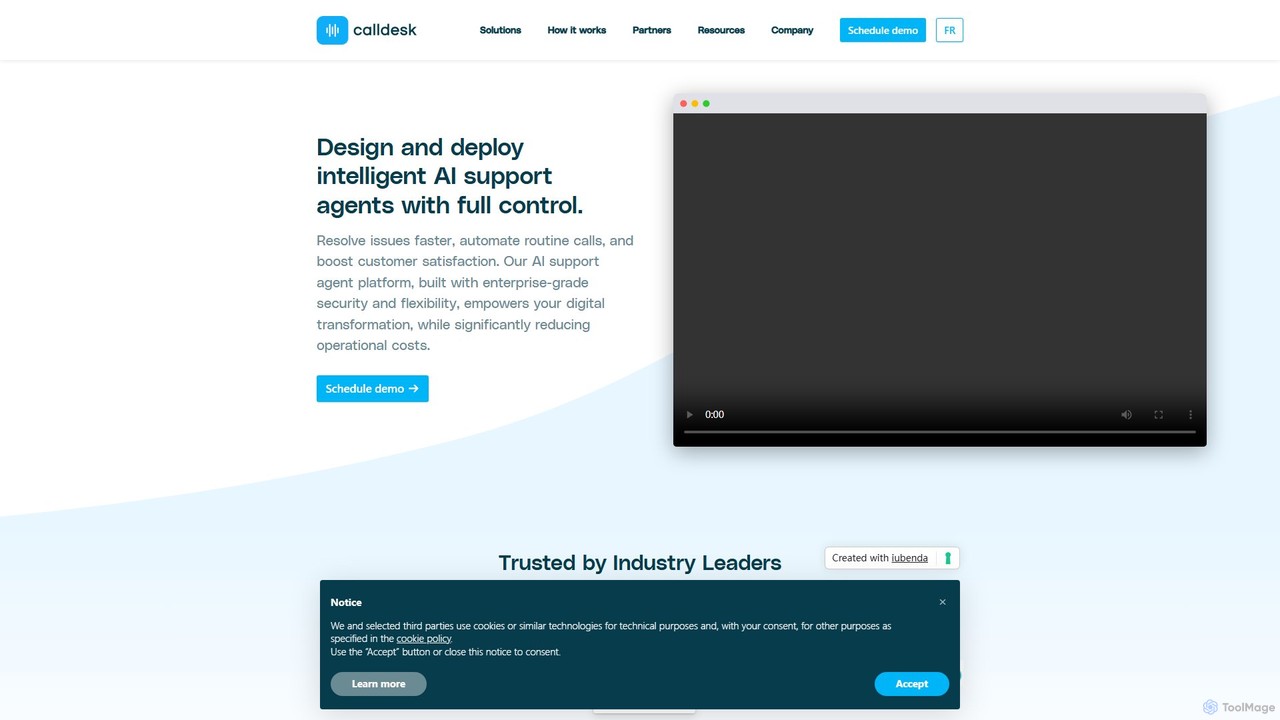
calldesk is an AI-powered platform for creating intelligent voice agents to automate customer service calls. It helps enterprises resolve issues faster, reduce operational costs, and improve customer satisfaction by handling routine inquiries and routing calls with natural language understanding, freeing up human agents for more complex tasks.
About Contact Center
Contact Center AI tools are a category of AI-powered solutions designed to enhance and automate customer interactions within business operations. These tools leverage natural language processing (NLP), machine learning, and automation to streamline communication, improve service quality, and boost operational efficiency. They serve as a critical component within the broader business technology landscape, transforming how companies manage customer support and engagement.
Core Features
- AI Chatbots & Virtual Agents: Automate responses to common queries, handle routine tasks, and provide 24/7 support across various channels.
- Intelligent Call Routing: Analyze customer intent and sentiment in real-time to direct inquiries to the most appropriate human agent or automated service.
- Sentiment Analysis: Evaluate customer emotions during interactions to help agents tailor responses and identify urgent issues.
- Agent Assist & Co-pilot: Provide human agents with real-time information, suggested responses, and knowledge base articles to improve service quality and reduce handling time.
- Automated Interaction Summarization: Generate concise summaries of calls and chats, reducing post-interaction work for agents and improving record-keeping.
Use Cases
Businesses across various sectors utilize Contact Center AI to manage high volumes of customer inquiries, reduce operational costs, and deliver consistent service. They are crucial for automating first-line support, assisting agents with complex cases, and gaining insights from customer interactions to drive continuous improvement.
How to Choose
When selecting Contact Center AI tools, consider integration capabilities with existing CRM and communication platforms, the accuracy and language support of the NLP engine, scalability to handle fluctuating customer demand, and the level of customization offered for specific business needs. Evaluate reporting and analytics features for performance insights and continuous optimization.
Contact CenterUse Cases
Automating First-Line Customer Support
For e-commerce businesses or service providers, AI chatbots handle a significant portion of routine customer inquiries such as order status checks, FAQ answers, and basic troubleshooting. This offloads human agents, allowing them to focus on complex issues, and provides customers with instant, 24/7 support, reducing wait times and improving satisfaction.
Enhancing Live Agent Efficiency and Training
Contact center agents benefit from AI-powered "agent assist" tools that provide real-time suggestions, access to relevant knowledge base articles, and sentiment alerts during live conversations. This reduces training time for new agents, improves consistency in responses, and empowers agents to resolve issues faster and more effectively.
Intelligent Omnichannel Routing
Organizations with diverse customer service needs use AI to analyze incoming calls, emails, or chat messages for intent and urgency. The AI then intelligently routes the customer to the most qualified human agent or appropriate automated service, ensuring customers reach the right resource quickly, minimizing transfers and frustration.
Personalizing Customer Interactions
AI tools analyze a customer's interaction history, preferences, and past purchases to provide highly personalized support. For example, a banking customer calling about a loan application might be greeted with relevant information already pulled up, or offered tailored financial advice, leading to a more relevant and satisfying experience.
Post-Interaction Analysis and Quality Assurance
After customer interactions, AI automatically transcribes calls, summarizes key points, and performs sentiment analysis. This data is used by quality assurance teams to identify training gaps, monitor agent performance, and uncover emerging customer pain points, leading to continuous service improvement and better customer outcomes.
Proactive Customer Engagement and Issue Resolution
AI can monitor customer data and identify potential issues before they escalate. For instance, a telecom company might use AI to detect service disruptions in an area and proactively notify affected customers, offering solutions or updates, thereby reducing inbound calls and preventing widespread dissatisfaction.