AegisMind
AegisMind is an ensemble AI intelligence system that orchestrates multiple models like GPT, Claude, and Mistral to deliver …
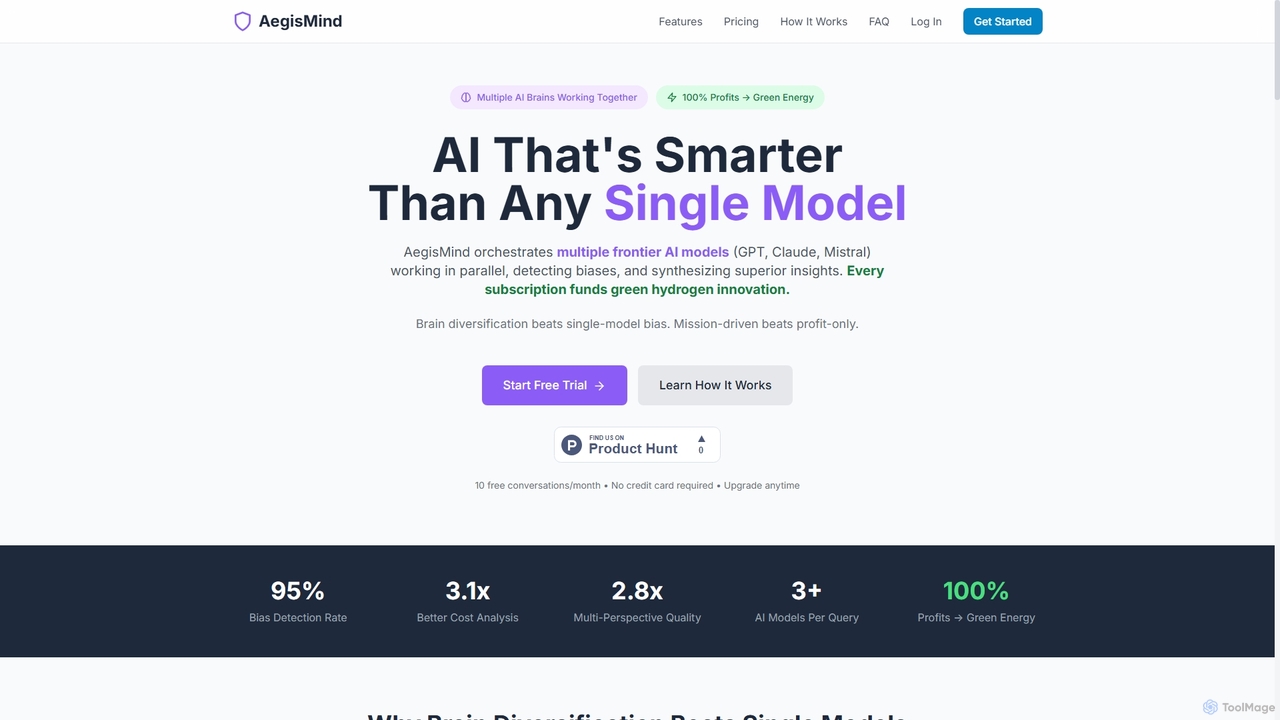
AegisMind is an ensemble AI intelligence system that orchestrates multiple models like GPT, Claude, and Mistral to deliver superior, bias-free insights. It's designed for high-stakes decision-making in finance, research, and strategy. Uniquely, 100% of its profits are directed towards funding green hydrogen energy projects.
About Financial Analysis
Financial Analysis tools are a specialized category of software that leverage AI and machine learning to interpret complex financial data. They go beyond traditional spreadsheets by automatically identifying trends, forecasting future performance, and generating actionable insights from financial statements, market data, and economic indicators. These tools empower investors, analysts, and businesses to make faster, more data-driven decisions, significantly reducing manual effort and improving the accuracy of financial assessments.
Core Features
- Predictive Forecasting: Utilizes historical data and machine learning algorithms to model future revenue, expenses, and market trends.
- Automated Reporting: Instantly generates comprehensive financial reports, such as P&L statements, balance sheets, and cash flow analyses.
- Sentiment Analysis: Scans news articles, social media, and earnings calls to gauge market sentiment towards specific assets or companies.
- Anomaly Detection: Automatically identifies unusual transactions or data patterns that could indicate fraud, errors, or operational inefficiencies.
- Risk Modeling: Simulates the impact of various economic scenarios on investment portfolios to quantify and manage risk.
Applicable Scenarios
These tools are essential for financial analysts, investment firms, corporate finance departments, and individual investors. They are used for tasks like company valuation, M&A due diligence, internal budgeting, fraud detection, and developing trading strategies. For example, a CFO can use them for dynamic forecasting, while a hedge fund can analyze market sentiment to inform trades.
Selection Criteria
When choosing a tool, evaluate its data integration capabilities with sources like ERP systems, accounting software, and market data feeds. Assess the transparency and accuracy of its AI models. Consider the user interface's intuitiveness for non-technical users and the level of customization available for reports and dashboards. Finally, align the pricing model with your usage scale and feature requirements.

Financial AnalysisUse Cases
Investment Due Diligence for Venture Capital
A venture capital analyst is tasked with evaluating a dozen potential startups for a new funding round. Instead of spending weeks manually combing through financial statements and market data, the analyst uses an AI financial analysis tool. They upload the startups' financial projections, historical data, and business plans. The AI platform automatically standardizes the data, calculates key metrics like burn rate and customer acquisition cost, and benchmarks them against industry averages. It also performs scenario analysis on revenue forecasts, highlighting potential risks and opportunities. This allows the analyst to quickly screen candidates and focus their in-depth analysis on the most promising ventures, reducing due diligence time by over 60%.
Automated Quarterly Earnings Report Analysis
A portfolio manager needs to analyze the quarterly earnings reports of 50 companies in their portfolio. This process is time-consuming and prone to human error. By using an AI financial analysis tool, they can automate the entire workflow. The tool connects to financial data providers, ingests the new earnings reports as they are released, and uses Natural Language Processing (NLP) to extract key financial metrics, growth figures, and management commentary. It also performs sentiment analysis on the management's tone during the earnings call. The manager receives a consolidated dashboard highlighting underperforming and overperforming assets, along with alerts for any significant deviations from analyst expectations, enabling them to make timely portfolio adjustments.
Corporate Budget Forecasting and Variance Analysis
A corporate finance department is preparing the annual budget. Instead of relying solely on historical averages, they use an AI tool that analyzes years of internal financial data alongside external macroeconomic indicators like inflation rates and consumer spending trends. The AI generates a more accurate, dynamic budget forecast by identifying complex patterns and correlations. Throughout the year, the tool automatically imports actual spending data from the company's ERP system. It then provides real-time variance analysis, flagging departments that are significantly over or under budget and identifying the root causes. This proactive approach allows management to address budget issues before they escalate, improving financial discipline across the organization.
Fraud Detection in Financial Transactions
A large e-commerce company processes millions of transactions daily, making it a target for fraudulent activities. Their internal audit team employs an AI-powered financial analysis tool to monitor all transactions in real-time. The AI model has been trained on historical transaction data to understand normal purchasing behavior. It continuously scans for anomalies, such as an unusually high number of transactions from a single IP address, purchases made with cards from different countries in quick succession, or deviations from a user's typical spending pattern. When a suspicious activity is detected, the system automatically flags the transaction and alerts the audit team for immediate investigation, significantly reducing financial losses due to fraud.
Stock Market Sentiment Analysis for Traders
A day trader wants to gain an edge by understanding market sentiment beyond just price charts. They use an AI financial analysis tool that specializes in sentiment analysis. The tool aggregates and analyzes millions of data points in real-time from news sources, financial blogs, and social media platforms. It identifies trending topics related to specific stocks, detects shifts in public opinion (e.g., from positive to negative), and quantifies the overall sentiment score. For example, the trader receives an alert that sentiment for a tech stock has suddenly turned negative following a product announcement. This insight, combined with technical analysis, helps the trader make a more informed decision to potentially short the stock before the negative sentiment is fully reflected in the price.
Personalized Financial Planning for Advisors
A financial advisor manages portfolios for hundreds of clients, each with unique goals and risk tolerances. Manually creating and adjusting plans is inefficient. The advisor adopts an AI platform that integrates with client accounts to pull real-time financial data. The AI analyzes each client's portfolio, spending habits, and stated goals. It then runs thousands of market simulations to generate an optimized, personalized financial plan, suggesting specific asset allocations and savings strategies. The platform also monitors portfolios continuously and alerts the advisor to events that may require plan adjustments, such as major market shifts or a client's change in income. This allows the advisor to provide a higher level of proactive, data-driven service to more clients simultaneously.