ToolMage
Sign in

Best 1 Payments AI tools for Business

Popular Payments AI tools in Business include Routable, helping you work more efficiently.

Routable
Paid

Routable

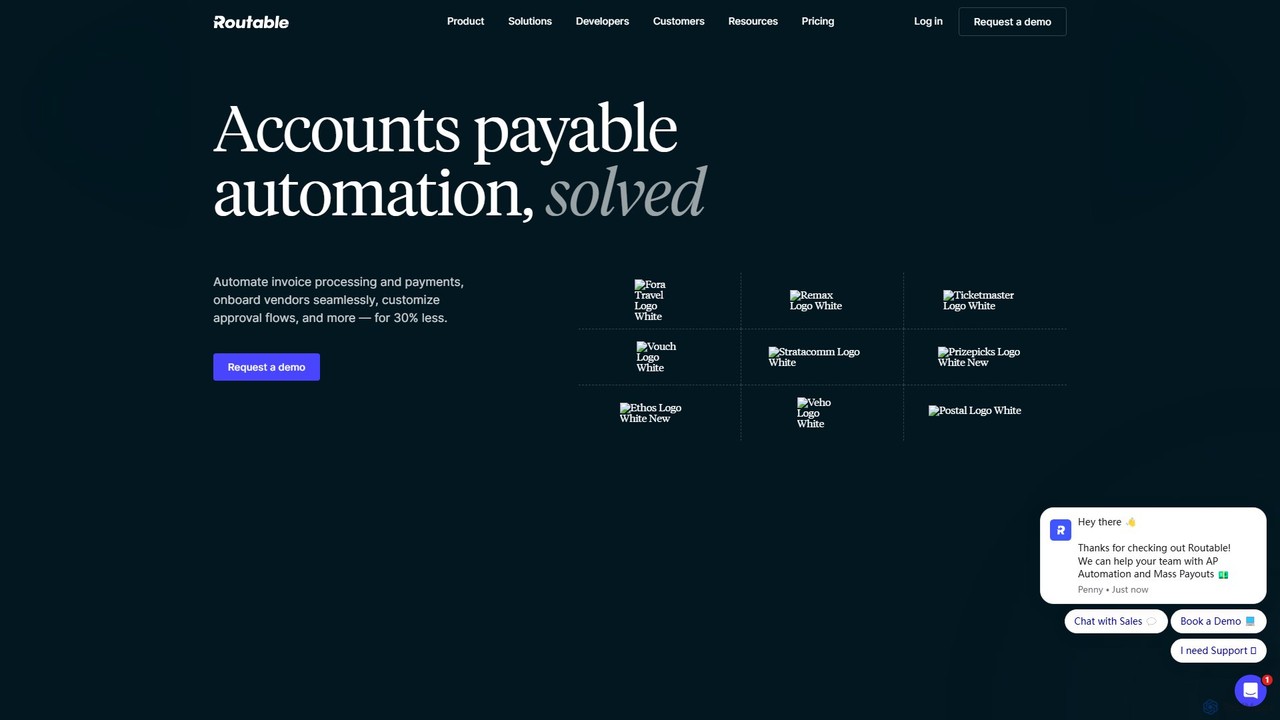
Routable is a comprehensive AP automation platform that uses AI to streamline invoice processing, vendor management, and global mass payments. It helps businesses save time and money by automating manual tasks, ensuring compliance, and providing real-time financial visibility through seamless ERP integrations.

Payments
Visits 32.8KFavorites 122Likes 135

About Payments

AI Payments tools are a category of solutions that leverage artificial intelligence to automate, optimize, and secure financial transactions. These tools utilize advanced algorithms for tasks such as fraud detection, payment reconciliation, and personalized checkout experiences. They enhance efficiency, reduce manual errors, and provide deeper insights into financial flows, making payment processes smarter and more resilient. By integrating AI, businesses can streamline operations and improve customer satisfaction.

Core Features

  • AI-Powered Fraud Detection: Analyzes transaction patterns in real-time to identify and flag suspicious activities, minimizing financial risks.
  • Automated Payment Reconciliation: Automatically matches transactions with invoices, bank statements, and ledgers, significantly reducing manual effort and discrepancies.
  • Personalized Payment Experiences: Recommends preferred payment methods or offers based on individual customer behavior, location, and historical data.
  • Predictive Cash Flow Analytics: Forecasts future payment trends and liquidity, enabling better financial planning and resource allocation.
  • Dynamic Pricing & Billing: Adjusts pricing models or billing cycles based on market conditions, customer segments, or usage patterns.

Use Cases

Businesses across various sectors, from e-commerce to financial services, utilize AI Payments tools. They are particularly valuable for online retailers managing high transaction volumes, SaaS companies automating subscription billing, and enterprises seeking to optimize global payment processing. These tools help streamline back-office operations and enhance the front-end customer experience.

How to Choose

When selecting an AI Payments tool, consider its integration capabilities with existing financial systems and e-commerce platforms. Evaluate the robustness of its fraud detection mechanisms and compliance with industry regulations. Assess its scalability to handle growing transaction volumes and the level of customization offered for payment workflows. Finally, compare pricing models and the quality of customer support.

Payments use cases

1

Automate E-commerce Fraud Prevention

An online retailer uses AI payment tools to automatically screen incoming transactions for suspicious patterns. By leveraging machine learning algorithms, the system identifies and blocks potentially fraudulent purchases in real-time, minimizing chargebacks and financial losses. This allows the retailer to process legitimate orders quickly while protecting against sophisticated fraud attempts, saving significant operational costs and maintaining customer trust.

2

Streamline Subscription Billing for SaaS

A SaaS company employs AI payment solutions to manage its recurring subscription billing cycles. The AI automatically handles payment retries for failed transactions, sends personalized dunning notifications, and updates billing information. This ensures a higher success rate for recurring payments, reduces churn due to payment issues, and frees up finance teams from manual follow-ups, leading to more predictable revenue streams and improved customer retention.

3

Optimize Cross-Border Payment Routing

A global e-commerce platform uses AI payment tools to optimize the routing of international transactions. The AI analyzes real-time exchange rates, transaction fees, and success rates across various payment processors and corridors. It then intelligently selects the most cost-effective and efficient route for each cross-border payment, reducing processing costs and improving transaction speed for customers worldwide, thereby enhancing global market reach and profitability.

4

Automate Expense Management and Reconciliation

A large enterprise implements AI payment solutions to automate its employee expense management and reconciliation processes. Employees can submit receipts via a mobile app, which AI instantly categorizes and matches with corporate card transactions. The system automatically flags discrepancies and generates reports, drastically reducing the time spent by finance teams on manual data entry and reconciliation, ensuring greater accuracy and compliance with company policies.

5

Personalize Checkout Experiences

An online travel agency uses AI payment tools to offer personalized checkout experiences to its customers. Based on a user's location, browsing history, and past purchases, the AI dynamically suggests preferred local payment methods, currency options, or even installment plans. This tailored approach reduces friction at checkout, increases conversion rates, and enhances customer satisfaction by providing convenient and relevant payment choices.

6

Real-time Cash Flow Forecasting

A corporate finance department leverages AI payment analytics to generate real-time cash flow forecasts. The AI processes historical payment data, current invoices, and upcoming payment schedules, identifying trends and predicting future inflows and outflows with high accuracy. This enables proactive liquidity management, optimizes working capital, and supports strategic financial decision-making, moving beyond traditional static forecasting methods.

Payments FAQ

What are AI Payments tools?

AI Payments tools are software solutions that integrate artificial intelligence to enhance and automate various aspects of financial transactions. They go beyond basic payment processing by using AI for tasks like real-time fraud detection, intelligent payment routing, and automated reconciliation. These tools aim to improve security, efficiency, and the overall user experience in payment ecosystems, offering predictive insights and personalized services.

How do AI Payments tools enhance security?

AI Payments tools significantly enhance security primarily through advanced fraud detection. They employ machine learning algorithms to analyze vast amounts of transaction data, identifying anomalies and suspicious patterns that human analysts or rule-based systems might miss. This includes detecting unusual spending habits, geographic inconsistencies, or rapid successive transactions. By flagging potential fraud in real-time, these tools prevent financial losses and protect both businesses and customers from malicious activities, adapting to new fraud tactics as they emerge.

What's the difference between AI Payments tools and traditional payment gateways?

Traditional payment gateways primarily facilitate the secure transfer of funds between customers and merchants, focusing on basic processing and encryption. AI Payments tools, however, integrate intelligence beyond this. They leverage AI for advanced functionalities like predictive fraud analytics, dynamic currency conversion optimization, automated reconciliation, and personalized payment recommendations. While a traditional gateway is a conduit, an AI payment tool acts as an intelligent layer that optimizes, secures, and provides insights into the entire payment lifecycle, reducing manual intervention and enhancing strategic financial management.

Who benefits most from using AI Payments solutions?

Businesses that handle high volumes of transactions, operate globally, or manage recurring payments benefit most from AI Payments solutions. This includes e-commerce platforms, SaaS companies, financial institutions, and large enterprises. They gain advantages in fraud prevention, operational efficiency through automation (like reconciliation), improved customer experience via personalization, and enhanced financial planning through predictive analytics. Any organization looking to reduce costs, mitigate risks, and gain deeper insights into their financial operations will find significant value.

What are the key features of AI Payments tools?

Key features of AI Payments tools include AI-powered fraud detection, which uses machine learning to identify suspicious transactions in real-time. Automated payment reconciliation streamlines financial closing by matching transactions with records. Personalized payment experiences offer tailored options to customers. Predictive cash flow analytics forecast future financial movements, aiding strategic planning. Additionally, dynamic pricing and billing capabilities allow for flexible adjustment of payment terms based on various factors, enhancing revenue optimization and operational flexibility.

What should I consider when choosing an AI Payments platform?

When choosing an AI Payments platform, prioritize its integration capabilities with your existing ERP, CRM, and e-commerce systems to ensure seamless data flow. Evaluate the platform's security features, including its AI-driven fraud detection accuracy and compliance with PCI DSS and other relevant regulations. Consider its scalability to accommodate future growth in transaction volume and its ability to support various payment methods and currencies. Finally, assess the level of customization for workflows, reporting features, and the quality of customer support and technical documentation.