Dashbe
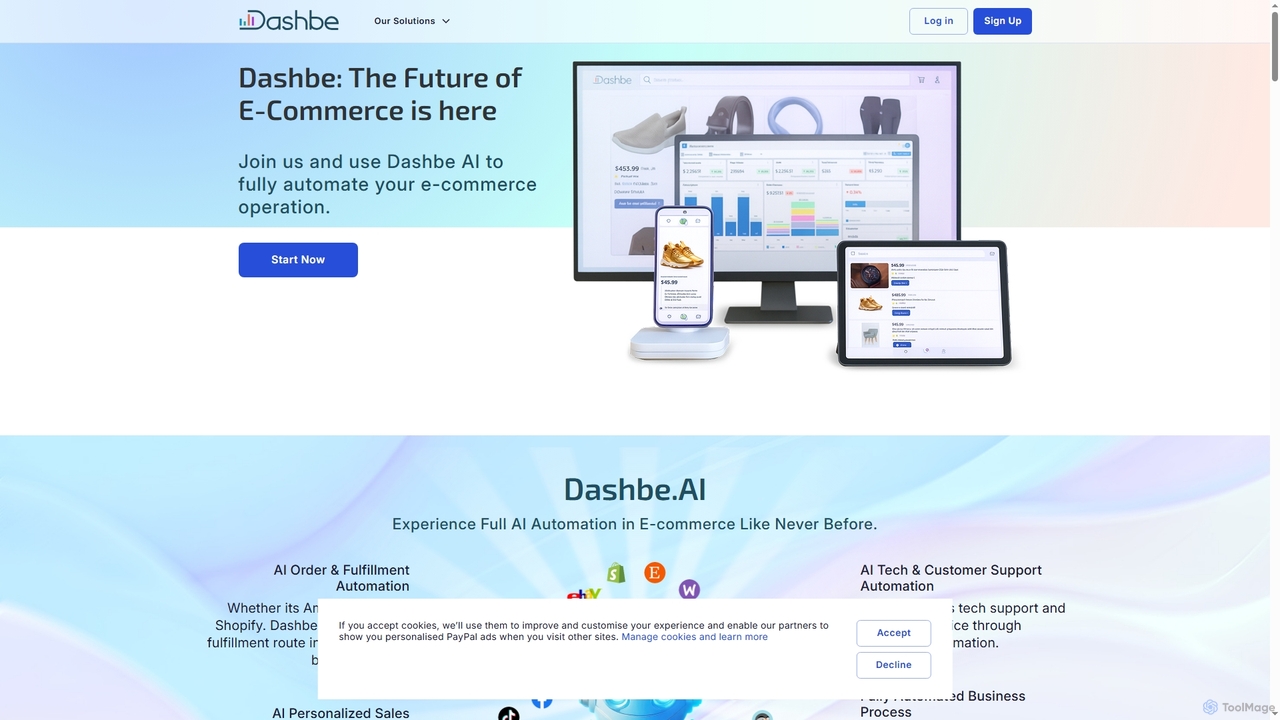
Dashbe is an AI-powered e-commerce automation platform designed to streamline and optimize online business operations. It offers comprehensive …
Dashbe is an AI-powered e-commerce automation platform designed to streamline and optimize online business operations. It offers comprehensive solutions for order fulfillment, personalized sales, marketing, customer support, inventory management, and multi-channel payment processing, empowering merchants to scale efficiently and enhance customer satisfaction.
About Sales Management
AI Sales Management tools are a specialized class of software that leverages artificial intelligence to optimize and automate the entire sales lifecycle. These platforms use machine learning algorithms to analyze vast amounts of sales data, providing predictive insights, automating repetitive tasks, and guiding sales teams toward the most promising opportunities. The primary value lies in transforming sales from a reactive process into a proactive, data-driven strategy, enabling teams to forecast revenue more accurately, prioritize leads effectively, and improve overall win rates. They act as an intelligent layer on top of traditional CRM systems.
Core Features
- Predictive Lead Scoring: Analyzes customer data and behavior to rank leads based on their likelihood to convert, focusing sales efforts.
- Sales Forecasting: Uses historical data and AI models to generate accurate predictions of future sales revenue and pipeline health.
- Conversation Intelligence: Records, transcribes, and analyzes sales calls and meetings to provide coaching insights and identify best practices.
- Automated Task Management: Automates data entry, follow-up reminders, and email sequencing, freeing up reps to focus on selling.
- Deal Health & Risk Analysis: Monitors deal progression and engagement signals to flag at-risk opportunities that require attention.
Use Cases
These tools are widely adopted by B2B sales organizations, particularly in sectors like SaaS, technology, and financial services. Sales managers use them for accurate forecasting and team performance tracking. Sales Development Representatives (SDRs) rely on lead scoring to prioritize outreach, while Account Executives (AEs) use conversation intelligence to refine their pitches and deal analysis to close more effectively.
How to Choose
When selecting an AI Sales Management tool, prioritize seamless integration with your existing CRM (e.g., Salesforce, HubSpot). Evaluate the accuracy and transparency of its AI models for forecasting and scoring. Consider the specific features your team needs most—whether it's conversation analysis, lead prioritization, or automation. Finally, assess the user interface's simplicity to ensure high adoption rates among your sales representatives.

Sales ManagementUse Cases
Prioritizing High-Value Leads for a SaaS Company
A Sales Development Representative (SDR) at a growing SaaS company is tasked with qualifying hundreds of inbound leads each week. Instead of manually sifting through them, the SDR uses an AI Sales Management tool with predictive lead scoring. The system automatically analyzes each lead's firmographics, online behavior, and engagement with marketing content, assigning a score from 1 to 100. The SDR can then filter their view to focus only on leads with a score above 80, ensuring their time is spent on prospects with the highest probability of converting into a sales opportunity. This approach significantly increases their meeting booking rate and the quality of leads passed to Account Executives.
Generating Accurate Quarterly Sales Forecasts
A sales manager needs to provide an accurate revenue forecast to leadership for the upcoming quarter. Previously, this involved manually polling each sales rep for their subjective estimates, often leading to inaccurate projections. By implementing an AI Sales Management tool, the manager now gets an AI-generated forecast based on historical win rates, deal stage progression, rep performance, and the level of engagement in current deals. The system provides a more objective and reliable prediction, allowing the company to make better decisions regarding hiring, budget allocation, and resource planning.
Coaching Sales Reps with Conversation Intelligence
A sales enablement leader aims to improve the performance of the entire sales team. They use a conversation intelligence feature within their AI sales platform, which records and analyzes all sales calls. The AI automatically identifies key moments, such as competitor mentions, pricing discussions, and customer objections. The leader can then review these specific call segments with individual reps, providing targeted coaching on how to handle objections or better articulate value. The platform also identifies the talk tracks and questions used by top-performing reps, which can be used to build a best-practice playbook for the whole team.
Identifying and Mitigating At-Risk Deals
An Account Executive is managing a large, complex deal that seems to be progressing well. However, their AI Sales Management tool flags it as "at-risk." The AI has detected a significant drop in email communication from the prospect's key decision-maker and notes that the last meeting was rescheduled twice. Alerted by the system, the Account Executive proactively reaches out to re-engage the stakeholder and uncovers a previously unknown internal blocker. This early warning allows them to address the issue and get the deal back on track, preventing it from being unexpectedly lost.
Automating Sales Outreach and Follow-ups
A small but growing sales team struggles to maintain consistent communication with a large pool of prospects. They use an AI Sales Management tool to create automated yet personalized email sequences. The AI can suggest the best times to send emails, personalize content based on the prospect's industry and role, and automatically stop the sequence once a prospect replies. This automates the time-consuming task of manual follow-ups, ensuring no lead is forgotten and allowing the sales reps to focus their energy on active conversations and closing deals.
Optimizing Sales Playbooks with Data Insights
A Revenue Operations (RevOps) team is responsible for optimizing the company's sales process. They use the analytics dashboard of their AI Sales Management platform to analyze thousands of data points across the entire sales funnel. The AI reveals that deals where a product demo occurs within the first week have a 30% higher win rate. It also identifies that mentioning a specific case study early in the conversation correlates with faster deal cycles. Armed with these data-backed insights, the RevOps team updates the official sales playbook and training materials to standardize these successful behaviors across the entire sales force.