recruitryte
recruitryte is an AI-powered recruitment and talent sourcing platform. It utilizes a conversational, chat-first interface to help recruiters …
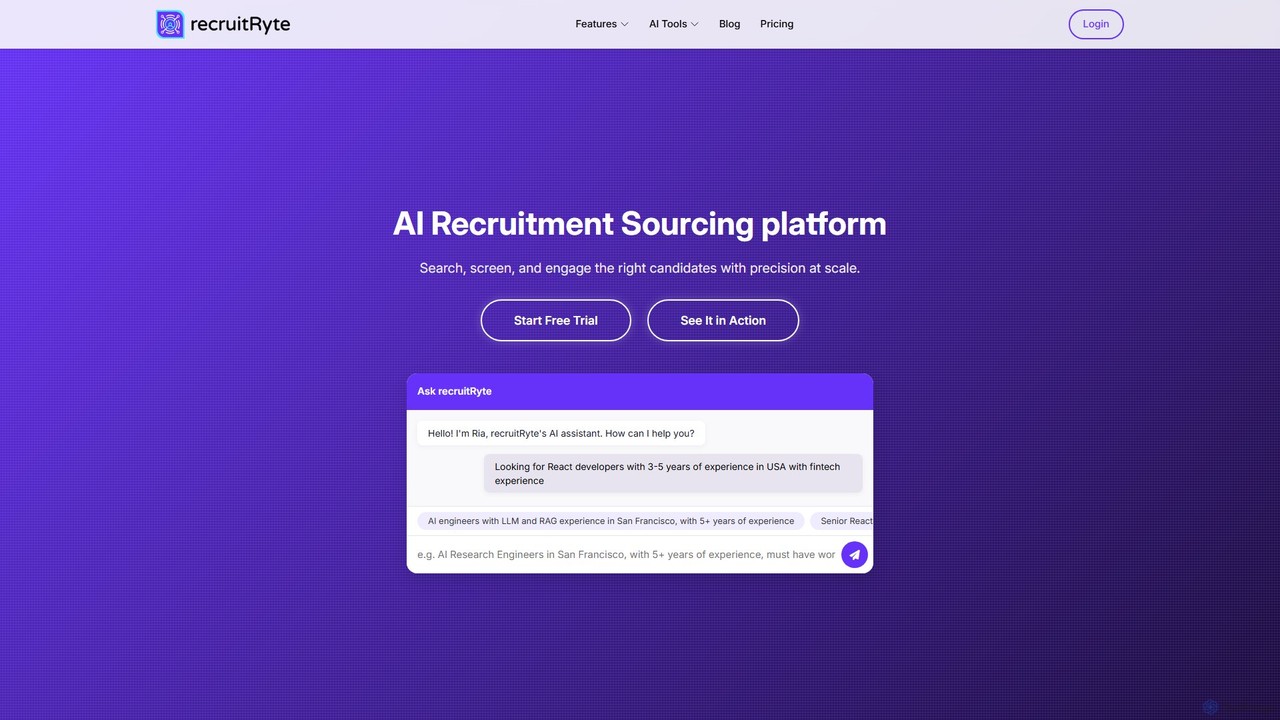
recruitryte is an AI-powered recruitment and talent sourcing platform. It utilizes a conversational, chat-first interface to help recruiters and hiring managers search, screen, and engage with candidates globally. The platform leverages semantic search and smart screening to go beyond keywords, delivering highly accurate candidate matches and automating outreach campaigns to streamline the entire hiring process.
About Talent Sourcing
Talent Sourcing tools are AI-powered platforms designed to proactively find, identify, and engage potential job candidates. These systems utilize machine learning and natural language processing to scan diverse sources like professional networks, code repositories, and online communities, going beyond traditional resumes. Their primary value lies in building a pipeline of qualified passive candidates—professionals who are not actively looking for a job but are a strong fit for future roles. This approach allows recruitment teams to reduce time-to-hire and access a wider, often higher-quality, talent pool.
Core Features
- AI-Powered Search & Matching: Uses algorithms to match job requirements with candidate profiles across multiple online platforms.
- Automated Outreach Sequences: Creates and sends personalized multi-step email or message campaigns to engage candidates.
- Talent Pool Management: Builds and organizes a centralized database of potential candidates for current and future needs.
- Predictive Analytics: Analyzes data to identify candidates most likely to respond or be a good long-term fit.
- Bias Reduction: Implements features to anonymize profiles or focus on skills to support diversity and inclusion initiatives.
Use Cases
These tools are widely used by corporate recruiters, talent acquisition specialists, and headhunting agencies, particularly in competitive industries like technology, finance, and healthcare. They are essential for filling niche technical roles, building leadership succession pipelines, and executing high-volume hiring campaigns where a proactive approach is critical for success.
How to Choose
When selecting a Talent Sourcing tool, consider its integration capabilities with your existing Applicant Tracking System (ATS). Evaluate the breadth and relevance of its sourcing channels (e.g., LinkedIn, GitHub, academic sites). Assess the level of customization available for search filters and outreach messaging. Finally, review the analytics and reporting features to measure campaign effectiveness and ROI.

Talent SourcingUse Cases
Sourcing for Niche Technical Roles
A tech recruiter is tasked with finding a Senior Backend Engineer with specific experience in Rust and distributed systems. Instead of relying on job boards with few applicants, they use an AI Talent Sourcing tool. The AI scans GitHub for relevant code contributions, Stack Overflow for expert answers, and specialized tech forums. It identifies five highly qualified passive candidates who haven't applied anywhere. The tool then helps draft personalized outreach emails referencing their specific projects, resulting in a 40% response rate and filling the role in three weeks instead of the typical two months.
Building a Proactive Talent Pipeline
An HR department at a fast-growing SaaS company anticipates needing to hire 10 new account executives in the next quarter. Instead of waiting for the roles to open, they use a sourcing tool to build a talent pipeline now. The tool identifies professionals with a proven track record in B2B software sales on LinkedIn and other professional networks. It automates a gentle nurture campaign, sending them relevant industry news and company updates over several weeks. When the positions are officially opened, the company has a warm pool of 50+ pre-vetted, engaged candidates, significantly shortening the hiring cycle.
Improving Diversity in Hiring
A large financial institution wants to improve gender and ethnic diversity in its management roles. Their Diversity & Inclusion team uses an AI sourcing tool with bias-reduction features. The tool can anonymize candidate profiles, removing names and photos, to focus evaluations purely on skills and experience. It also actively searches for qualified candidates from underrepresented groups and alumni of diverse universities. This data-driven approach helps the company build more balanced shortlists for interviews, directly contributing to their D&I goals by ensuring a wider range of talent is considered from the very start of the process.
High-Volume Recruitment for Sales Teams
A national retail company needs to hire 50 new sales associates across 10 cities before the holiday season. A recruitment agency uses a talent sourcing platform to manage this high-volume project. The AI identifies thousands of potential candidates with retail or sales experience on professional networks. The platform then automates the initial outreach, sending personalized messages to all of them. This allows the small recruiting team to focus their time only on screening the hundreds of interested candidates who respond, rather than manually searching and messaging each person individually. The project is completed on schedule, ensuring all stores are staffed.
Confidential Executive Search
A headhunting firm is hired to find a new Chief Financial Officer (CFO) for a public company, a search that must remain confidential. The lead recruiter uses a talent sourcing tool to discreetly identify sitting VPs of Finance and CFOs at comparable companies. The AI analyzes career progression data and public statements to flag individuals who might be receptive to a new challenge. The tool's outreach capabilities allow the recruiter to send highly personalized, confidential inquiries through secure channels, ensuring the search remains private until the final stages. This targeted approach is more effective and discreet than public job postings.
Mapping Talent in a New Market
A company plans to open a new office in a different country and needs to understand the local talent landscape for software developers. Before making any hiring decisions, the HR team uses a talent sourcing tool to perform market mapping. The AI gathers data on the number of developers with specific skills (e.g., Python, AWS) in the target city, average experience levels, and the companies they currently work for. This intelligence provides crucial insights for setting realistic hiring goals, defining competitive salary benchmarks, and creating a targeted recruitment strategy, de-risking their international expansion.