S3cura
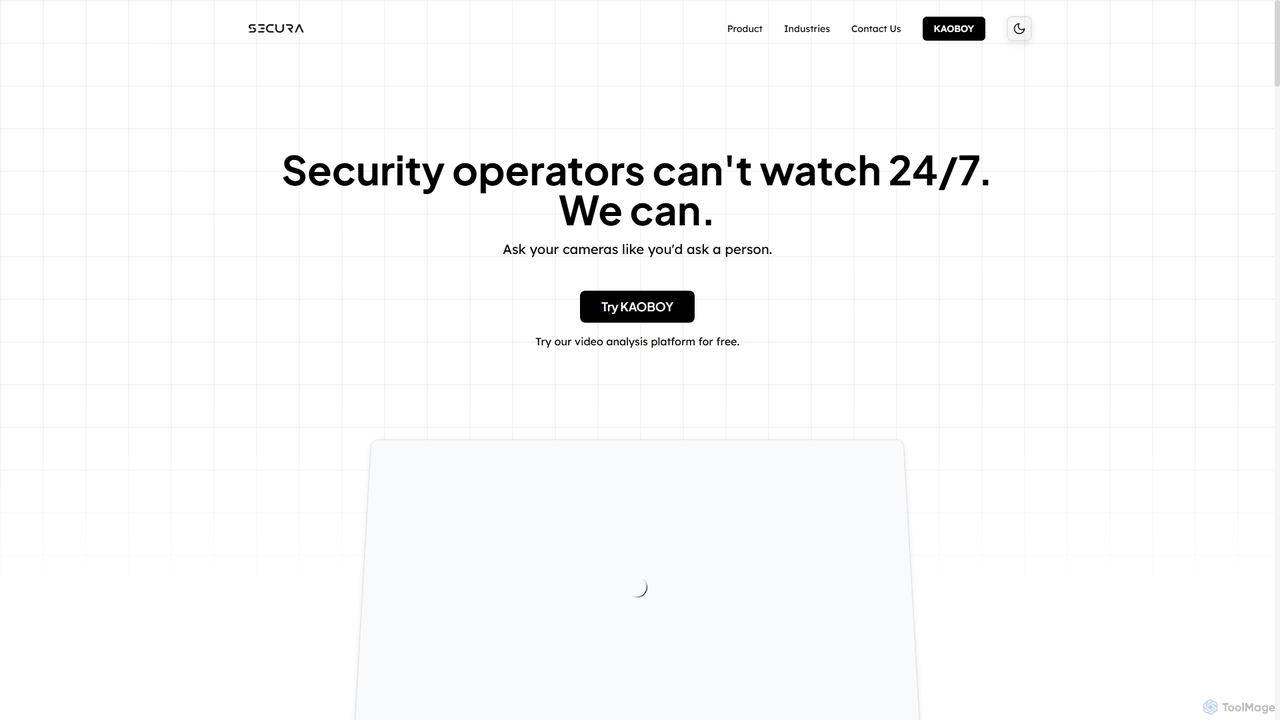
S3cura is an advanced AI-powered video surveillance platform designed to upgrade existing security systems. It leverages generative AI …
S3cura is an advanced AI-powered video surveillance platform designed to upgrade existing security systems. It leverages generative AI to understand events, enabling natural language queries across multiple cameras. The system provides sub-30-second threat alerts, significantly reduces false alarms, and delivers verifiable, forensic-ready evidence for enhanced security operations.
About Threat Detection
Threat Detection tools are a class of AI-powered software designed to proactively identify, analyze, and respond to cybersecurity threats in real-time. These tools leverage machine learning and behavioral analytics to detect anomalies and malicious patterns that traditional signature-based security systems often miss. Their primary value lies in enhancing an organization's security posture by providing early warnings of potential breaches, insider threats, and sophisticated attacks. This enables security teams to neutralize threats before they cause significant damage to business operations and data integrity.
Core Features
- Real-time Anomaly Detection: Identifies deviations from normal patterns in network traffic, user activity, and system behavior.
- Behavioral Analytics (UEBA): Profiles users and entities to detect suspicious activities indicative of compromised accounts or insider threats.
- Automated Threat Triage: Uses AI to analyze and prioritize security alerts, reducing alert fatigue for security teams.
- Malware and Ransomware Identification: Detects zero-day malware and ransomware by analyzing file behavior and communication patterns, not just signatures.
- Threat Intelligence Integration: Correlates internal activity with external threat intelligence feeds to identify known attack vectors and indicators of compromise.
Use Cases
These tools are essential for Security Operations Centers (SOCs), IT security departments, and compliance officers across various industries, particularly finance, healthcare, and technology. They are used to monitor complex IT environments, including cloud infrastructure, on-premise networks, and endpoint devices, to safeguard critical business assets and sensitive data from ever-evolving cyber threats.
How to Choose
When selecting a Threat Detection tool, consider its integration capabilities with your existing security stack (like SIEM and SOAR), the accuracy of its detection models (to minimize false positives), and its scalability to handle your organization's data volume. Also, evaluate the user interface's clarity for security analysts and the vendor's support for incident response.
Threat DetectionUse Cases
Proactive Network Monitoring for SOC Teams
A Security Operations Center (SOC) analyst for a mid-sized tech company uses an AI threat detection tool to monitor network traffic. The tool establishes a baseline of normal data flow. One afternoon, it flags an unusual outbound data transfer to an unknown IP address, occurring outside of business hours. Unlike a traditional firewall which might permit the traffic based on port rules, the AI flags it as anomalous behavior. The analyst investigates, discovers a compromised server attempting to exfiltrate customer data, and isolates the server, preventing a major data breach that would have gone unnoticed.
Detecting Insider Threats with Behavioral Analytics
A financial services firm is concerned about insider threats. They deploy a threat detection tool with User and Entity Behavior Analytics (UEBA). The system learns the typical data access patterns of each employee. It then alerts the security team when a sales employee, who normally only accesses CRM data, begins downloading large volumes of proprietary financial models from a restricted server late at night. This deviation from their established behavioral baseline allows the security team to intervene and prevent intellectual property theft before the data leaves the company.
Automating Ransomware Prevention on Endpoints
A healthcare organization deploys an AI-powered endpoint detection tool across its hospital network. A phishing email successfully tricks an employee into opening a malicious attachment. The malware begins to encrypt files on the local machine, a classic ransomware behavior. The AI tool, which is monitoring process behavior rather than just file signatures, immediately detects this unauthorized mass encryption activity. It automatically isolates the infected endpoint from the network to prevent the ransomware from spreading and alerts the IT team, minimizing the damage to a single machine instead of the entire network.
Securing Cloud Infrastructure from Compromised Credentials
An e-commerce company heavily relies on cloud services. Their AI threat detection tool monitors all login activity to their cloud management console. The system flags a login attempt from an administrator account originating from an unfamiliar country and at an unusual time (3 AM local time). The AI correlates this with an 'impossible travel' scenario, as the same user logged in from the corporate office just two hours prior. The system automatically locks the account and notifies the security team, thwarting an attacker who had likely stolen the administrator's credentials.
Prioritizing Alerts in a High-Volume Environment
A large enterprise's SOC is inundated with thousands of security alerts daily from various systems. It's impossible for analysts to investigate every single one. An AI threat detection platform is implemented to ingest all these alerts. The AI uses contextual information and threat intelligence to automatically triage them, distinguishing between low-risk anomalies and potentially critical threats. It consolidates related alerts into single, high-priority incidents and provides analysts with a summarized view. This reduces alert fatigue by over 90% and allows the team to focus their efforts on the most significant threats.
Identifying Zero-Day Malware in Email Attachments
A manufacturing company receives a targeted spear-phishing email containing a novel, never-before-seen malware variant (a zero-day threat) embedded in a PDF document. Traditional antivirus software, which relies on known signatures, fails to detect it. However, the company's AI threat detection system, integrated with its email gateway, analyzes the PDF's behavior in a sandbox environment. It observes the file attempting to execute suspicious PowerShell commands to establish a connection with an external server. The AI flags this malicious behavior, quarantines the email, and blocks the threat before it can be delivered to the user's inbox.