ToolMage
Sign in

Best 1 Talentacquisition AI tools for Businessoperations

Popular Talentacquisition AI tools in Businessoperations include TalentReview, helping you work more efficiently.

TalentReview

TalentReview

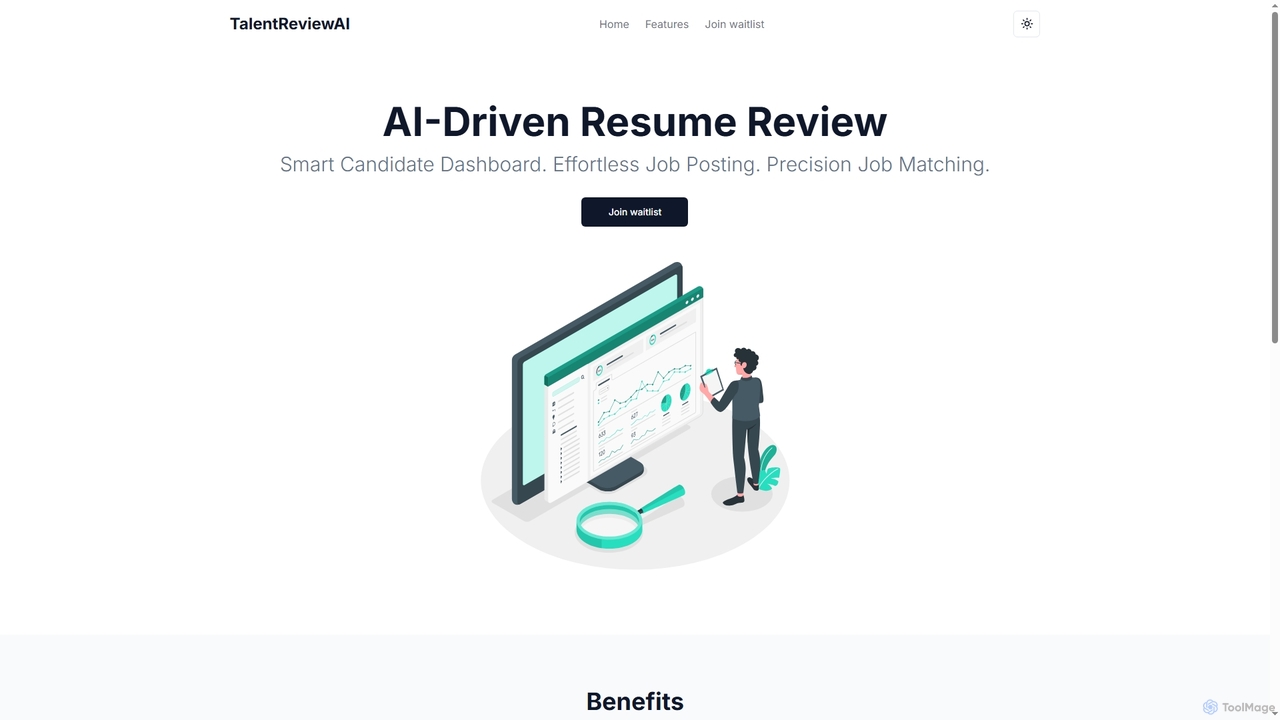
TalentReview is an AI-powered platform designed to streamline the hiring process for businesses. It offers AI-driven resume review, smart candidate dashboards, effortless job posting with AI-generated descriptions, and precision job matching, helping recruiters find the best talent efficiently.

Talentacquisition
Visits 6.5KFavorites 138Likes 120

About Talentacquisition

Talent acquisition AI tools are specialized solutions designed to automate and enhance various stages of the recruitment process. Leveraging advanced machine learning, natural language processing, and data analytics, these tools streamline candidate sourcing, screening, assessment, and engagement. They aim to significantly improve hiring efficiency, reduce time-to-hire, and ensure a better, more objective match between candidates and organizational roles, ultimately contributing to more effective business operations.

Core Features

  • Automated Candidate Sourcing: Identifies and engages potential candidates from diverse online platforms and databases.
  • Intelligent Resume Screening: Analyzes resumes and applications to identify top candidates based on skills, experience, and job requirements.
  • AI-Powered Interview Scheduling: Automates the coordination of interviews, sending reminders and managing calendars for all parties.
  • Candidate Engagement Chatbots: Provides instant answers to candidate FAQs and offers personalized communication throughout the hiring journey.
  • Bias Mitigation Analytics: Analyzes hiring data to identify and reduce unconscious biases in job descriptions, screening, and selection processes.

Use Cases

These tools are invaluable for HR departments, recruiters, and hiring managers seeking to optimize their talent pipelines. They are used to quickly identify qualified candidates for hard-to-fill roles, automate the initial review of high-volume applications, and provide a seamless, engaging experience for applicants from initial contact to offer. This allows human recruiters to focus on strategic decision-making and candidate relationship building.

How to Choose

When selecting talent acquisition AI tools, consider their integration capabilities with existing ATS/HRIS systems, the accuracy and transparency of their AI algorithms in bias detection, and the level of customization offered for specific hiring needs. Evaluate the user experience for both recruiters and candidates, data security protocols, and the scalability of the solution to grow with your organization's hiring volume.

Talentacquisition use cases

1

Automated Candidate Sourcing & Outreach

Recruitment teams utilize AI tools to proactively identify passive candidates who match specific job criteria across professional networks, social media, and public databases. The AI can then initiate personalized outreach campaigns, engaging potential hires with relevant job opportunities and company culture information, significantly expanding the talent pool beyond traditional applicants.

2

Efficient Resume Screening & Shortlisting

For roles attracting hundreds of applications, HR professionals deploy AI to rapidly analyze resumes and cover letters. The AI identifies key skills, experience, and qualifications, ranking candidates based on their fit with the job description. This automation drastically reduces the manual effort of initial screening, allowing recruiters to focus on a highly qualified shortlist.

3

Streamlined Interview Scheduling & Logistics

Hiring managers and candidates often face challenges coordinating interview times across multiple calendars and time zones. AI-powered scheduling tools automate this process, finding optimal slots, sending invitations, and managing rescheduling requests. This ensures a smooth, professional experience for candidates and frees up administrative time for recruiters.

4

Personalized Candidate Engagement & Support

AI chatbots and virtual assistants are integrated into career pages and application portals to provide instant answers to candidate questions about job roles, company benefits, or application status. This personalized, 24/7 support enhances the candidate experience, reduces recruiter workload for routine inquiries, and keeps applicants informed and engaged throughout the hiring journey.

5

Objective Skills Assessment & Evaluation

Companies use AI-driven assessment platforms to objectively evaluate candidates' technical skills, cognitive abilities, or soft skills through gamified tests or coding challenges. The AI analyzes performance data to provide unbiased insights, helping hiring teams make data-backed decisions and identify candidates with true potential, reducing reliance on subjective judgments.

6

Analyzing Hiring Data for Bias Reduction

HR departments leverage AI analytics to scrutinize historical hiring data, job descriptions, and interview feedback for patterns indicative of unconscious bias. The AI can highlight areas where certain demographics might be inadvertently disadvantaged, providing actionable insights to refine recruitment strategies and foster a more diverse and inclusive workforce.

Talentacquisition FAQ

What are Talent Acquisition AI tools?

Talent acquisition AI tools are software solutions that use artificial intelligence, such as machine learning and natural language processing, to automate and optimize various aspects of the hiring process. They assist with tasks like candidate sourcing, resume screening, interview scheduling, and candidate engagement, aiming to make recruitment faster, more efficient, and less biased.

How do AI tools help reduce bias in hiring?

AI tools can help reduce bias by analyzing job descriptions for biased language, anonymizing candidate data during initial screening, and using objective criteria to evaluate skills and qualifications. By focusing on data-driven matching rather than subjective human judgment, these tools can identify and mitigate unconscious biases that might otherwise influence hiring decisions, promoting diversity.

What's the difference between AI in Talent Acquisition and traditional HR software?

Traditional HR software primarily manages administrative tasks like payroll, benefits, and employee records. AI in talent acquisition, however, goes beyond administration by actively learning and making predictions. It uses algorithms to analyze data, identify patterns, and automate complex decision-making processes in recruitment, offering predictive insights and intelligent automation that traditional systems lack.

What should I consider when choosing an AI talent acquisition platform?

When selecting an AI talent acquisition platform, consider its integration capabilities with your existing Applicant Tracking System (ATS) or HRIS, the transparency and explainability of its AI algorithms in bias detection, and its proven ability to mitigate bias. Also, evaluate its scalability, customization options, data security features, and the quality of candidate and recruiter user experience it offers.

Can AI tools fully replace human recruiters?

No, AI tools are designed to augment, not replace, human recruiters. While AI excels at automating repetitive, data-intensive tasks like initial screening, sourcing, and scheduling, human recruiters remain crucial for strategic decision-making, building rapport with candidates, conducting in-depth interviews, and understanding nuanced cultural fit. AI empowers recruiters to focus on high-value, human-centric aspects of their role.