ToolMage
Sign in

Best 3 Calculators AI tools

Popular Calculators AI tools include Rune, LoanSim, and ToolsMaverick, helping you work more efficiently.

ToolsMaverick
Free

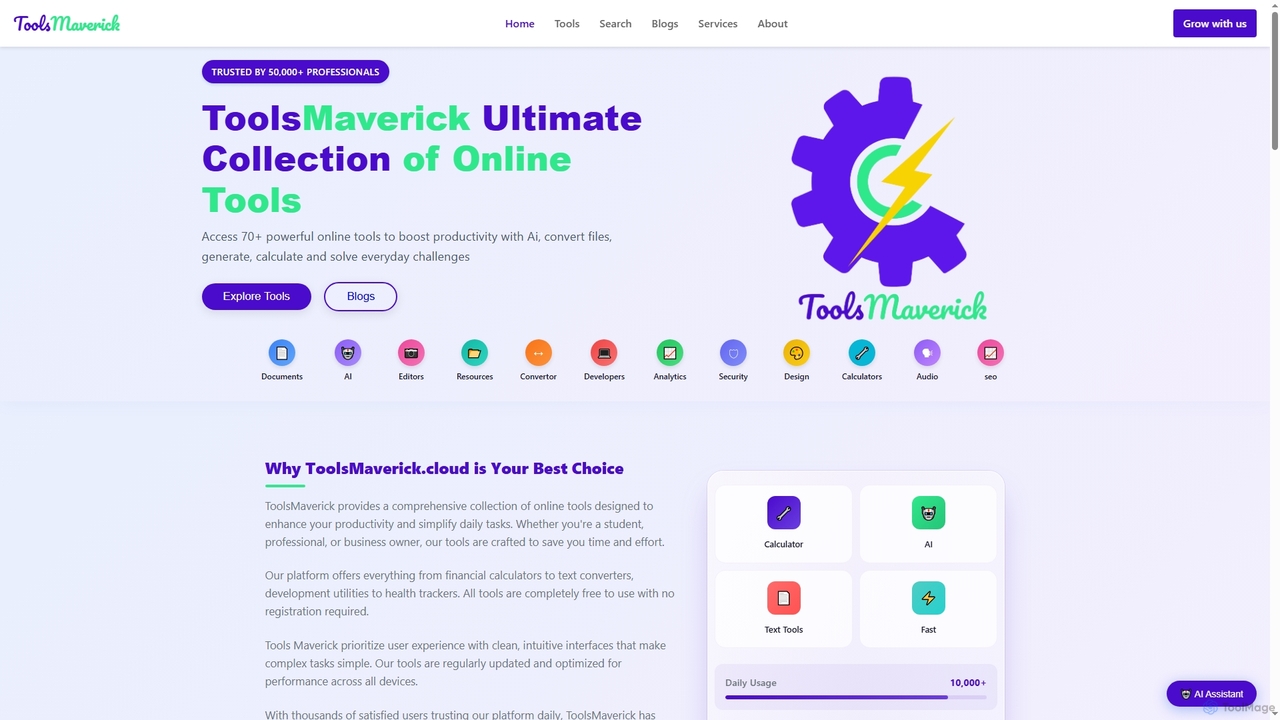
ToolsMaverick

ToolsMaverick is a comprehensive, free online platform offering over 70 diverse utilities, including powerful AI tools, calculators, converters, SEO aids, and development tools. Designed for simplicity, it requires no sign-up, features no ads, and provides immediate access to enhance productivity for professionals, students, and everyday users.

Content Analysis
Visits 3.5KFavorites 118Likes 121
Rune
Freemium

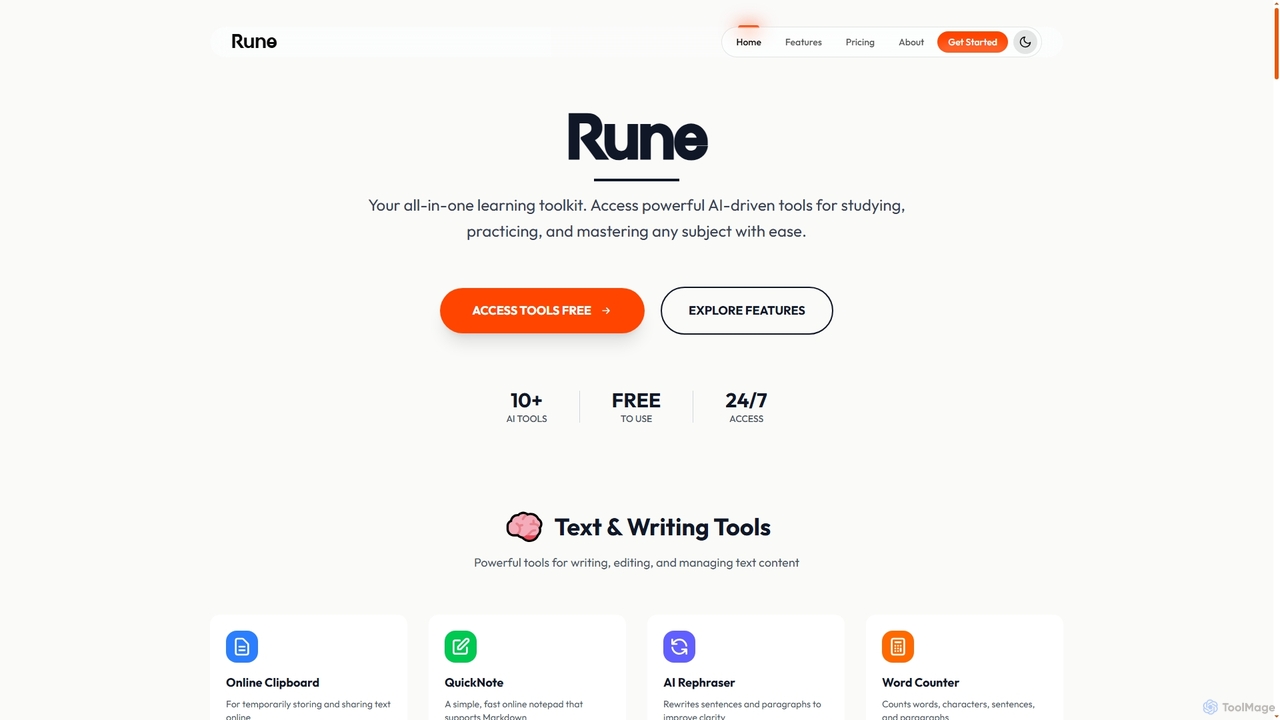
Rune

Rune is a comprehensive online toolkit offering over 80 AI-powered tools for productivity, learning, and daily tasks. It provides free utilities for PDF, image, text, video, and developer needs, designed for students, professionals, and institutions seeking efficient digital solutions.

Unit Converters
Visits 11.9KFavorites 85Likes 81
LoanSim
Free

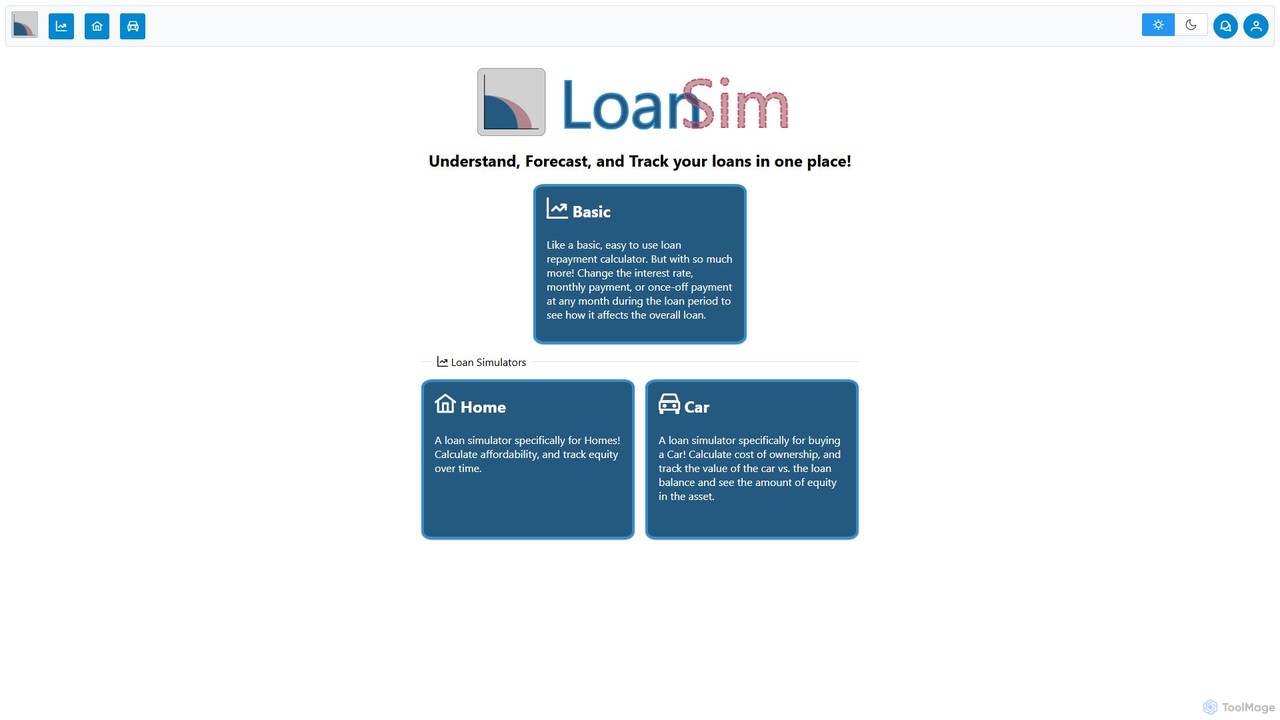
LoanSim

LoanSim is a dynamic financial simulator for understanding, forecasting, and tracking various loans. It offers specialized calculators for home, car, and basic loans, allowing users to model changes in interest rates, payments, and see the long-term impact on their finances.

Mortgage Calculator
Visits 4KFavorites 99Likes 89

About Calculators

Calculators are AI-powered tools that extend beyond traditional arithmetic to perform complex computations, estimations, and predictive analyses. These tools leverage machine learning algorithms and vast datasets to provide highly accurate and context-aware results. They are invaluable for professionals and individuals needing quick, intelligent insights for financial planning, scientific research, business forecasting, and personal decision-making. Their ability to process nuanced inputs and learn from patterns offers a significant advantage over traditional calculation methods.

Core Features

  • Predictive Modeling: Forecast future trends and outcomes based on historical data.
  • Scenario Analysis: Evaluate different "what-if" situations to assess potential impacts.
  • Data Integration: Connect with various data sources for real-time calculations and insights.
  • Natural Language Input: Understand and process complex queries posed in plain language.
  • Customizable Algorithms: Adapt calculation logic to specific industry needs or user preferences.

Use Cases

Financial analysts use them for risk assessment and investment portfolio optimization. Marketing teams leverage them for campaign ROI prediction and budget allocation. Individuals can use them for personalized financial planning, such as retirement savings projections or loan affordability.

How to Choose

Consider the specific calculation needs: simple estimations vs. complex predictive models. Evaluate data integration capabilities: does it connect with your existing systems? Assess the level of customization and algorithm transparency required. Check for user-friendliness and the clarity of result interpretation.

Featured tool rankings

Calculators use cases

1

Financial Investment Portfolio Optimization

Financial advisors use AI calculators to analyze market trends, predict asset performance, and optimize client investment portfolios for maximum returns and minimal risk. By inputting client risk tolerance and financial goals, the tool suggests diversified asset allocations, rebalancing strategies, and potential future values, significantly enhancing decision-making and client outcomes.

2

Real Estate Valuation and Market Analysis

Real estate professionals employ AI calculators to estimate property values, analyze market trends, and predict future price movements. These tools consider various factors like location, property features, historical sales data, and economic indicators, providing accurate valuations for buying, selling, or investment decisions, streamlining the appraisal process.

3

Project Budgeting and Resource Allocation

Project managers utilize AI calculators to forecast project costs, estimate resource needs, and optimize budget allocation. By analyzing past project data, task dependencies, and team availability, the calculator provides realistic budget projections and resource schedules, helping to prevent cost overruns and ensure timely project completion.

4

Personalized Health Risk Assessment

Individuals use AI-powered health calculators to assess their risk for certain conditions based on lifestyle, genetics, and medical history. These tools provide personalized insights into potential health challenges and suggest preventive measures or lifestyle adjustments, empowering users to make informed decisions about their well-being.

5

Marketing Campaign ROI Prediction

Marketing managers leverage AI calculators to predict the return on investment (ROI) for various marketing campaigns before launch. By inputting budget, target audience, and channel data, the tool estimates potential reach, conversion rates, and revenue, enabling data-driven budget allocation and campaign optimization.

6

Carbon Footprint Estimation for Businesses

Environmental consultants and businesses use AI calculators to estimate their organizational carbon footprint. By inputting data on energy consumption, travel, and supply chain activities, the tool calculates emissions, identifies high-impact areas, and suggests strategies for reduction, aiding in sustainability reporting and goal setting.

Calculators FAQ

What are AI Calculators?

AI Calculators are advanced computational tools that utilize artificial intelligence, particularly machine learning, to perform complex calculations, estimations, and predictions. Unlike traditional calculators that follow fixed rules, AI calculators can learn from data, understand context, and provide more nuanced, data-driven insights for various applications, from finance to health.

How do AI Calculators differ from traditional calculators?

Traditional calculators perform operations based on predefined formulas and direct inputs, yielding exact results. AI Calculators, however, leverage algorithms to analyze patterns in large datasets, make predictions, and offer estimations with varying degrees of probability. They can handle ambiguous inputs, learn over time, and provide insights beyond simple arithmetic, such as forecasting or risk assessment.

What are the main benefits of using AI Calculators?

The primary benefits include enhanced accuracy in complex scenarios, the ability to make predictions and forecasts, automation of intricate calculations, and personalized insights. They save significant time by processing vast amounts of data quickly and can uncover hidden patterns that human analysis might miss, leading to better decision-making.

Who can benefit most from using AI Calculators?

Professionals in finance, marketing, engineering, healthcare, and research can greatly benefit from AI calculators for tasks like risk assessment, market forecasting, resource optimization, and scientific modeling. Individuals can also use them for personal finance planning, health assessments, and educational purposes, making complex data more accessible.

How do I choose the right AI Calculator for my needs?

To choose the right AI Calculator, consider the specific type of calculation or prediction you need (e.g., financial, scientific, business). Evaluate its data integration capabilities, the transparency of its algorithms, and its ease of use. Also, check for customization options, security features, and whether it offers clear, interpretable results for your specific domain.