ToolMage
Sign in

Best 2 Ai Chatbot AI tools for Character

Popular Ai Chatbot AI tools in Character include Kamoto.AI and Kaley.ai, helping you work more efficiently.

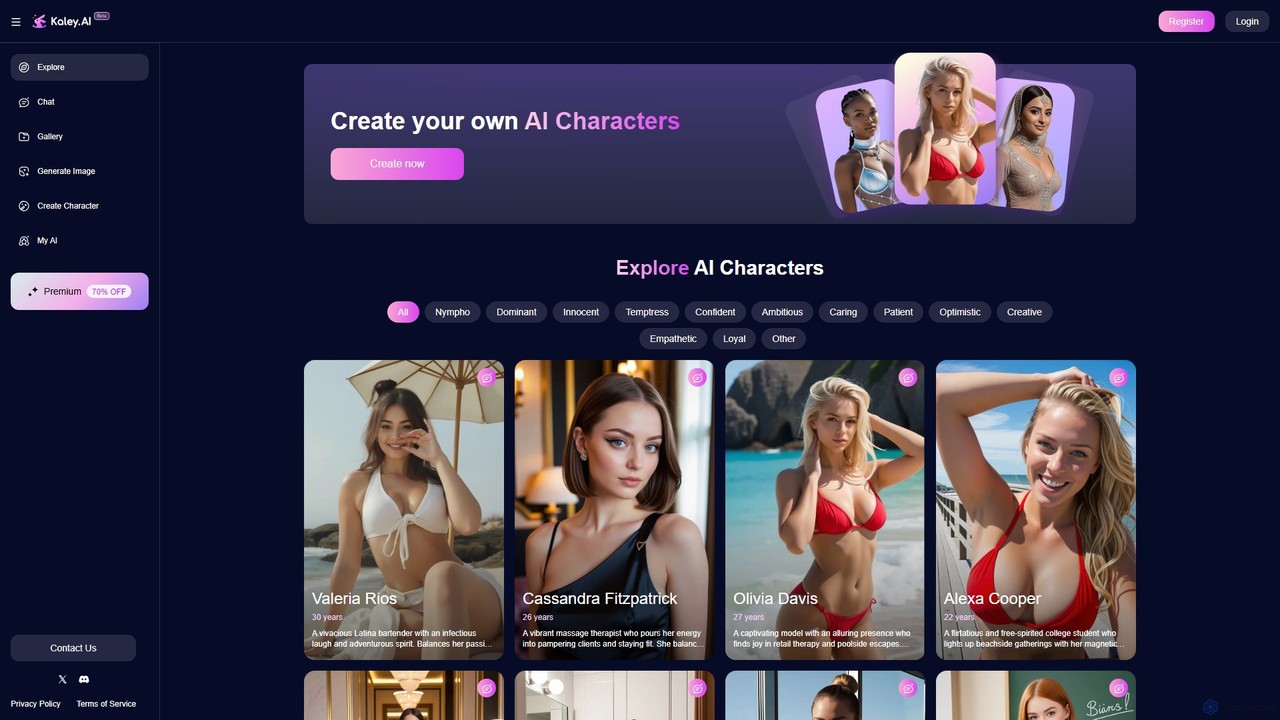
Kaley.ai
Freemium

Kaley.ai

Kaley.ai is an advanced AI platform for creating, exploring, and interacting with unique AI characters. Generate virtual influencers, companions, and friends with distinct personalities and backstories. Perfect for personal entertainment, creative storytelling, and brand marketing.

Ai Chatbot
Visits 4.3KFavorites 106Likes 116
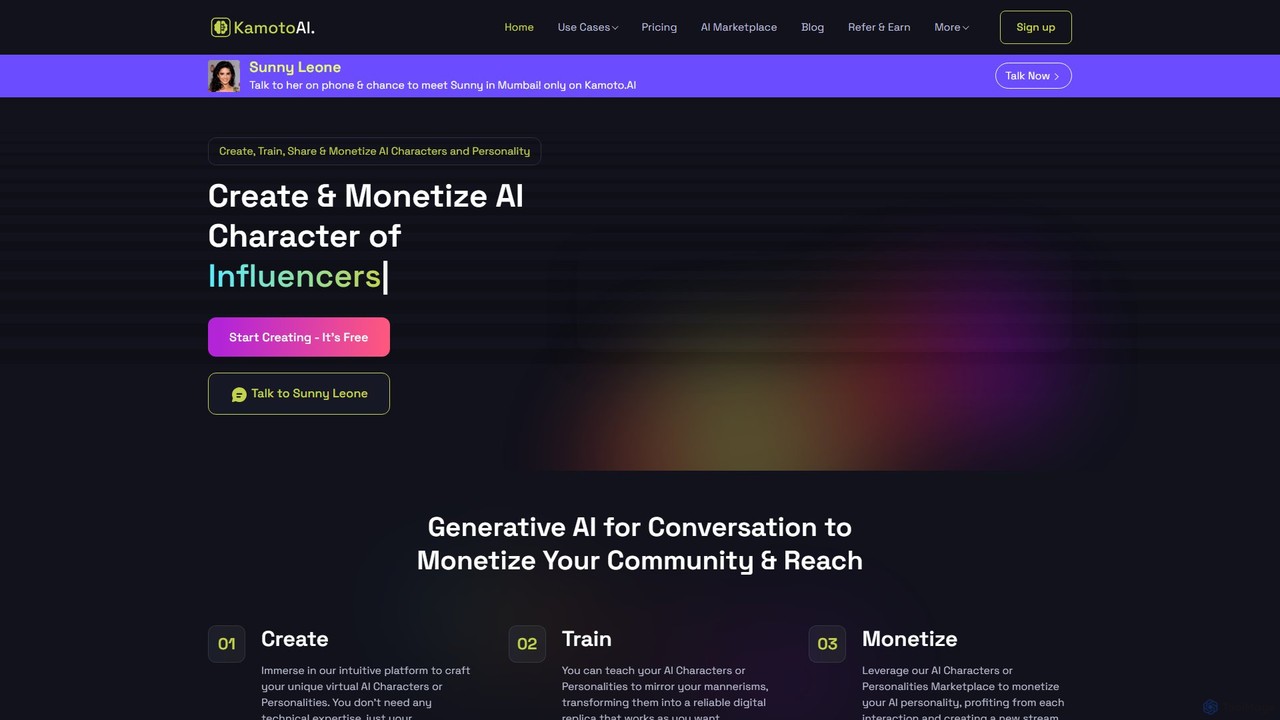
Kamoto.AI
Freemium

Kamoto.AI

Kamoto.AI is a powerful no-code platform that enables users to create, train, share, and monetize unique AI characters and personalities. It's designed for a wide range of users, from individuals and influencers to game developers and businesses, allowing them to build digital replicas, engaging NPCs, or brand ambassadors. The platform features an intuitive creation process, a marketplace for monetization, and API integration for seamless use in other applications.

Ai Chatbot
Visits 5.2KFavorites 127Likes 127

About Ai Chatbot

AI Chatbots are AI-powered tools designed to simulate human-like conversations through text or voice. Leveraging advanced Natural Language Processing (NLP) and Machine Learning, they understand user intent, process queries, and generate relevant responses. These intelligent agents enhance customer service, automate routine tasks, and provide instant information across various platforms, acting as interactive digital characters within the broader AI landscape.

Core Features

  • Natural Language Understanding (NLU): Accurately interprets user input, including complex queries and varying linguistic styles.
  • Contextual Memory: Maintains conversation history to provide coherent and relevant responses throughout a dialogue.
  • Multi-channel Deployment: Can be integrated across websites, messaging apps, social media, and voice assistants.
  • Personalization: Adapts responses and recommendations based on user data, preferences, and past interactions.
  • Integration Capabilities: Connects with CRM, knowledge bases, and other business systems for comprehensive support.

Use Cases

AI Chatbots are widely adopted in industries requiring scalable and efficient communication. They serve as virtual assistants for customer support, handling FAQs, troubleshooting, and guiding users through processes. In sales, they qualify leads and offer product recommendations. For internal operations, they automate HR queries and IT support, significantly reducing response times and operational costs.

How to Choose

When selecting an AI Chatbot, prioritize its Natural Language Understanding (NLU) accuracy and language support for your target audience. Evaluate its integration capabilities with your existing CRM, knowledge management systems, and communication channels. Consider the ease of customization and training for your specific use cases, along with scalability, security features, and the overall pricing model to ensure it meets both current and future needs.

Featured tool rankings

Ai Chatbot use cases

1

Automating Customer Support Inquiries

Customer service departments utilize AI chatbots to provide 24/7 support, instantly answering frequently asked questions, guiding users through troubleshooting steps, and processing basic requests. This reduces agent workload, improves response times, and ensures consistent service availability, especially during peak hours or outside business hours.

2

Lead Qualification and Sales Engagement

Sales and marketing teams deploy chatbots on websites to engage visitors, gather essential information, and qualify leads based on predefined criteria. The chatbot can ask targeted questions, provide product information, and even schedule demos or connect high-value leads directly to a human sales representative, streamlining the sales funnel.

3

Internal HR and IT Helpdesk Support

Organizations use AI chatbots to automate responses to common employee queries regarding HR policies, benefits, payroll, or IT issues like password resets and software installation guides. This provides immediate assistance to employees, reduces the burden on HR and IT staff, and ensures quick access to critical information.

4

Personalized Product Recommendations

E-commerce platforms integrate AI chatbots to offer personalized shopping experiences. By analyzing user browsing history, purchase patterns, and direct inquiries, the chatbot can suggest relevant products, compare options, and guide customers towards suitable purchases, enhancing engagement and potentially increasing conversion rates.

5

Educational Tutoring and Language Learning

In educational settings, AI chatbots act as virtual tutors or language learning partners. They can answer student questions, provide explanations, offer practice exercises, and give instant feedback. This personalized learning support helps students grasp concepts at their own pace and practice conversational skills in a low-pressure environment.

6

Content Generation and Idea Brainstorming

Content creators and marketers leverage AI chatbots to assist with brainstorming ideas, drafting initial content outlines, generating social media captions, or even writing short articles. By providing prompts, users can quickly receive diverse suggestions and accelerate the content creation process, serving as a creative co-pilot.

Ai Chatbot FAQ

What are AI Chatbots?

AI Chatbots are computer programs designed to simulate human conversation through text or voice interfaces. They utilize Artificial Intelligence, specifically Natural Language Processing (NLP) and Machine Learning, to understand user input, interpret intent, and generate relevant, human-like responses. Their primary goal is to automate communication, provide information, and perform tasks interactively.

How do AI Chatbots differ from traditional rule-based chatbots?

AI Chatbots use advanced NLP and machine learning to understand context, sentiment, and varied user expressions, allowing for more flexible and human-like conversations. In contrast, traditional rule-based chatbots operate on predefined scripts, keywords, and decision trees, only responding to exact matches. AI chatbots can handle complex, open-ended queries, while rule-based bots are limited to specific, anticipated questions.

What are the key benefits of using AI Chatbots for businesses?

Businesses benefit from AI Chatbots through 24/7 customer support, leading to improved customer satisfaction and reduced response times. They automate routine tasks, freeing human agents for complex issues, thus lowering operational costs. Chatbots also enhance lead generation, personalize user experiences, and provide valuable insights from conversation data, driving efficiency and growth.

How can I choose the right AI Chatbot for my needs?

To choose the right AI Chatbot, first define your specific use cases and target audience. Evaluate the chatbot's Natural Language Understanding (NLU) capabilities, language support, and ability to integrate with your existing systems (CRM, knowledge base). Consider its customization options, scalability, security features, and the vendor's support. Finally, assess the pricing model and ease of deployment.

Can AI Chatbots understand and respond in multiple languages?

Yes, many advanced AI Chatbots are designed with multilingual capabilities. They can be trained to understand and generate responses in various languages, often leveraging machine translation or dedicated language models. This allows businesses to provide consistent support and engagement to a global audience, breaking down language barriers and expanding their reach effectively.