ToolMage
Sign in

Best 3 Character AI tools

Popular Character AI tools include Kamoto.AI, Kaley.ai, and Holoworld AI, helping you work more efficiently.

Kaley.ai
Freemium

Kaley.ai

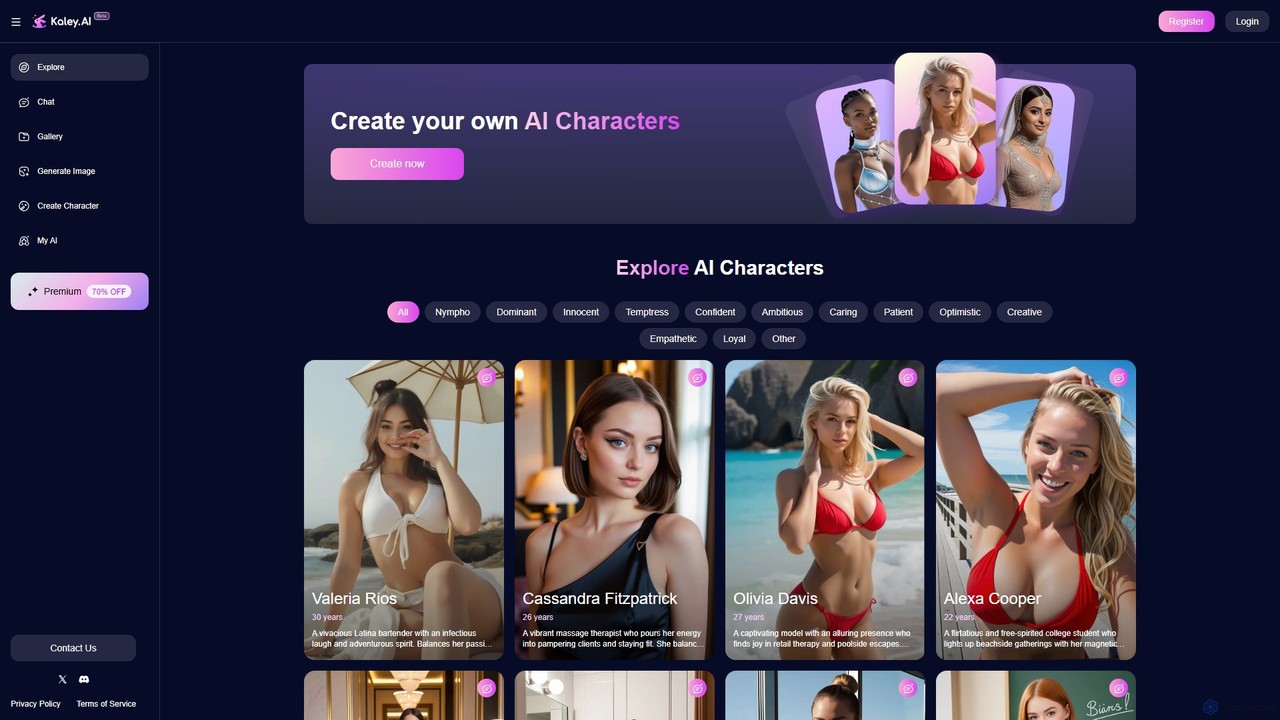
Kaley.ai is an advanced AI platform for creating, exploring, and interacting with unique AI characters. Generate virtual influencers, companions, and friends with distinct personalities and backstories. Perfect for personal entertainment, creative storytelling, and brand marketing.

Ai Chatbot
Visits 3.5KFavorites 99Likes 111
Holoworld AI
Freemium

Holoworld AI

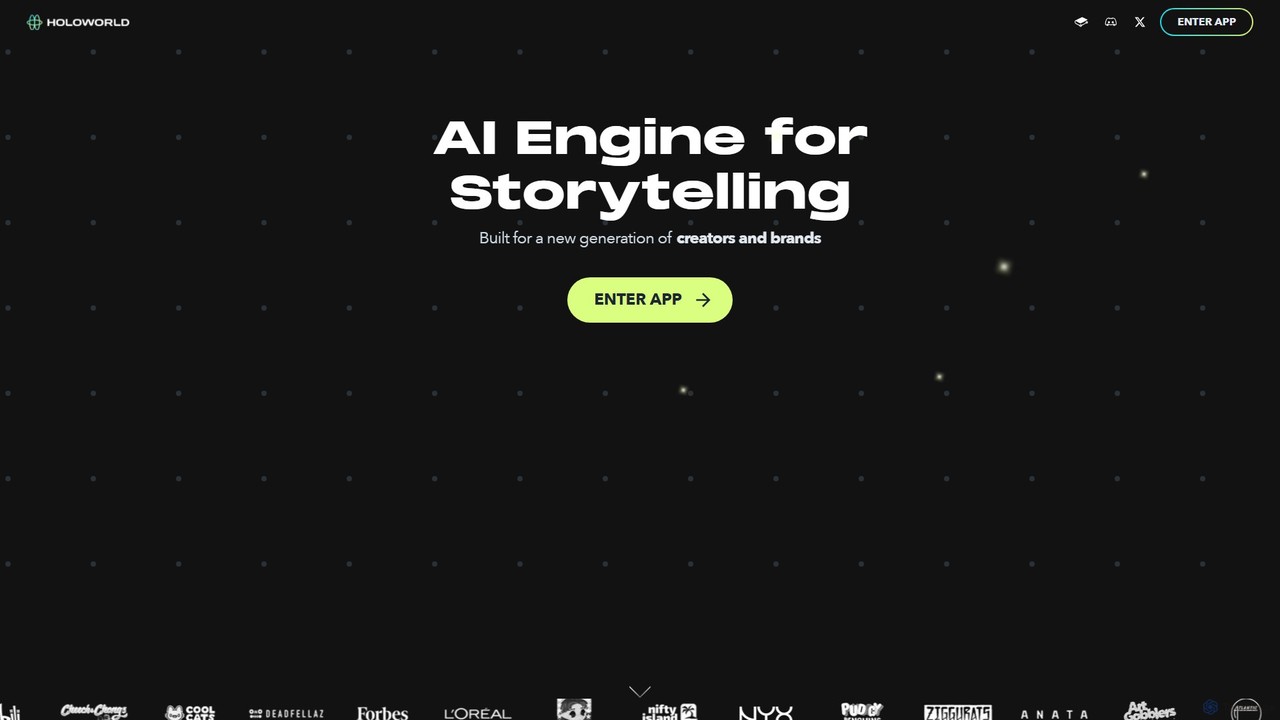
Holoworld AI is a powerful platform for creating and interacting with lifelike AI characters. Design unique personalities, knowledge bases, and skills, then deploy them in videos, livestreams, and immersive experiences. It's built for creators, brands, and developers to pioneer a new era of generative culture and storytelling.

Ai Character
Visits 3.4KFavorites 111Likes 118
Kamoto.AI
Freemium

Kamoto.AI

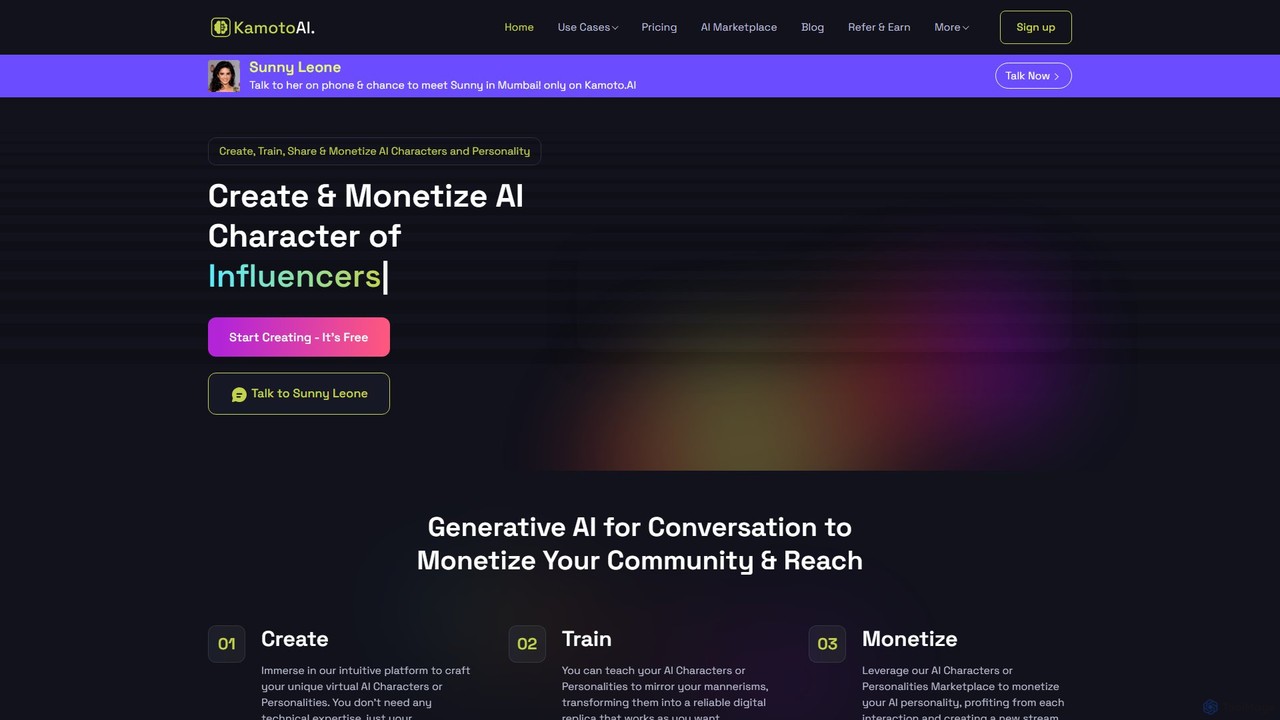
Kamoto.AI is a powerful no-code platform that enables users to create, train, share, and monetize unique AI characters and personalities. It's designed for a wide range of users, from individuals and influencers to game developers and businesses, allowing them to build digital replicas, engaging NPCs, or brand ambassadors. The platform features an intuitive creation process, a marketplace for monetization, and API integration for seamless use in other applications.

Ai Chatbot
Visits 4.4KFavorites 120Likes 124

About Character

Character AI tools are AI-powered platforms designed to create, animate, and interact with virtual characters or digital personas. These tools leverage advanced artificial intelligence, including natural language processing (NLP), computer vision, and machine learning, to imbue digital entities with unique personalities, emotional expressions, and conversational abilities. They enable users to develop highly realistic and interactive virtual beings for a wide range of applications, from entertainment and education to customer service and virtual companionship, enhancing user engagement and immersion.

Core Features

  • Personality Generation: Define and generate unique character traits, backstories, and behavioral patterns.
  • Dialogue Systems: Enable natural, context-aware conversations through advanced NLP and speech synthesis.
  • Emotional Expression: Animate characters with realistic facial expressions, body language, and voice modulation to convey emotions.
  • Animation & Movement: Control character movements, gestures, and actions, often with motion capture or procedural animation.
  • Memory & Learning: Allow characters to remember past interactions and learn from new data to evolve their responses.

Use Cases

Character AI tools are invaluable for creators and businesses looking to bring digital entities to life. They are widely used in game development for creating dynamic NPCs, in virtual reality for immersive experiences, and in marketing for interactive brand ambassadors. These tools also find application in educational platforms for virtual tutors and in mental health support for empathetic digital companions.

How to Choose

When selecting a Character AI tool, consider the desired level of realism and customization for your characters, including visual fidelity and personality depth. Evaluate the complexity and naturalness of its dialogue system, as well as its ability to express emotions and perform animations. Assess integration capabilities with existing platforms and the ease of use for character creation and management. Finally, compare pricing models and the scalability of the solution to meet future demands.

Featured tool rankings

Character use cases

1

Creating Interactive Game NPCs

Game developers utilize Character AI to design non-player characters (NPCs) with dynamic personalities and context-aware dialogue. By defining an NPC's backstory and traits, developers can generate unique responses and behaviors, making game worlds more immersive. This allows for complex interactions, side quests, and evolving relationships, significantly enhancing player engagement beyond static scripts.

2

Developing Virtual Brand Ambassadors

Marketing teams employ Character AI to create engaging virtual brand ambassadors for digital campaigns and customer interactions. These AI characters can represent a brand's voice and values, interact with customers on websites or social media, and provide personalized product information. This approach offers a novel way to build brand loyalty and deliver consistent messaging across various touchpoints.

3

Enhancing Educational Virtual Tutors

Educators and e-learning platforms use Character AI to develop intelligent virtual tutors that provide personalized learning experiences. These AI characters can explain complex concepts, answer student questions in real-time, and adapt their teaching style based on individual progress. This fosters a more engaging and accessible learning environment, especially for self-paced studies.

4

Facilitating Mental Wellness Companions

Healthcare innovators leverage Character AI to create empathetic digital companions for mental wellness support. These AI characters can engage users in supportive conversations, offer guided mindfulness exercises, and provide a non-judgemental space for emotional expression. While not replacing human therapists, they offer accessible, round-the-clock support for managing stress and anxiety.

5

Producing Dynamic Storytelling Characters

Content creators and filmmakers use Character AI to generate and animate characters for interactive narratives, animated shorts, or virtual productions. By inputting character descriptions and dialogues, they can quickly prototype scenes, explore different emotional arcs, and bring stories to life with expressive digital actors. This streamlines the animation process and opens new avenues for creative storytelling.

6

Simulating Realistic Training Scenarios

Organizations in fields like customer service, sales, or emergency response use Character AI to create realistic virtual scenarios for training purposes. Trainees can interact with AI characters simulating difficult customers or high-stress situations, practicing their communication and decision-making skills in a safe environment. This provides valuable hands-on experience without real-world risks.

Character FAQ

What are Character AI tools?

Character AI tools are advanced platforms that use artificial intelligence to create, animate, and interact with virtual characters or digital personas. They leverage technologies like natural language processing, machine learning, and computer vision to give these characters unique personalities, emotional depth, and the ability to engage in natural conversations. Their core purpose is to bring digital entities to life for various interactive applications.

How do Character AI tools work?

Character AI tools typically work by combining several AI components. Natural Language Processing (NLP) enables characters to understand and generate human-like text and speech. Machine learning models are trained on vast datasets to develop personality traits and behavioral patterns. Computer vision and animation engines then translate these internal states into visual expressions, body language, and movements, creating a cohesive and interactive digital being.

What are the main applications of Character AI?

Character AI has diverse applications across many sectors. In entertainment, they create dynamic NPCs for games and interactive storytelling. In education, they serve as virtual tutors. Businesses use them as virtual assistants or brand ambassadors for customer engagement. They also find use in mental wellness as empathetic companions and in training simulations for realistic role-playing scenarios, enhancing user interaction and immersion.

How do Character AI tools differ from traditional chatbots?

While both involve conversational AI, Character AI tools go beyond traditional chatbots by focusing on creating a holistic digital persona. Chatbots primarily handle text-based queries and provide information based on predefined rules or basic NLP. Character AI, however, integrates personality, emotional expression, visual animation and memory, aiming for a more human-like and immersive interactive experience, making the character feel like a distinct entity rather than just an information provider.

What should I consider when choosing a Character AI tool?

When selecting a Character AI tool, evaluate the level of realism and customization offered for character appearance and personality. Assess the naturalness and complexity of its conversational capabilities, including emotional intelligence and memory. Consider its integration options with your existing platforms, the ease of use for character creation, and the scalability of the solution to support your project's growth. Finally, review the pricing structure and available support.