
ToolMage
Sign in

Best 1 Parenting AI tools for Children

Popular Parenting AI tools in Children include Synthesis, helping you work more efficiently.

Synthesis
Freemium

Synthesis

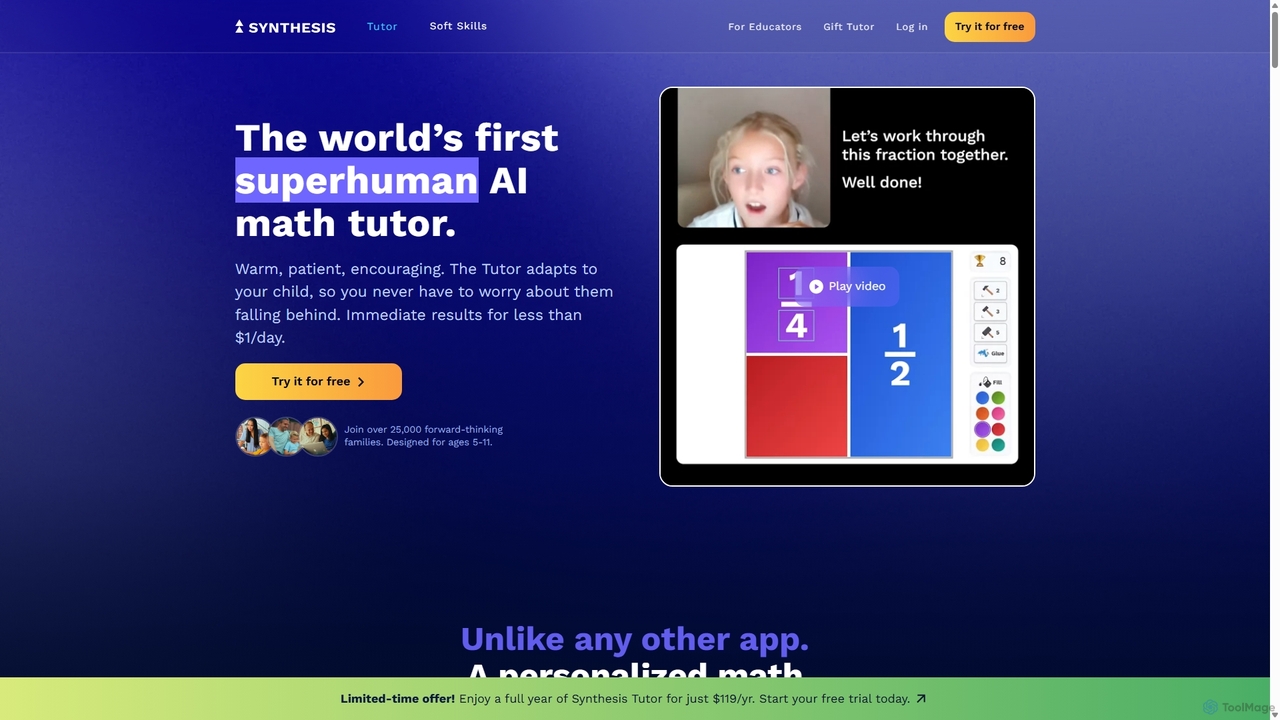
Synthesis is an advanced educational platform, born at SpaceX, designed to develop future problem-solvers. It offers two main products: Synthesis Tutor, an AI-powered math companion for ages 5-11 that makes learning fun and adaptive, and Synthesis Teams, a collaborative game-based program for ages 8-14 that teaches critical thinking, leadership, and teamwork through complex simulations.

Parenting
Visits 6.4KFavorites 130Likes 122

About Parenting

AI Parenting tools are applications designed to support parents by leveraging artificial intelligence for personalized guidance and task management. These tools analyze data such as a child's age, sleep patterns, and developmental milestones to offer tailored advice and actionable insights. They serve as a digital assistant for modern parents, helping to navigate the challenges of child-rearing with data-driven suggestions and automated support. From tracking growth to generating bedtime stories, these tools aim to simplify daily parenting responsibilities.

Core Features

  • Personalized Advice: Delivers customized recommendations for sleep, feeding, and activities based on the child's specific data.
  • Developmental Tracking: Monitors and charts key milestones in cognitive, physical, and social development against standard benchmarks.
  • Schedule & Routine Management: Helps create and maintain consistent daily schedules for naps, meals, and playtime.
  • AI Content Generation: Creates unique bedtime stories, answers children's questions, or suggests learning activities.
  • Behavioral Insights: Analyzes logged data to identify patterns in a child's behavior and offer potential strategies for parents.

Use Cases

These tools are particularly valuable for new parents seeking guidance, busy working parents needing to optimize schedules, and caregivers looking for creative ways to engage with children. They are used for sleep training, meal planning for picky eaters, finding age-appropriate educational content, and getting quick answers to common parenting questions.

How to Choose

When selecting an AI Parenting tool, consider the age range it covers to ensure it matches your child's needs. Prioritize tools with strong data privacy policies to protect your family's information. Check if the advice is backed by pediatric or child development experts. Finally, decide whether you need a specialized tool for one purpose (like sleep) or an all-in-one assistant.

Featured tool rankings

Parenting use cases

1

Personalized Sleep Training Guidance

New parents struggling with an infant's erratic sleep schedule can use an AI parenting tool for support. They log feeding times, nap durations, and nighttime awakenings into the app. The AI analyzes this data to identify patterns and generates a customized, step-by-step sleep training plan. The plan adapts daily based on the baby's progress, offering timely advice on creating a consistent bedtime routine and managing sleep regressions, helping both baby and parents get more rest.

2

Generating Custom Bedtime Stories

A parent wants to create a unique bedtime story for their child who is fascinated by knights and friendly dragons. Instead of reading the same book again, they use an AI tool. They input prompts like 'a brave knight named Alex' and 'a funny, purple dragon'. The AI instantly generates an original, age-appropriate story incorporating these elements, complete with a positive moral. This fosters creativity and makes bedtime a more engaging and personalized experience.

3

Tracking Developmental Milestones

Parents of a toddler use an AI app to monitor their child's growth. They log new achievements, such as saying their first words, taking their first steps, or solving a simple puzzle. The tool visualizes this progress on a developmental timeline, comparing it to standard milestones for that age. It also suggests age-appropriate activities, like building with blocks or reading picture books, to encourage the next set of skills, giving parents confidence that their child is on the right track.

4

Answering a Child's Curious Questions

A parent is faced with a barrage of 'why' questions from their inquisitive preschooler, such as 'Why is the sky blue?'. Using an AI parenting assistant, the parent can quickly get a simple, accurate, and age-appropriate explanation. The AI breaks down complex topics into easy-to-understand concepts for a young child. This not only satisfies the child's curiosity but also helps the parent provide educational answers confidently, turning everyday moments into learning opportunities.

5

Planning Nutritious Weekly Meals

A busy parent needs to plan healthy meals for their picky-eater toddler. They use an AI tool, inputting the child's age, dietary restrictions (like a dairy allergy), and a list of preferred foods. The AI then generates a balanced, seven-day meal plan complete with simple recipes that are both nutritious and appealing to young children. It can also create a corresponding grocery list, saving the parent significant time on planning and ensuring the child receives a varied and healthy diet.

6

Finding Local, Kid-Friendly Activities

A family is looking for a weekend activity. Instead of endlessly searching online, they use an AI parenting app. They input their location, their children's ages (e.g., 4 and 7), and interests like 'outdoors' and 'animals'. The AI assistant cross-references this with local event listings, weather forecasts, and user reviews. It then suggests a list of suitable options, such as a visit to a nearby petting zoo with good reviews or a nature trail suitable for young children, complete with opening times and directions.

Parenting FAQ

What are AI Parenting tools?

AI Parenting tools are digital applications that use artificial intelligence to provide parents with personalized support. They function as assistants by analyzing data you provide—such as your child's age, sleep logs, and developmental progress—to offer tailored advice, track milestones, and help manage daily routines. Common features include sleep training guidance, activity suggestions, meal planners, and content generators for things like bedtime stories.

How do I choose the right AI Parenting tool?

To choose the right tool, consider these factors:

  • Age Focus: Ensure the tool is designed for your child's specific age group, whether they are an infant, toddler, or older child.
  • Data Privacy: Review the app's privacy policy to understand how your family's sensitive data is stored and used.
  • Expert Backing: Look for tools whose advice and content are developed or reviewed by pediatricians, child psychologists, or developmental experts.
  • Features vs. Simplicity: Decide if you want an all-in-one app with many features or a simpler, specialized tool that does one thing well, like sleep tracking.
Are AI Parenting tools a substitute for professional medical advice?

No, absolutely not. AI Parenting tools are designed to be supportive aids, not medical devices. They can provide general guidance, track data, and offer suggestions based on common patterns. However, they cannot diagnose conditions or replace the personalized care and expertise of a pediatrician or child development specialist. Always consult a qualified healthcare professional for any health concerns regarding your child.

What kind of data do AI Parenting tools collect?

AI Parenting tools typically collect data that you voluntarily provide. This can include your child's name, date of birth, gender, and specific logs related to their daily life. Common data points are:

  • Feeding Logs: Time, duration, and type (breastfeeding, bottle, solids).
  • Sleep Data: Nap times, nighttime sleep duration, and awakenings.
  • Developmental Milestones: Dates when skills like crawling, walking, or talking are achieved.
  • Health Information: Records of vaccinations, height, and weight.

It is crucial to read the privacy policy of any tool to understand exactly what data is collected and how it is protected.

How do AI Parenting tools differ from general productivity apps?

While general productivity apps like calendars or note-takers can help with organization, AI Parenting tools are highly specialized. The key difference is their built-in, domain-specific knowledge. They are pre-loaded with information about child development, nutrition, and sleep science. This allows them to not just store data, but to analyze it within a parenting context and provide relevant, actionable insights and suggestions that a generic app cannot offer.