
ToolMage
Sign in

Best 1 Critical Thinking AI tools for Cognitive Enhancement

Popular Critical Thinking AI tools in Cognitive Enhancement include Thinkable, helping you work more efficiently.

Thinkable
Paid

Thinkable

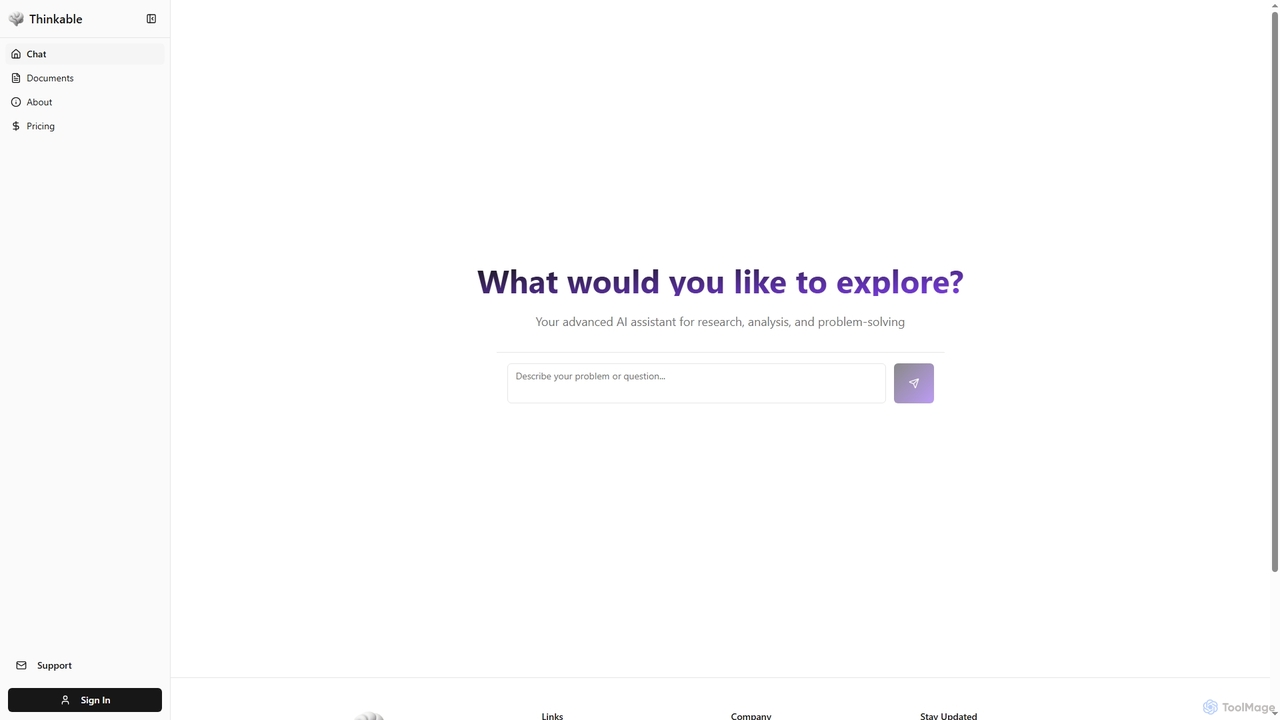
Thinkable is an advanced AI thinking companion designed to enhance human intelligence through deep research, analysis, and problem-solving. It leverages cognitive science principles to foster active learning, personal growth, and critical thinking, adapting to your unique learning style for effective information absorption and retention.

Critical Thinking
Visits 5.7KFavorites 160Likes 154

About Critical Thinking

AI Critical Thinking tools are a specialized category of software designed to help users analyze information, identify logical fallacies, and uncover cognitive biases. These tools leverage Natural Language Processing (NLP) to deconstruct arguments, evaluate the strength of evidence, and highlight inconsistencies within a text. They are invaluable for students, researchers, and professionals who need to make well-reasoned judgments based on complex information. Unlike broader cognitive enhancement tools, critical thinking platforms focus specifically on improving the quality and structure of reasoning.

Core Features

  • Argument Analysis: Deconstructs text to identify premises, supporting evidence, and conclusions, often creating a visual map of the argument's structure.
  • Logical Fallacy Detection: Automatically scans for and flags common errors in reasoning, such as ad hominem, straw man, or circular arguments.
  • Bias Identification: Detects emotionally loaded language, unsubstantiated claims, and patterns indicative of cognitive biases like confirmation bias.
  • Evidence Evaluation: Assesses the relevance and strength of evidence presented to support a claim, helping users distinguish strong support from weak assertions.

Use Cases

These tools are widely used in academia for analyzing research papers, in journalism for fact-checking articles, and in the legal field for deconstructing legal briefs. Businesses also use them to evaluate market reports and strategic proposals, ensuring decisions are based on sound logic rather than flawed assumptions.

How to Choose

When selecting a critical thinking tool, consider the depth of its analysis—does it simply flag issues or provide detailed explanations? Evaluate its integration capabilities, such as browser extensions or document uploads. Also, check the comprehensiveness of its fallacy and bias database and ensure the user interface provides clear, actionable feedback.

Critical Thinking use cases

1

Analyzing Academic Research Papers

A graduate student is writing a literature review and needs to critique several complex scientific papers. They use an AI critical thinking tool to upload the PDFs. The tool automatically maps out each paper's core argument, identifies the key premises and conclusions, and highlights the evidence used. It also flags potential logical fallacies in the authors' reasoning and points out sentences with weak evidential support, allowing the student to formulate a more insightful and rigorous critique, saving hours of manual analysis.

2

Fact-Checking News and Media Content

A journalist is investigating a controversial online article before publishing a response. They input the article's URL into a critical thinking tool. The AI scans the text for emotionally charged language, unsubstantiated claims, and logical fallacies commonly used in propaganda. It cross-references key statements with reliable data sources and fact-checking websites. The resulting report provides the journalist with a clear overview of the article's weaknesses, enabling them to write a well-supported, evidence-based rebuttal quickly.

3

Evaluating Business Proposals and Reports

A project manager receives a detailed proposal for a new software implementation. To ensure a sound decision, she uses a critical thinking tool to analyze the document. The AI deconstructs the proposal's arguments, highlighting key assumptions in the ROI calculations and market analysis. It flags sections where the vendor's claims are not supported by concrete data, identifying potential confirmation bias. This systematic analysis helps the manager ask more targeted questions and negotiate a better contract based on logic, not just persuasive language.

4

Strengthening Legal Arguments and Briefs

A law student is preparing for a moot court competition and wants to find weaknesses in the opposing counsel's brief. They use an AI critical thinking tool to analyze the document. The tool identifies the logical structure of the opponent's argument, flags any formal or informal fallacies, and highlights claims that lack sufficient legal precedent as evidence. This allows the student to focus their rebuttal on the most vulnerable points, constructing a more robust and persuasive counter-argument that is logically sound.

5

Improving Personal Decision-Making

An individual is facing a major life choice, such as whether to accept a new job offer in a different city. They write down their reasoning, including pros and cons. Using a critical thinking tool, they analyze their own text. The AI highlights potential cognitive biases, such as overemphasizing the benefits due to confirmation bias or being overly influenced by recent negative experiences (recency bias). By seeing their own thought process objectively analyzed, they can re-evaluate their decision with greater clarity and confidence.

6

Debunking Online Misinformation

A user on social media encounters a viral post with alarming claims about a public health issue. Instead of sharing it, they copy the text into a critical thinking AI tool. The tool immediately flags several fallacies, such as an 'appeal to authority' using a non-expert source and 'anecdotal evidence' presented as scientific fact. It also identifies emotionally manipulative language designed to create fear. This quick analysis empowers the user to recognize the post as misinformation and helps prevent its further spread.

Critical Thinking FAQ

What are AI Critical Thinking tools?

AI Critical Thinking tools are specialized software applications that use artificial intelligence, particularly Natural Language Processing (NLP), to analyze text for its logical soundness. Their primary function is to help users identify logical fallacies, detect cognitive biases, and evaluate the structure of arguments. Unlike simple grammar or spell checkers, these tools focus on the quality of reasoning, making them useful for students, researchers, journalists, and anyone needing to assess information rigorously.

How do these tools differ from grammar checkers?

The primary difference lies in their focus. A grammar checker analyzes the surface level of a text: spelling, punctuation, syntax, and style. Its goal is to ensure the writing is clear and grammatically correct. In contrast, a critical thinking tool analyzes the deep structure: the logic, evidence, and reasoning behind the words. It can identify a perfectly grammatical sentence as logically flawed. For example, a grammar checker won't flag a circular argument, but a critical thinking tool is designed specifically to do so.

How should I choose a critical thinking tool?

When selecting a tool, consider the following factors:

  • Analysis Depth: Does the tool simply flag potential fallacies, or does it provide detailed explanations and argument maps to help you understand the reasoning?
  • Content Sources: Can it analyze text you paste in, or does it support URLs, document uploads (like PDF or DOCX), or even have a browser extension?
  • Customization: Can you adjust the sensitivity of the detection or focus on specific types of fallacies or biases relevant to your work?
  • User Interface: Is the feedback presented in a clear, intuitive, and actionable way? A complex interface can hinder rather than help the analysis process.
Can these tools replace human critical thinking?

No, these tools are designed to augment, not replace, human critical thinking. They act as an assistant or a 'second pair of eyes' to help spot potential issues that a human might overlook due to bias, fatigue, or lack of specific training in logic. The final judgment about whether an argument is truly flawed, persuasive, or valid still rests with the user. The tool provides data and highlights potential problems; the user provides context, interpretation, and the ultimate decision.

How do Critical Thinking tools relate to broader Cognitive Enhancement tools?

Critical Thinking tools are a specialized subcategory within the broader field of Cognitive Enhancement. While 'Cognitive Enhancement' can include a wide range of tools—from memory aids like flashcard apps to focus tools like Pomodoro timers—Critical Thinking tools specifically target higher-order reasoning skills. They don't aim to make you remember more or focus longer, but to improve the quality, logic, and objectivity of your thought processes when analyzing information.