ToolMage
Sign in

Best 1 Cognitive Enhancement AI tools

Popular Cognitive Enhancement AI tools include Thinkable, helping you work more efficiently.

Thinkable
Paid

Thinkable

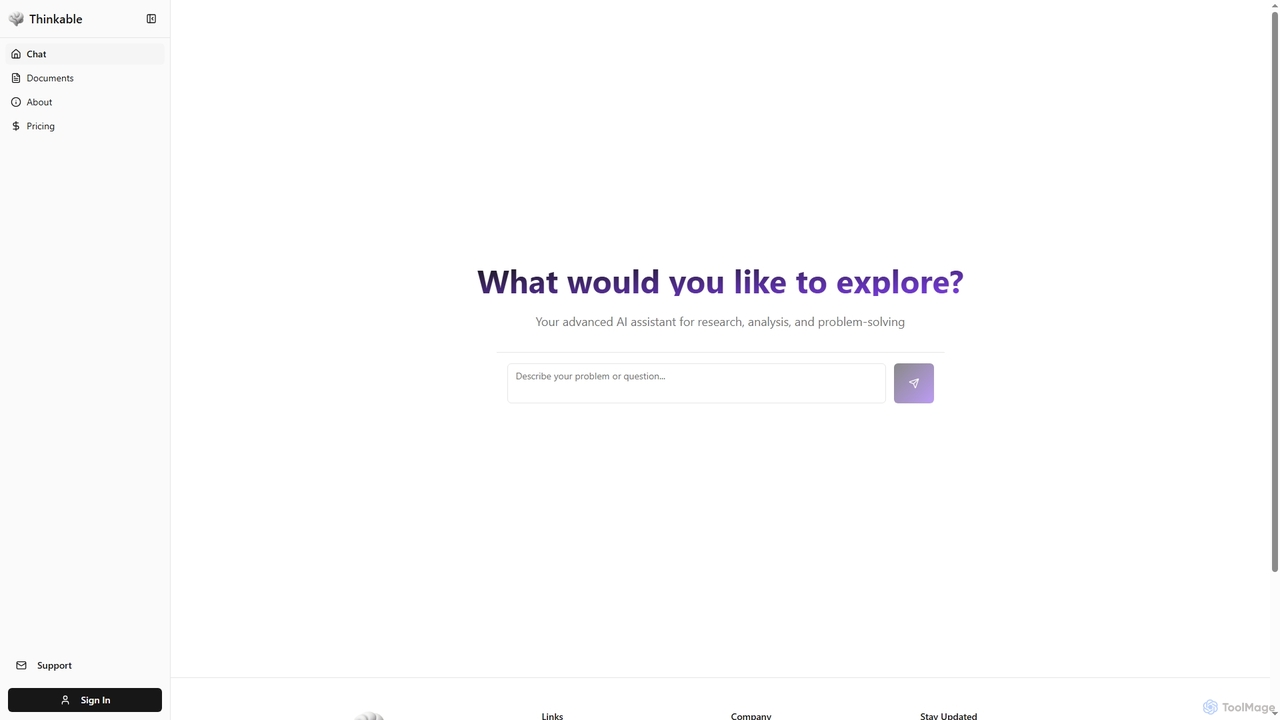
Thinkable is an advanced AI thinking companion designed to enhance human intelligence through deep research, analysis, and problem-solving. It leverages cognitive science principles to foster active learning, personal growth, and critical thinking, adapting to your unique learning style for effective information absorption and retention.

Critical Thinking
Visits 5.4KFavorites 157Likes 152

About Cognitive Enhancement

Cognitive Enhancement tools are a class of AI-powered applications designed to augment and improve human cognitive functions. These tools leverage machine learning algorithms to analyze user behavior, learning patterns, and information intake, providing personalized support for memory, focus, and critical thinking. They are used to manage information overload, accelerate learning, and enhance decision-making capabilities. Unlike standard productivity apps that manage tasks, these tools focus on optimizing the user's internal mental processes.

Core Features

  • Personalized Learning Paths: AI algorithms adapt educational content and review schedules to an individual's learning pace and knowledge gaps.
  • Focus and Attention Management: Tools that monitor digital habits, block distractions, and use techniques like AI-driven timers to promote deep work.
  • Memory Augmentation: Employs methods like intelligent spaced repetition and knowledge graphing to improve information retention and recall.
  • Decision Support Systems: Synthesizes complex data from multiple sources into simplified insights, pros and cons, or weighted recommendations.
  • Knowledge Synthesis: Automatically connects related ideas from notes, articles, and documents to reveal hidden patterns and facilitate understanding.

Use Cases

Cognitive Enhancement tools are widely used by students, researchers, knowledge workers, and lifelong learners. For instance, a graduate student might use a tool to map out complex research topics and identify connections between papers. A professional may use a focus-management app to train their attention span for high-concentration tasks. These tools are also valuable in corporate training for creating adaptive learning modules that improve employee upskilling.

How to Choose

When selecting a Cognitive Enhancement tool, first consider your primary goal: are you aiming to improve memory, focus, or learning speed? Evaluate the scientific methodology or learning principles the tool is based on. Data privacy is crucial, as these tools may handle sensitive personal information. Also, consider its integration capabilities with your existing workflow (e.g., note-taking apps, calendars) and whether the user interface is intuitive and free of distractions.

Cognitive Enhancement use cases

1

Accelerate Learning with AI-Powered Spaced Repetition

A medical student preparing for board exams uses an AI cognitive enhancement tool to optimize their study schedule. After importing lecture notes and textbook chapters, the AI automatically generates flashcards for key concepts. The tool's spaced repetition system (SRS) algorithm then schedules reviews for each card based on the student's recall performance. Cards they struggle with appear more frequently, while mastered concepts are shown less often. This adaptive process ensures information is transferred to long-term memory efficiently, allowing the student to cover a vast amount of material and improve retention rates by focusing effort where it's most needed.

2

Build a Second Brain with AI Knowledge Management

A researcher combating information overload uses an AI-powered knowledge management tool as a 'second brain'. They feed it research papers, articles, and their own thoughts. The AI processes this unstructured data, automatically tagging concepts and creating a knowledge graph that visualizes connections between different ideas. When writing a new paper, the researcher can ask natural language questions like 'What are the main arguments against this theory?' and the AI synthesizes relevant information from their entire knowledge base, providing summaries and direct quotes. This transforms a passive collection of notes into an active, queryable intellectual partner.

3

Enhance Focus for Deep Work Sessions

A software developer uses an AI focus enhancement tool to create an optimal environment for deep work. The tool integrates with their calendar and project management system. Before a coding session, it silences non-essential notifications, blocks distracting websites, and plays focus-enhancing soundscapes. The AI learns the developer's work patterns and identifies times of day when they are most productive, suggesting optimal times for high-concentration tasks. After each session, it provides a report on focus duration and interruptions, helping the developer refine their work habits and progressively increase their capacity for sustained, deep concentration.

4

AI-Assisted Complex Decision Making

A business strategist uses an AI decision support tool to evaluate a potential company acquisition. They input financial reports, market analysis, internal documents, and news articles related to the target company. The AI platform processes all this information, identifies key risks and opportunities, and generates a weighted scorecard based on predefined criteria like financial health, market position, and cultural fit. It also runs simulations to project potential outcomes under different economic scenarios. Instead of spending weeks manually collating and analyzing data, the strategist receives a synthesized, data-driven overview in hours, enabling them to make a more informed and faster strategic decision.

5

Improve Skills with Gamified Brain Training

An individual looking to enhance their problem-solving and memory skills uses an AI-powered brain training app. The app provides a series of engaging games and puzzles designed to target specific cognitive functions like working memory, attention, and mental flexibility. The AI dynamically adjusts the difficulty of the games in real-time based on the user's performance. If they are succeeding easily, the challenge increases; if they struggle, it simplifies. This continuous adaptation keeps the user in a state of 'flow'—optimally challenged and engaged—which is crucial for skill development. The app also tracks progress over time, providing visual feedback and insights into their cognitive strengths and weaknesses.

6

Master Vocabulary with an Adaptive AI Tutor

A language learner uses an AI tutor app to expand their vocabulary for an upcoming proficiency test. Instead of using static word lists, the user reads short articles or watches videos within the app. The AI identifies words the user may not know and presents them in context. The user then practices these new words through AI-generated exercises, such as fill-in-the-blanks and sentence creation. The app tracks which words are mastered and which need more practice, creating a personalized learning deck that evolves with the user's progress. This method is more engaging than traditional flashcards and ensures vocabulary is learned in a practical, contextual manner, improving both recognition and usage.

Cognitive Enhancement FAQ

What are AI Cognitive Enhancement tools?

AI Cognitive Enhancement tools are software applications that use artificial intelligence to help users improve or augment their mental capabilities. Unlike standard productivity apps that manage external tasks, these tools focus on internal processes like memory, focus, learning, and decision-making. They work by personalizing experiences, adapting to user performance, and providing data-driven insights to optimize cognitive function. Common examples include AI-powered spaced repetition apps for learning, focus management tools that block distractions, and knowledge management systems that act as a 'second brain'.

How do I choose the right Cognitive Enhancement tool?

Choosing the right tool depends on your specific goals. Consider these factors:

  • Primary Goal: Identify what you want to improve. Is it long-term memory (choose a spaced repetition tool), daily focus (choose a distraction blocker), or understanding complex topics (choose a knowledge mapping tool)?
  • Scientific Basis: Look for tools based on established cognitive science principles, such as spaced repetition, active recall, or flow state research.
  • Data Privacy: Since these tools learn from your personal data, check their privacy policy to understand how your information is stored and used.
  • Integration: A tool is more effective if it fits into your existing workflow. Check for integrations with calendars, note-taking apps, or web browsers.
  • User Interface: The interface should be simple and intuitive. A complex tool can increase cognitive load, defeating its purpose.
What's the difference between Cognitive Enhancement tools and productivity apps?

The primary difference lies in their focus. Productivity apps (like to-do lists, calendars, project managers) are designed to help you manage external resources: your time, tasks, and projects. They organize your work. Cognitive Enhancement tools, on the other hand, are designed to improve your internal resources: your ability to focus, remember information, and think clearly. A productivity app helps you track what you need to do, while a cognitive enhancement tool helps you develop the mental capacity to do it better. For example, a project manager organizes tasks, while a focus tool trains your brain to concentrate on those tasks without distraction.

Who can benefit from using Cognitive Enhancement tools?

A wide range of individuals can benefit from these tools. Key groups include:

  • Students and Lifelong Learners: To absorb and retain large amounts of information more effectively, optimize study sessions, and understand complex subjects.
  • Knowledge Workers and Researchers: To manage information overload, synthesize research, connect disparate ideas, and facilitate deep work.
  • Professionals in High-Stakes Fields: Such as doctors, lawyers, and financial analysts, who need to make critical decisions based on complex data.
  • Creatives and Writers: To overcome writer's block, organize ideas, and maintain focus during creative sessions.
  • Anyone seeking self-improvement: Individuals looking to improve their memory, increase their attention span, or enhance their problem-solving skills in their daily lives.
Are AI Cognitive Enhancement tools scientifically proven to work?

The effectiveness of these tools varies. Many reputable tools are built on solid, scientifically validated principles from cognitive psychology, such as spaced repetition, active recall, and interleaving. For example, the benefits of spaced repetition for long-term memory are well-documented in academic research. However, the 'brain training' game category has more mixed results, with some studies showing improvements only in the game tasks themselves, not in general cognitive abilities. When choosing a tool, it's beneficial to look for those that are transparent about the scientific research or learning theories underpinning their design. Be cautious of tools that make extraordinary claims without providing evidence.