Community Best in category 1 results Resource Hub AI Tool

Popular AI tools in the Resource Hub field of Community include AI Art Weekly, etc., helping you quickly improve efficiency.

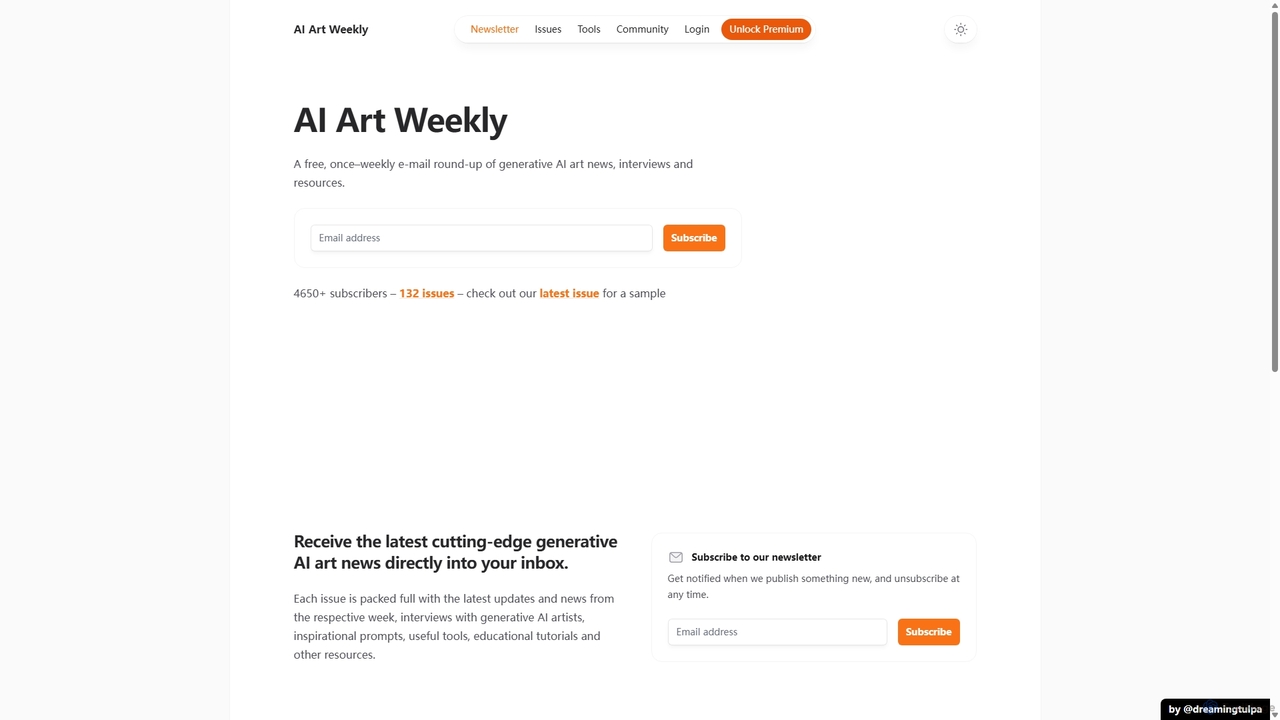
AI Art Weekly

AI Art Weekly

A free weekly newsletter and resource hub for the generative AI art community. It delivers curated news, artist …

8.1K

About Resource Hub

An AI Resource Hub is a centralized platform offering curated learning materials, datasets, documentation, and pre-trained models. As a key component of the AI Community, these hubs provide the foundational knowledge and assets required to learn, build, and deploy artificial intelligence applications. They serve as a structured library, accelerating development by providing access to essential tools and expert-written guides. This consolidation of information helps both beginners and experts stay updated and solve complex problems efficiently.

Core Features

  • Curated Learning Paths: Structured tutorials, courses, and articles designed for various skill levels, from beginner to advanced.
  • Public Datasets & Models: Access to a wide range of high-quality datasets for training and pre-trained models for immediate implementation.
  • Comprehensive Documentation: Detailed API references, SDK guides, and technical articles explaining how to use specific AI tools and platforms.
  • Code Repositories & Snippets: Practical code examples, project templates, and reusable scripts to jumpstart development.
  • Community-Sourced Content: A collection of user-submitted guides, case studies, and best practices that reflect real-world experience.

Use Cases

Resource Hubs are invaluable for students and lifelong learners seeking structured AI education, developers needing quick access to API documentation and code samples, and researchers looking for public datasets to validate their hypotheses. They are also essential for data scientists who need to explore and compare pre-trained models for specific business tasks.

How to Choose

When selecting an AI Resource Hub, consider the scope and depth of its content—does it cover the specific AI domain (e.g., NLP, Computer Vision) you need? Evaluate the quality and freshness of the resources, the clarity of the documentation, and the level of community activity. Also, check if it provides the specific datasets, models, or API access required for your project.

Resource HubUse Cases

1

Onboarding for Aspiring AI Developers

An aspiring developer wants to enter the field of machine learning but doesn't know where to start. They use an AI Resource Hub to find a structured learning path titled 'From Zero to TensorFlow'. The path guides them through foundational concepts, Python programming for AI, and hands-on projects. By following the tutorials and using the provided code snippets, they successfully build and train their first image classification model within a few weeks, gaining the confidence and foundational skills needed for more advanced topics.

2

Accelerating App Development with API Documentation

A mobile app developer needs to integrate a third-party sentiment analysis feature. Instead of spending days trying to understand the API from scratch, she consults the provider's Resource Hub. She finds comprehensive API documentation, complete with request/response examples, authentication guides, and SDKs for her programming language. Using the provided code snippets, she successfully integrates the feature in a matter of hours, not days, significantly reducing development time and ensuring a correct implementation from the start.

3

Finding the Right Dataset for Research

A university researcher is working on a new algorithm for detecting plant diseases from leaf images. To train and validate the algorithm, a large, high-quality, and properly labeled dataset is crucial. They access an academic AI Resource Hub and browse its curated list of public datasets for agriculture. They quickly find the 'PlantVillage' dataset, which contains over 50,000 images. The hub provides direct download links, a description of the data structure, and citations, saving the researcher weeks of searching and data collection effort.

4

Evaluating Pre-trained Models for a Business Use Case

A product manager is tasked with adding a text summarization feature to their company's knowledge management software. Instead of building a model from scratch, they decide to use a pre-trained one. They visit a Resource Hub that hosts a model library. Here, they can compare various summarization models like T5 and BART, read documentation on their performance benchmarks, and even test them with sample text in an interactive demo. This allows the team to quickly select the most suitable model for their needs without investing heavily in research and development.

5

Solving a Technical Problem with Community Guides

A data scientist is struggling with a specific error while fine-tuning a large language model on a custom dataset. The official documentation doesn't cover this edge case. They turn to a community-driven Resource Hub and search for the error message. They find a detailed guide written by another user who encountered the same problem. The guide provides a step-by-step solution, including code modifications and an explanation of the underlying issue. This community-sourced knowledge saves them from days of frustrating debugging.

6

Staying Updated with the Latest AI Research Papers

An AI researcher needs to stay on the cutting edge of their field, which involves constantly reading new academic papers. A specialized Resource Hub aggregates, summarizes, and categorizes the latest papers from top conferences and journals like NeurIPS and arXiv. The researcher uses this hub to set up alerts for keywords relevant to their work. This allows them to efficiently track new developments, understand emerging trends, and find relevant literature for their own publications without having to manually sift through hundreds of papers each week.

Resource HubFrequently Asked Questions