Compliance Best in category 2 results Kyc & Aml AI Tool

Popular AI tools in the Kyc & Aml field of Compliance include Veriff、Shufti Pro, etc., helping you quickly improve efficiency.

Veriff

Veriff

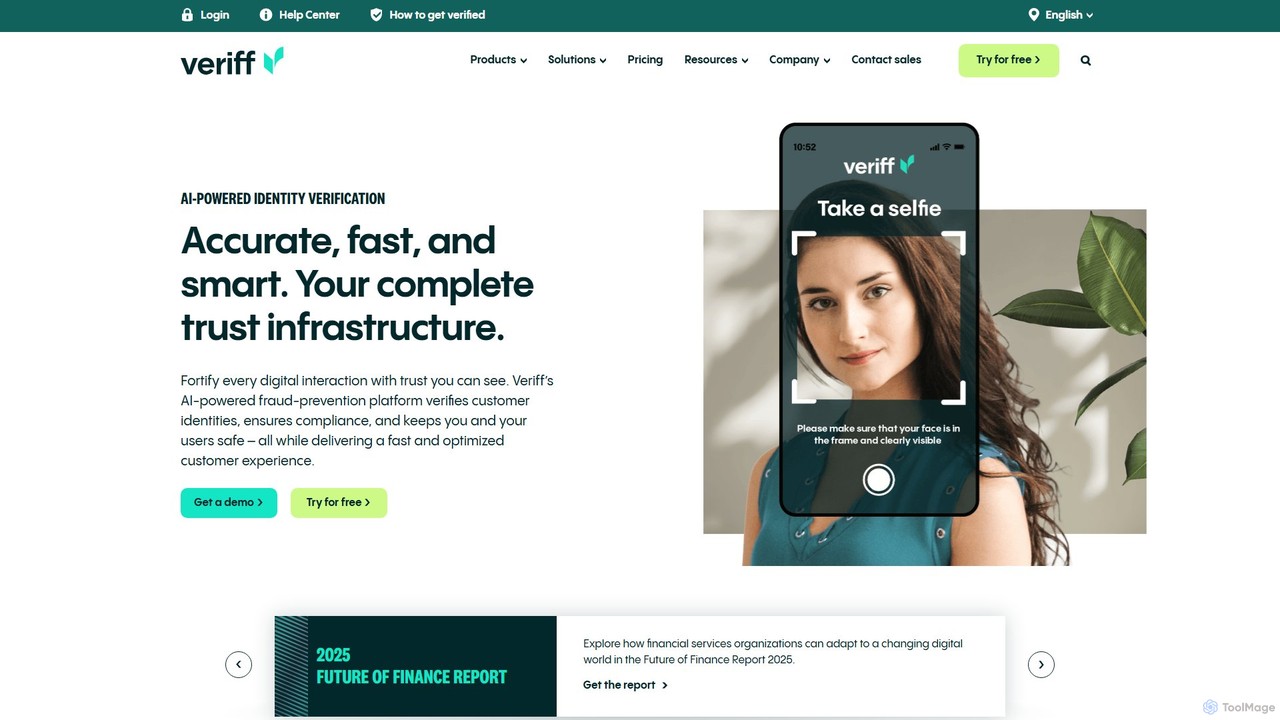
Veriff is an AI-powered identity verification and fraud prevention platform. It helps businesses build trust online by offering …

677.9K
Shufti Pro

Shufti Pro

Shufti Pro is an AI-powered identity verification platform offering comprehensive KYC, KYB, and AML solutions. It uses advanced …

239.2K

About Kyc & Aml

AI KYC & AML tools are a class of solutions that automate and enhance customer identity verification and anti-money laundering screening. These tools leverage technologies like machine learning, computer vision, and natural language processing to analyze documents, biometrics, and transactional data. Their primary value lies in increasing the accuracy and speed of compliance checks, reducing manual workload, and helping organizations meet strict regulatory requirements. By detecting suspicious patterns and verifying identities in real-time, they form a critical defense against financial crime.

Core Features

  • Automated Identity Verification: Uses AI to scan and authenticate ID documents, perform facial recognition, and conduct liveness checks to confirm a user's identity.
  • Transaction Monitoring: Employs machine learning algorithms to analyze transaction patterns in real-time and flag suspicious activities that may indicate money laundering.
  • Adverse Media & Sanctions Screening: Continuously scans global watchlists, sanctions lists, and news sources to identify high-risk individuals or entities.
  • Dynamic Risk Scoring: Automatically calculates and updates customer risk profiles based on their behavior, transaction history, and other data points.

Use Cases

These tools are essential in regulated industries such as banking, fintech, cryptocurrency exchanges, and online gaming. Compliance officers and risk analysts use them to automate customer onboarding, conduct ongoing due diligence, and investigate suspicious activity alerts, ensuring their organization remains compliant and secure.

How to Choose

When selecting an AI KYC & AML tool, consider its accuracy in identity verification and low false-positive rates in transaction monitoring. Evaluate its integration capabilities via API, the breadth of its regulatory and watchlist coverage for your target markets, and its data security protocols to protect sensitive customer information.

Kyc & AmlUse Cases

1

Automated Customer Onboarding for a Digital Bank

A fintech startup aims to provide a frictionless onboarding experience for new customers. They integrate an AI KYC tool into their mobile app. When a new user signs up, the app prompts them to take a photo of their government-issued ID and a selfie. The AI engine instantly verifies the document's authenticity, extracts the data, performs a liveness check on the selfie, and cross-references the user's name against global watchlists. This entire process is completed in under 90 seconds, reducing customer drop-off rates and freeing compliance staff from manual document review.

2

Real-time Transaction Monitoring for a Payment Processor

A payment processing company handles millions of transactions daily. To comply with AML regulations, they deploy an AI-powered monitoring system. The system analyzes transaction data in real-time, looking for anomalies and patterns indicative of money laundering, such as structuring (breaking large transactions into smaller ones) or rapid fund movements between unrelated accounts. When a high-risk pattern is detected, the system automatically generates an alert with a detailed case file for a compliance analyst to review. This approach significantly reduces false positives compared to traditional rule-based systems and allows the team to focus on genuinely suspicious cases.

3

Continuous Risk Screening for a Crypto Exchange

A cryptocurrency exchange needs to manage the high risks associated with digital assets. They use an AI AML tool for continuous monitoring. The tool not only screens new customers but also perpetually monitors existing ones. It scans the blockchain for connections to illicit addresses (e.g., darknet markets, sanctioned wallets), monitors for adverse media mentions related to clients, and checks against updated PEP and sanctions lists daily. If a customer's risk profile changes, for instance, due to a transaction with a high-risk wallet, the compliance team is immediately notified to take action, such as freezing the account or filing a Suspicious Activity Report (SAR).

4

Enhanced Due Diligence for High-Risk Clients

A private wealth management firm deals with high-net-worth individuals, who often require Enhanced Due Diligence (EDD). Manually conducting EDD is time-consuming. The firm uses an AI tool that automates this process by scouring the internet, including news articles, legal records, and corporate filings, to build a comprehensive risk profile. The AI's natural language processing capabilities can understand context, identify ultimate beneficial owners (UBOs), and uncover hidden negative information that a simple keyword search would miss. This provides a deeper, more accurate risk assessment in a fraction of the time, allowing the firm to onboard high-value clients confidently.

5

Screening Partners Against Sanctions Lists in International Trade

An import-export business must ensure it does not trade with sanctioned entities. Manually checking every partner against ever-changing global sanctions lists is impractical. They implement an AI AML solution that integrates with their supplier management system. Before any payment is made, the tool automatically screens the recipient's name and associated entities against hundreds of updated international sanctions and PEP lists. The system provides real-time pass/fail results, creating an auditable trail for compliance and preventing costly violations that could result in massive fines and reputational damage.

6

Streamlining Periodic KYC Reviews for a Bank

A large bank is required to perform periodic KYC reviews on all its customers, a process that consumes thousands of analyst hours. To optimize this, they use an AI KYC tool. The system automatically triggers a review based on a customer's risk level (e.g., annually for high-risk, every three years for low-risk). It then re-verifies customer data against external sources, checks for new adverse media, and analyzes recent transaction behavior. For low-risk customers with no significant changes, the review is automatically completed and logged. Only cases with newly identified risks are flagged for manual review, reducing the manual workload by over 70%.

Kyc & AmlFrequently Asked Questions