Compliance Best in category 1 results Regulatory Monitoring AI Tool

Popular AI tools in the Regulatory Monitoring field of Compliance include Infinidatum, etc., helping you quickly improve efficiency.

Infinidatum

Infinidatum

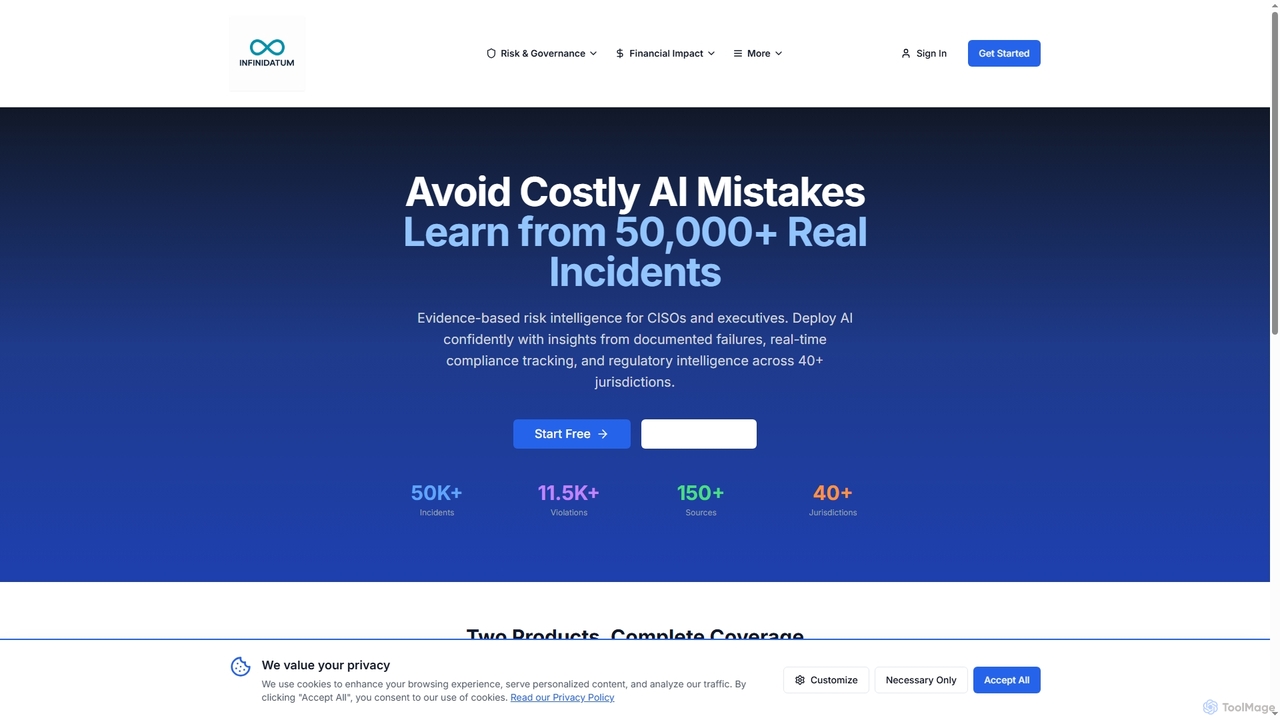
Infinidatum is an enterprise risk intelligence platform that empowers CISOs and executives to confidently deploy AI by providing …

3.4K

About Regulatory Monitoring

Regulatory Monitoring tools are AI-powered platforms that automate the tracking, analysis, and reporting of changes in laws and regulations. These tools utilize Natural Language Processing (NLP) to scan thousands of global sources, such as government websites and legal databases, in real-time. This enables organizations to proactively identify relevant regulatory updates, assess their potential impact, and maintain continuous compliance. As a critical component of a modern compliance framework, they replace manual, time-consuming, and error-prone monitoring processes.

Core Features

  • Automated Horizon Scanning: Proactively identifies and tracks upcoming bills, proposed rules, and potential regulatory shifts.
  • Real-time Change Alerts: Delivers instant, customized notifications when relevant laws or policies are updated.
  • AI-Powered Impact Analysis: Assesses how specific regulatory changes affect business operations, policies, and controls.
  • Centralized Regulatory Library: Aggregates and organizes regulations from multiple jurisdictions into a single, searchable database.
  • Customizable Reporting: Generates tailored reports and dashboards for compliance teams, management, and auditors.

Applicable Scenarios

These tools are essential for highly regulated industries such as finance, healthcare, pharmaceuticals, and energy. Compliance officers, legal counsel, and risk managers use them to monitor bodies like the SEC, FDA, or EPA. For instance, a global bank can track anti-money laundering (AML) rule changes across all its operating countries, while a tech company can monitor evolving data privacy laws like GDPR and CCPA.

Selection Criteria

When choosing a Regulatory Monitoring tool, consider its jurisdictional and industry coverage to ensure it aligns with your business footprint. Evaluate the depth and reliability of its source aggregation. Key factors also include the sophistication of its AI for filtering irrelevant 'noise' and providing accurate impact analysis, as well as its ability to integrate with existing Governance, Risk, and Compliance (GRC) platforms.

Regulatory MonitoringUse Cases

1

Monitoring AML Regulations for a Global Bank

A compliance officer at a multinational bank is responsible for ensuring adherence to Anti-Money Laundering (AML) regulations across 20+ countries. Manually tracking changes is nearly impossible. By using an AI Regulatory Monitoring tool, the officer sets up customized alerts for all relevant financial authorities. The platform automatically scans regulatory updates, flags changes to AML directives, and provides an initial impact summary. This allows the compliance team to immediately analyze the change and update internal policies, reducing the risk of non-compliance fines by over 90% and saving hundreds of hours of manual research each month.

2

Tracking FDA Updates for a Pharmaceutical Company

A regulatory affairs team at a pharmaceutical company needs to monitor all guidance documents and rule changes from the FDA and EMA. Missing a single update on clinical trial reporting standards could delay a drug's approval by months. The team implements a Regulatory Monitoring tool focused on life sciences. The tool provides a daily digest of all relevant changes, categorizes them by drug development stage (e.g., pre-clinical, Phase III), and highlights keywords related to the company's product pipeline. This ensures the team can proactively adapt their submission strategies and maintain a competitive edge.

3

Navigating Data Privacy Laws for a Tech Company

A fast-growing SaaS company operates globally and must comply with a complex web of data privacy laws like GDPR, CCPA, and LGPD. Their small legal team cannot keep up with amendments and new legislation. They adopt a Regulatory Monitoring tool that specializes in technology and privacy law. The system sends alerts whenever a data protection authority issues new guidance or a new privacy bill is introduced. It also provides comparative analysis, showing how a new state-level law in the US differs from GDPR. This enables the team to efficiently update their privacy policy and data processing agreements, avoiding legal risks.

4

Ensuring Environmental Compliance in Manufacturing

An Environment, Health, and Safety (EHS) manager for a manufacturing firm is tasked with ensuring all factories comply with EPA regulations and local environmental laws. These regulations, especially concerning emissions and waste disposal, change frequently. The manager uses a Regulatory Monitoring tool to create a dashboard tracking all relevant federal and state environmental agencies. When a new rule on water discharge limits is proposed, the tool sends an alert with a link to the official document and an AI-generated summary. This early warning allows the manager to assess the operational changes needed and budget for new equipment well before the rule takes effect.

5

Proactive Client Advisory for a Law Firm

A corporate law firm wants to offer more value to its clients in the energy sector. Instead of just reacting to legal issues, they aim to provide proactive advice on upcoming regulatory changes. Using a Regulatory Monitoring tool, the firm's lawyers create personalized watchlists for each major client, tracking agencies like the Department of Energy and FERC. When the tool flags a significant proposed rule change, the lawyers can analyze its implications and alert their client weeks or months in advance, offering strategic guidance. This transforms their service from reactive to consultative, strengthening client relationships and creating new revenue streams.

6

Managing Product Safety Standards for a Global Retailer

A large retail corporation sells thousands of products, from electronics to toys, in dozens of countries. Each product category and country has its own evolving safety standards and labeling requirements. A product compliance team uses a Regulatory Monitoring tool to track updates from consumer product safety commissions worldwide. They set up rules to automatically flag any changes related to specific materials (e.g., plastics, chemicals) or product types in their inventory. This system ensures that no product is sold that violates a new or updated safety standard, protecting consumers and preventing costly product recalls.

Regulatory MonitoringFrequently Asked Questions