Sinaptic
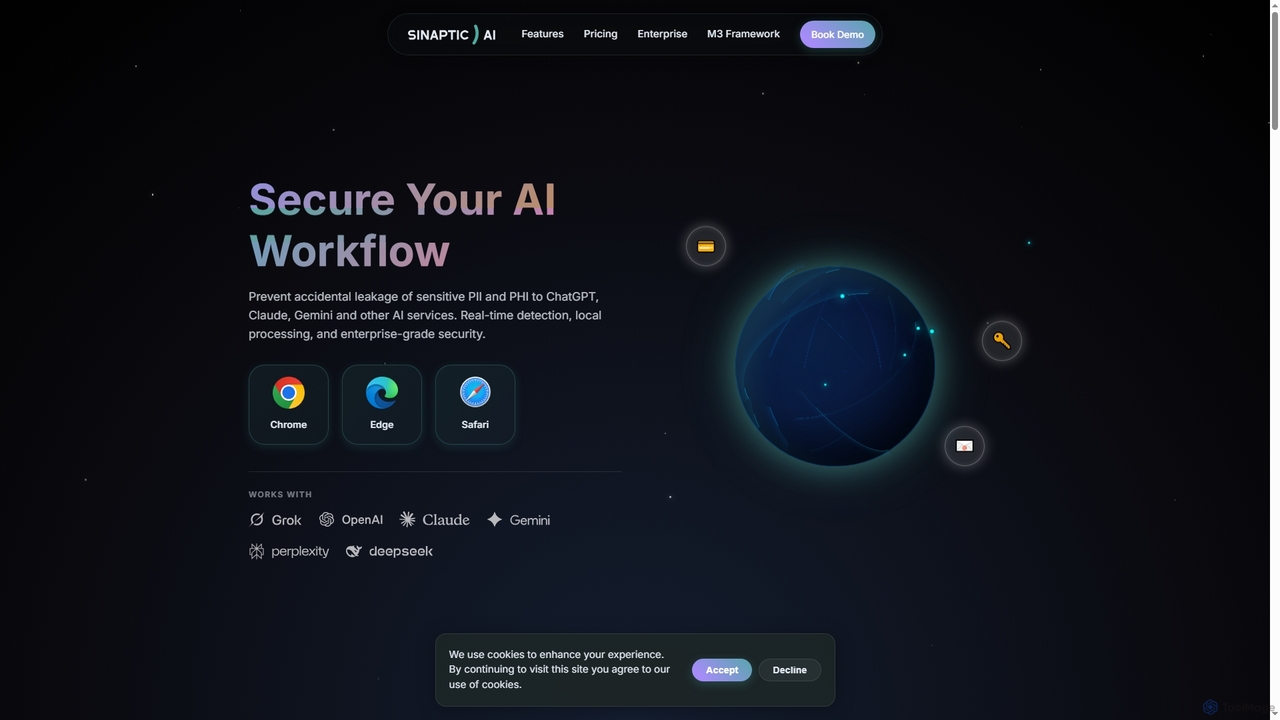
Sinaptic is a browser extension that safeguards sensitive personal and health information (PII/PHI) from accidental leakage to AI …
Sinaptic is a browser extension that safeguards sensitive personal and health information (PII/PHI) from accidental leakage to AI tools like ChatGPT, Claude, and Gemini. It offers real-time detection, local processing for privacy, and enterprise-grade security to ensure data protection in AI workflows.
About Compliance
AI Compliance tools are a class of software that leverages artificial intelligence to automate, monitor, and manage adherence to legal, regulatory, and internal policies. These tools utilize technologies like Natural Language Processing (NLP) and machine learning to analyze vast amounts of data, including documents, communications, and transactions, in real-time. Their primary value lies in proactively identifying potential risks, reducing manual review efforts, and ensuring an organization's operations remain within legal boundaries. This enables businesses to maintain a robust compliance posture with greater accuracy and efficiency.
Core Features
- Regulatory Intelligence: Automatically tracks, interprets, and alerts teams to changes in relevant laws and regulations.
- Communication Monitoring: Scans emails, chats, and calls to detect potential policy violations or misconduct.
- Automated Risk Assessment: Continuously analyzes business processes and data to identify, score, and prioritize compliance risks.
- Policy Management: Digitizes and analyzes internal policies to ensure they are consistent and aligned with external regulations.
- Audit Trail & Reporting: Generates comprehensive, tamper-proof reports and maintains detailed logs for auditors and regulatory bodies.
Applicable Scenarios
These tools are critical in highly regulated industries such as finance (for anti-money laundering and trade surveillance), healthcare (for HIPAA compliance), and pharmaceuticals. Roles like compliance officers, legal counsel, risk managers, and internal auditors use them to automate routine monitoring, manage complex regulatory landscapes, and prepare for audits more effectively.
Selection Criteria
When choosing an AI Compliance tool, consider its industry-specific knowledge base and coverage of relevant regulations. Evaluate its integration capabilities with your existing systems (e.g., CRM, email, cloud storage). Assess the scalability of the platform to handle your data volume and the transparency of its AI models (explainability) for audit purposes. Finally, review the reporting features to ensure they meet regulatory requirements.
ComplianceUse Cases
Automated AML Transaction Monitoring
A compliance team at a financial institution uses an AI tool to monitor thousands of transactions per second for Anti-Money Laundering (AML) violations. The AI analyzes complex patterns and customer behavior, going beyond simple rule-based flags. It identifies networks of suspicious activity and significantly reduces false positives by over 70%, allowing analysts to focus their investigations on high-risk cases that would otherwise be missed, strengthening the bank's defense against financial crime.
Review Marketing Content for Regulatory Adherence
A marketing team in the pharmaceutical industry uses an AI compliance tool to pre-screen all promotional materials, including website copy, social media posts, and brochures. The AI scans for unapproved medical claims, missing risk disclosures, and off-label promotion. This process flags potential issues in minutes, compared to days of manual legal review, ensuring all public-facing content adheres to strict FDA regulations and reducing the risk of costly fines and brand damage.
GDPR/CCPA Data Discovery and Classification
A data privacy officer uses an AI tool to automatically scan all company data repositories, including cloud storage, databases, and email servers. The tool identifies and classifies Personal Identifiable Information (PII) such as names, addresses, and credit card numbers. It generates a real-time data map, which is essential for responding to Data Subject Access Requests (DSARs) and demonstrating compliance with privacy regulations like GDPR and CCPA, saving hundreds of hours of manual data auditing.
Employee Communication Surveillance for Misconduct
A legal department at an investment firm deploys an AI compliance tool to monitor internal communications like emails and chat messages. The AI is trained to detect language patterns, keywords, and sentiment associated with insider trading, market manipulation, or harassment. It flags a small percentage of high-risk communications for human review, providing a proactive way to identify and mitigate employee misconduct before it leads to regulatory investigation, protecting the firm's reputation and finances.
Automated Contract Analysis for Risk Management
A corporate legal team uses an AI tool to analyze thousands of third-party contracts for compliance risks. The AI automatically extracts key clauses, identifies non-standard terms, flags missing liability protections, and compares obligations against internal policies. This process reduces contract review time from weeks to hours, ensures consistency across all agreements, and provides the legal team with a clear dashboard of contractual risks, enabling them to negotiate better terms and prevent future disputes.
Automated Audit Evidence Collection
An internal audit team prepares for a regulatory audit by using an AI compliance tool. Instead of manually gathering evidence from disparate systems, the tool automatically collects, organizes, and links digital evidence (like system logs, user access reports, and policy documents) to specific audit controls. It creates a complete, ready-to-present evidence package, reducing audit preparation time by up to 80% and minimizing the risk of human error in evidence collection, leading to smoother and more successful audits.