ToolMage
Sign in

Best 2 Consumer AI tools

Popular Consumer AI tools include SeatCompare and Deal Protectors, helping you work more efficiently.

SeatCompare

SeatCompare

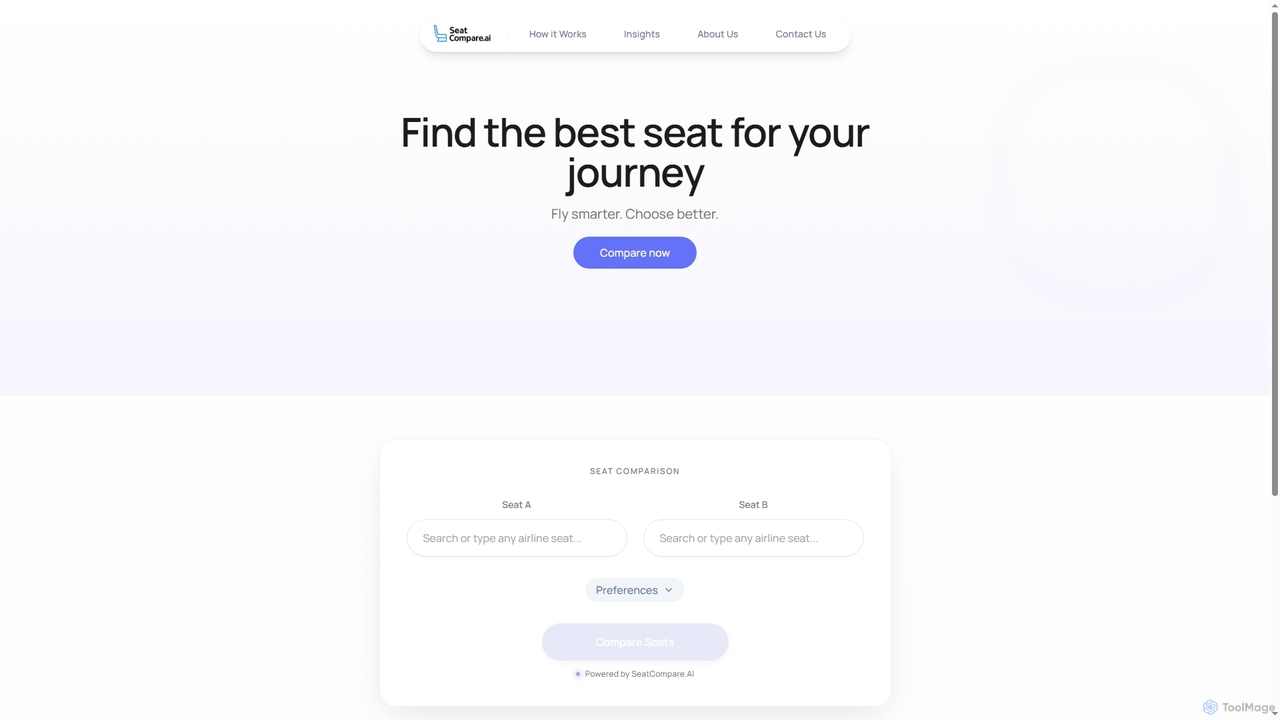
SeatCompare is an AI-powered tool that instantly compares airline seats across various classes, from economy to first class. It helps travelers make informed decisions by analyzing real traveler feedback and airline data to find the best seat for their journey, focusing on comfort, privacy, and overall value.

Travel Assistant
Visits 119.1KFavorites 124Likes 126
Deal Protectors
Free

Deal Protectors

Deal Protectors is a free, AI-powered tool designed to analyze car purchase deals. By comparing your deal's pricing, fees, and financing terms against real-time national and regional market data, it provides a comprehensive report and a simple score. This empowers car buyers with the transparency and confidence needed to negotiate effectively and ensure they are not overpaying.

Shopping
Visits 4.8KFavorites 82Likes 99

About Consumer

Consumer AI tools are AI-powered applications designed to enhance daily life and personal productivity. These tools leverage machine learning, natural language processing, and computer vision to automate tasks, provide personalized recommendations, and facilitate creative expression. They empower individuals to manage information, generate content, improve communication, and optimize various aspects of their personal and professional routines. By simplifying complex processes, Consumer AI makes advanced technology accessible to everyone, regardless of technical expertise.

Core Features

  • Personalized Recommendations: Analyzes user data to suggest content, products, or services tailored to individual preferences.
  • Content Generation: Creates text, images, audio, or video based on user prompts, aiding in creative tasks and communication.
  • Task Automation: Automates repetitive daily tasks like scheduling, email management, or data organization, saving time and effort.
  • Intelligent Assistants: Provides conversational interfaces for information retrieval, task execution, and general support.
  • Data Analysis & Insights: Processes personal data to offer insights into habits, health, or finances, supporting informed decision-making.

Use Cases

Individuals utilize Consumer AI tools for a wide range of personal and professional activities. For instance, a student might use an AI writing assistant to refine essays, while a busy professional could employ an AI scheduler to manage appointments and reminders. Content creators leverage AI for generating social media captions or video scripts, and everyday users benefit from AI-powered smart home devices for enhanced convenience and security.

How to Choose

When selecting Consumer AI tools, consider the specific problem you aim to solve and the features required. Evaluate ease of use, ensuring the interface is intuitive for your technical comfort level. Check for data privacy policies and security measures, as these tools often handle personal information. Finally, compare pricing models and integration capabilities with your existing digital ecosystem to ensure seamless adoption and value.

Consumer use cases

1

Personalized Learning & Skill Development

Students and lifelong learners can leverage Consumer AI tools to create customized study plans and access adaptive learning content. An AI tutor can provide instant feedback on assignments, explain complex concepts in simpler terms, and recommend resources tailored to individual learning styles. This significantly enhances comprehension and accelerates skill acquisition, making education more accessible and engaging.

2

Automated Content Creation for Social Media

Social media managers and individual creators often struggle with generating fresh content consistently. Consumer AI tools can automatically draft engaging captions, suggest relevant hashtags, and even create short video scripts or image concepts based on a given topic or trend. This streamlines the content pipeline, saves hours of brainstorming, and helps maintain a vibrant online presence without constant manual effort.

3

Personal Finance Management & Budgeting

Individuals seeking better control over their finances can use Consumer AI for intelligent budgeting and expense tracking. AI-powered apps analyze spending habits, categorize transactions, and predict future cash flow, offering personalized advice on saving and investment opportunities. This helps users identify areas for cost reduction, set realistic financial goals, and make more informed decisions to improve their financial well-being.

4

Enhanced Personal Productivity & Task Management

Busy professionals and students can leverage Consumer AI to optimize their daily schedules and manage tasks more efficiently. AI assistants can prioritize to-do lists, suggest optimal times for specific activities based on user habits and calendar data, and automate routine communications like email replies or meeting summaries. This reduces mental load, minimizes procrastination, and significantly boosts overall personal productivity.

5

Creative Writing & Storytelling Assistance

Writers, bloggers, and aspiring authors can utilize Consumer AI tools to overcome writer's block and refine their narratives. AI writing assistants can generate plot ideas, expand on character descriptions, suggest stylistic improvements, or even draft entire sections of text based on a given prompt. This accelerates the creative process, provides fresh perspectives, and helps users produce higher-quality, more engaging stories and articles.

6

Smart Home Automation & Daily Convenience

Homeowners can integrate Consumer AI into smart home systems for enhanced convenience and energy efficiency. AI-powered devices can learn household routines, automatically adjust lighting and temperature, manage security systems, and even order groceries when supplies run low. This creates a more responsive and comfortable living environment, reducing manual chores and optimizing resource consumption for a smarter, more effortless daily life.

Consumer FAQ

What are Consumer AI tools?

Consumer AI tools are artificial intelligence applications designed for personal use to enhance daily life, productivity, and creativity. They leverage technologies like machine learning and natural language processing to automate tasks, provide personalized recommendations, generate content, and offer intelligent assistance. These tools aim to simplify complex processes and make advanced AI accessible to individuals for various personal and professional needs, from managing schedules to creating digital art.

How do I choose the right Consumer AI tool for my needs?

When selecting a Consumer AI tool, consider your specific needs and the problem you want to solve. Evaluate the tool's core functionalities, ease of use, and user interface intuitiveness. Prioritize tools with strong data privacy and security measures, especially if personal information is involved. Additionally, check for compatibility with your existing devices and software, read user reviews, and compare pricing models to ensure it offers good value and integrates seamlessly into your routine.

What are the most common functions of Consumer AI tools?

Consumer AI tools offer a diverse range of functions to assist individuals. Common functionalities include:

  • Content Generation: Creating text, images, audio, or video from prompts.
  • Personalized Recommendations: Suggesting products, media, or services based on user preferences.
  • Task Automation: Automating routine tasks like scheduling, email sorting, or data entry.
  • Intelligent Assistance: Providing conversational support, answering questions, and executing commands.
  • Data Analysis: Offering insights into personal finances, health, or habits.

These functions aim to save time, enhance creativity, and improve decision-making for everyday users.

How do Consumer AI tools handle personal data and privacy?

Consumer AI tools often process personal data to provide tailored experiences. Reputable tools adhere to strict data privacy regulations (like GDPR or CCPA) and typically employ encryption and anonymization techniques to protect user information. Users should always review the tool's privacy policy to understand what data is collected, how it's used, and whether it's shared with third parties. Many tools also offer options for users to control their data, such as opting out of data collection or deleting their information.

What are the main benefits of using Consumer AI tools for everyday users?

For everyday users, Consumer AI tools offer several significant benefits. They can dramatically increase personal productivity by automating mundane tasks, freeing up time for more meaningful activities. These tools enhance creativity by providing assistance in writing, design, and content generation. They also offer personalized experiences, from tailored recommendations to adaptive learning, making digital interactions more relevant and efficient. Ultimately, Consumer AI simplifies complex digital tasks, making advanced technology accessible and beneficial for a broader audience.