ToolMage
Sign in

Best 1 Travel Assistant for Artificial Intelligence

Popular Travel Assistant in Artificial Intelligence include SeatCompare, helping you work more efficiently.

SeatCompare

SeatCompare

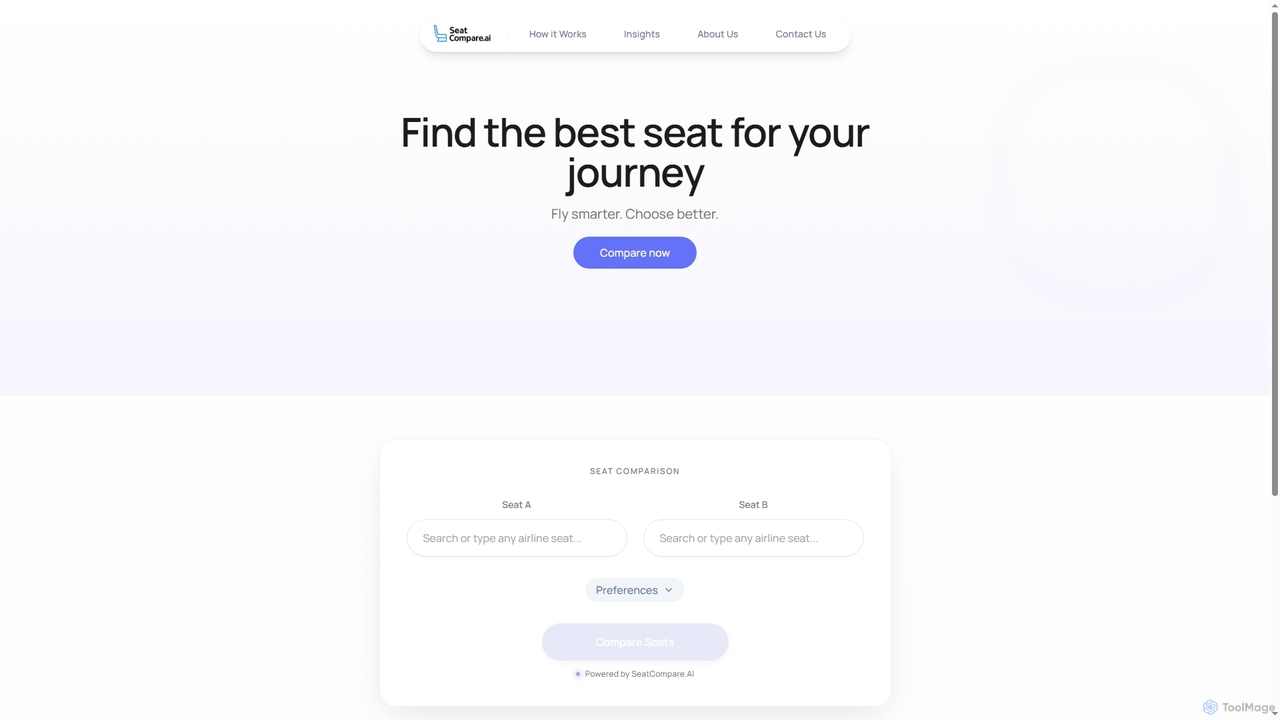
SeatCompare is an AI-powered tool that instantly compares airline seats across various classes, from economy to first class. It helps travelers make informed decisions by analyzing real traveler feedback and airline data to find the best seat for their journey, focusing on comfort, privacy, and overall value.

Travel Assistant
Visits 119.6KFavorites 127Likes 131

About Travel Assistant

Travel Assistant tools are AI-powered platforms designed to streamline and enhance every aspect of travel planning and execution. Leveraging artificial intelligence, these tools analyze vast amounts of data to offer personalized recommendations, automate itinerary creation, and provide real-time updates. They empower travelers to discover destinations, book accommodations, manage logistics, and navigate unfamiliar places with unprecedented ease and efficiency, transforming complex travel into a seamless experience.

Core Features

  • Personalized Itinerary Generation: Creates custom travel plans based on user preferences, budget, and interests.
  • Real-time Updates & Alerts: Provides instant notifications for flight changes, gate information, weather, and local events.
  • Smart Booking & Comparison: Compares prices and availability for flights, hotels, and activities across multiple providers.
  • Destination Discovery & Guides: Suggests new places, offers local insights, and generates detailed guides for exploration.
  • Expense Tracking & Budgeting: Helps manage travel costs, track spending, and adhere to a predefined budget.

Applicable Scenarios

These tools are invaluable for frequent business travelers needing efficient trip management, leisure tourists seeking personalized experiences without extensive planning, and adventure seekers looking for off-the-beaten-path recommendations. They simplify group travel coordination and assist solo travelers in navigating new environments safely and confidently.

How to Choose

When selecting an AI Travel Assistant, consider its integration capabilities with existing booking platforms and calendars, the breadth of its recommendation engine, and its real-time data accuracy. Evaluate the level of personalization offered, user interface intuitiveness, and the availability of offline access for international travel. Also, assess its pricing model and customer support options.

Travel Assistant use cases

1

Streamlining Business Trip Logistics

For corporate professionals, AI Travel Assistants automate the complex process of organizing business trips. Users can input meeting schedules and preferred airlines/hotels, and the AI generates optimized itineraries, handles bookings, and provides expense reports. This significantly reduces administrative burden, allowing professionals to focus on their work rather than logistics, ensuring timely arrivals and efficient use of travel time.

2

Crafting Personalized Leisure Vacations

Leisure travelers can leverage AI Travel Assistants to design unique vacation experiences tailored to their interests. By specifying preferences like "adventure travel," "cultural immersion," or "beach relaxation," along with budget and duration, the AI suggests destinations, activities, and dining options. This eliminates hours of research, delivering a bespoke itinerary that perfectly matches the traveler's desires.

3

Discovering Off-the-Beaten-Path Destinations

Adventure seekers and curious travelers use AI Travel Assistants to uncover less-known gems. By analyzing travel blogs, local reviews, and geographical data, the AI can recommend unique destinations, hidden attractions, and authentic local experiences that might not appear in standard guidebooks. This allows for more adventurous and memorable journeys away from typical tourist traps.

4

Managing Group Travel Coordination

Organizing trips for families or friends can be challenging. AI Travel Assistants simplify this by allowing multiple users to input preferences and availability. The tool then consolidates information, suggests mutually agreeable dates and destinations, and manages shared bookings and expenses. This ensures smooth coordination and minimizes conflicts, making group travel planning stress-free.

5

Real-time Navigation and Local Insights

When exploring a new city, travelers can use AI assistants for real-time navigation, public transport guidance, and recommendations for nearby restaurants or attractions. The AI can also provide cultural tips, language translation, and emergency contact information, acting as a knowledgeable local guide. This enhances safety and allows for more confident and immersive exploration.

6

Optimizing Travel Budget and Expenses

Budget-conscious travelers utilize AI Travel Assistants to track and optimize their spending. The tools can monitor flight and hotel price fluctuations, suggest cheaper alternatives, and categorize expenses in real-time. Users receive alerts when prices drop or when they are nearing their budget limits, helping them stay within financial constraints without compromising on experience.

Travel Assistant FAQ

What are AI Travel Assistants?

AI Travel Assistants are software tools that use artificial intelligence to help users plan, book, and manage their trips. They leverage technologies like natural language processing and machine learning to understand user preferences, provide personalized recommendations for destinations, accommodations, and activities, and automate various aspects of travel logistics, from itinerary creation to real-time updates.

How do AI Travel Assistants personalize recommendations?

AI Travel Assistants personalize recommendations by analyzing a user's past travel history, stated preferences (e.g., budget, travel style, interests), browsing behavior, and even real-time location data. They use machine learning algorithms to identify patterns and suggest relevant destinations, hotels, restaurants, and activities that align with the individual's unique profile, ensuring a highly customized travel experience.

What are the main benefits of using an AI Travel Assistant over traditional planning methods?

The main benefits include significant time savings through automation of research and booking, enhanced personalization with tailored recommendations, and access to real-time information for dynamic adjustments. Unlike traditional methods, AI assistants can process vast amounts of data instantly, offer dynamic pricing alerts, and provide comprehensive support throughout the entire travel journey, from inspiration to post-trip analysis.

Can AI Travel Assistants help with unexpected travel disruptions?

Yes, AI Travel Assistants are highly effective in managing unexpected travel disruptions. They provide real-time alerts for flight delays, cancellations, or gate changes, and can often suggest alternative routes, rebooking options, or nearby accommodation. Some advanced assistants can even proactively re-route or rebook parts of an itinerary based on unforeseen events, minimizing stress and inconvenience for the traveler.

Are AI Travel Assistants suitable for all types of travelers?

AI Travel Assistants are suitable for a wide range of travelers, from solo adventurers and families to business professionals and large groups. While they offer immense value for those seeking efficiency and personalization, their utility can vary. Tech-savvy individuals will find them intuitive, while those preferring human interaction might still opt for traditional travel agents for highly complex or niche travel needs. However, the technology is continuously evolving to cater to diverse preferences.