Artificial Intelligence Best in category 1 results Agent Systems AI Tool

Popular AI tools in the Agent Systems field of Artificial Intelligence include Elixion, etc., helping you quickly improve efficiency.

Elixion

Elixion

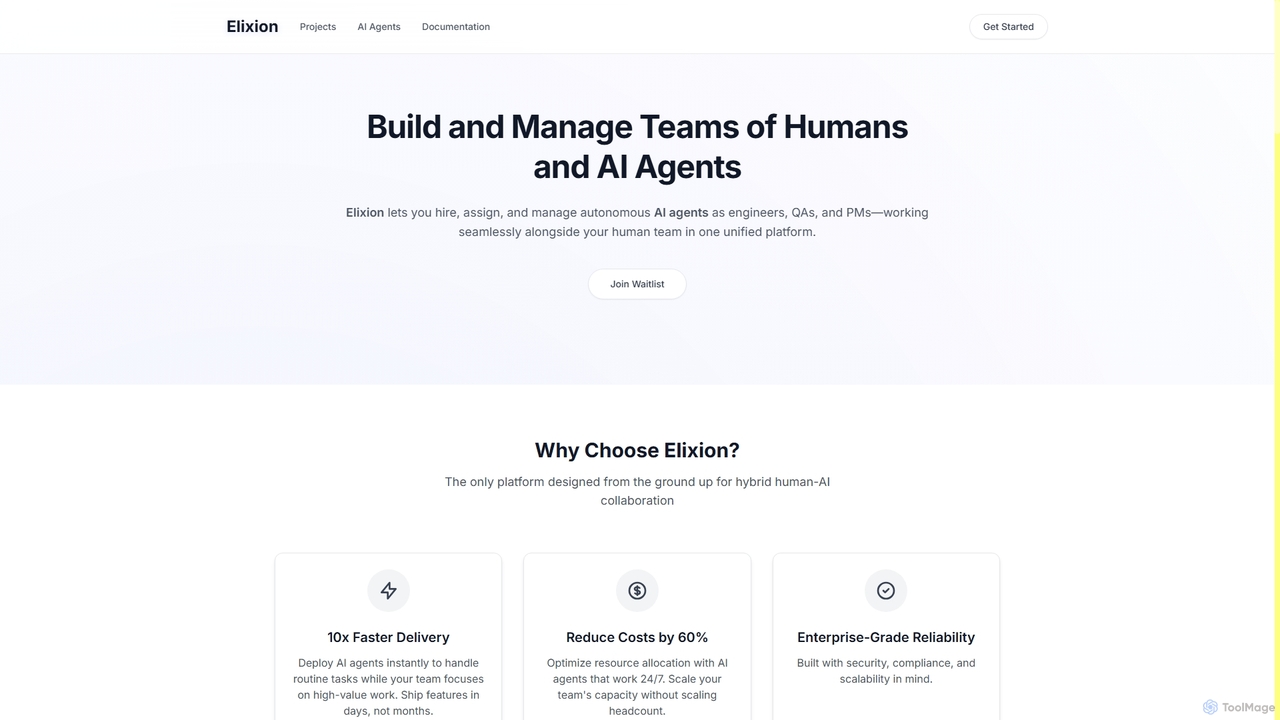
Elixion is an enterprise project management platform that empowers organizations to build and manage hybrid teams of human …

2.8K

About Agent Systems

Agent Systems are AI-powered tools designed to autonomously perceive their environment, make decisions, and execute complex tasks to achieve predefined goals. These systems leverage advanced AI models, often including large language models (LLMs), to perform multi-step reasoning, planning, and self-correction. They provide significant value by automating intricate workflows and enabling proactive problem-solving across various domains.

Core Features

  • Autonomous Goal Execution: Independently breaks down high-level goals into actionable steps and executes them.
  • Tool Integration: Connects and utilizes external tools, APIs, and databases to gather information or perform specific actions.
  • Memory Management: Maintains context and learns from past interactions and experiences for improved future performance.
  • Multi-step Reasoning: Engages in complex logical thought processes to navigate challenges and adapt strategies.
  • Self-Correction & Adaptation: Monitors its own progress, identifies errors, and adjusts its approach to stay on target.

Use Cases

Agent Systems are employed in scenarios requiring intelligent automation and decision-making. For instance, a marketing team might use an agent to research market trends, draft campaign content, and schedule posts across platforms. Developers can deploy agents to automate code generation, testing, and debugging cycles. Businesses leverage them for proactive customer support, where agents can diagnose issues and initiate resolutions without human intervention.

How to Choose

When selecting an Agent System, consider its goal-setting capabilities and autonomy level, ensuring it aligns with your desired automation scope. Evaluate its tool integration ecosystem to confirm compatibility with your existing software and data sources. Assess its reasoning and memory features for handling complex, context-rich tasks. Finally, review its security protocols and ethical guidelines, especially for sensitive applications, to ensure responsible deployment.

Agent SystemsUse Cases

1

Automate Market Research and Content Creation

A marketing strategist can deploy an Agent System to continuously monitor industry news, competitor activities, and social media trends. The agent then synthesizes this data, identifies emerging opportunities, and automatically drafts relevant blog posts, social media updates, or email newsletters, significantly reducing manual research and content production time.

2

Proactive Customer Support and Resolution

Customer service departments can utilize Agent Systems to proactively identify potential customer issues based on usage patterns or feedback. The agent can then initiate troubleshooting steps, access knowledge bases to provide solutions, or even escalate complex cases to human agents with pre-filled context, improving response times and customer satisfaction.

3

Automate Software Development and Testing

Software development teams can leverage Agent Systems to automate various stages of the development lifecycle. An agent can be tasked with generating code snippets based on requirements, writing unit tests, identifying bugs, and even suggesting fixes, thereby accelerating development cycles and enhancing code quality by catching issues early.

4

Personalized Learning and Tutoring

Educators and students can benefit from Agent Systems that act as personalized tutors. The agent assesses a student's learning style and progress, then dynamically generates custom learning paths, provides explanations, offers practice problems, and gives feedback, adapting in real-time to optimize the learning experience for individual needs.

5

Financial Portfolio Management & Analysis

Financial analysts can employ Agent Systems to monitor global markets, analyze vast datasets of financial news, and identify investment opportunities or risks. The agent can then generate detailed reports, suggest portfolio adjustments based on predefined strategies, and even execute trades autonomously within set parameters, optimizing investment performance.

6

Optimize Supply Chain and Logistics

Logistics managers can use Agent Systems to optimize complex supply chain operations. An agent can monitor inventory levels, predict demand fluctuations, identify potential disruptions, and autonomously re-route shipments or adjust production schedules to minimize delays and costs, ensuring efficient and resilient supply chain management.

Agent SystemsFrequently Asked Questions