ToolMage
Sign in

Best 3 Ai Development AI tools for Artificial Intelligence

Popular Ai Development AI tools in Artificial Intelligence include SwiftAI Boilerplate, Agentline, and NextChainX, helping you work more efficiently.

Agentline

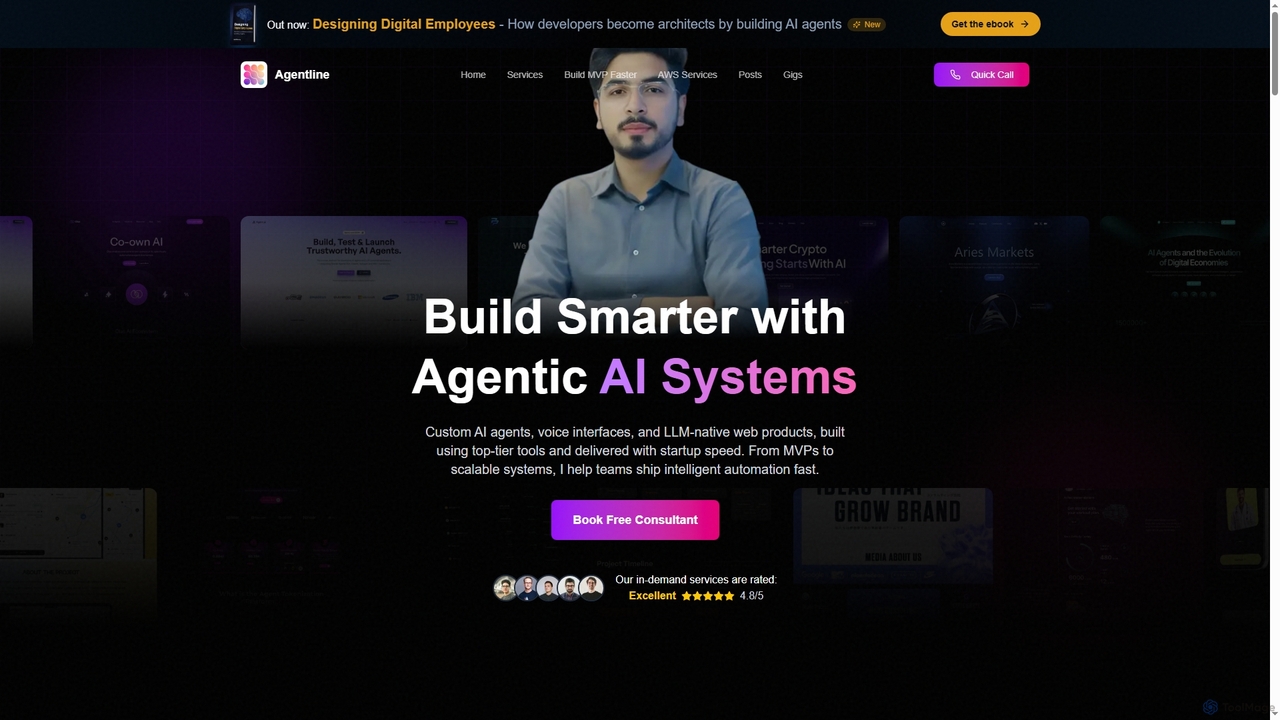
Agentline

Agentline specializes in building custom agentic AI systems, voice interfaces, and LLM-native web products. They help teams rapidly develop and deploy intelligent automation, from MVPs to scalable enterprise solutions, leveraging top-tier tools and a comprehensive tech stack.

Ai Development
Visits 4.1KFavorites 24Likes 30
SwiftAI Boilerplate
Paid

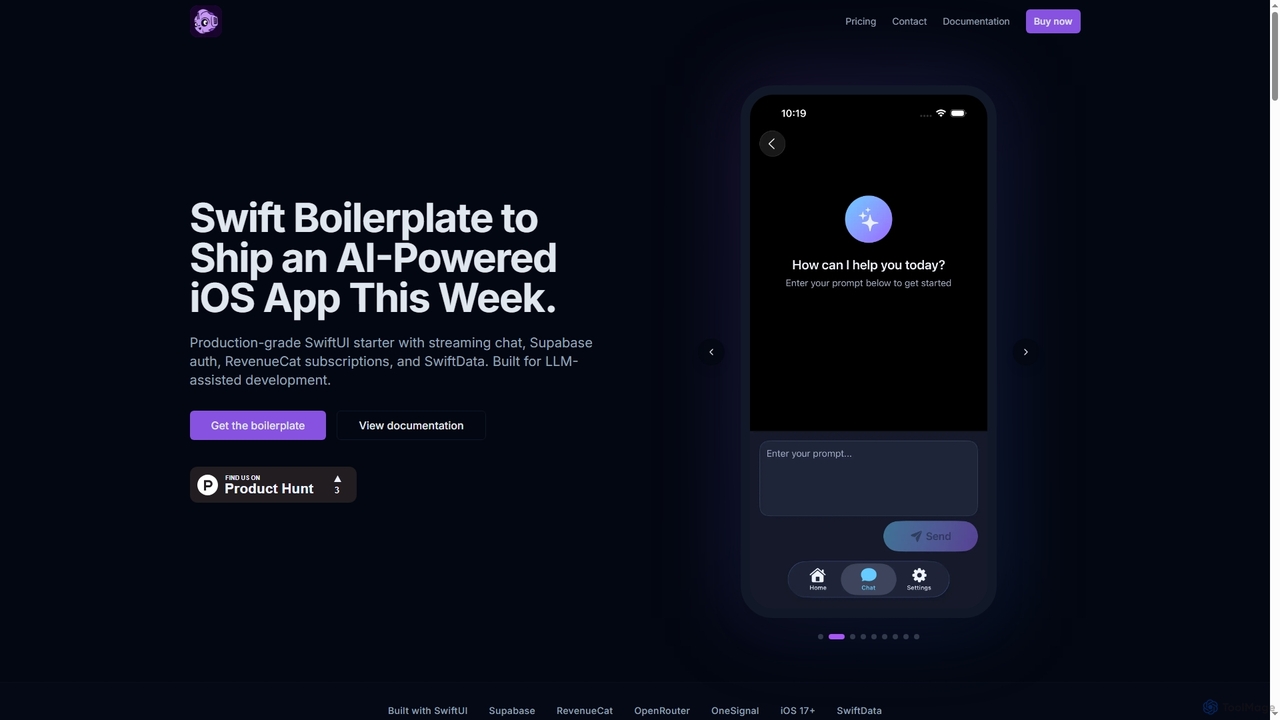
SwiftAI Boilerplate

SwiftAI Boilerplate is a production-grade SwiftUI starter kit designed to accelerate the development of AI-powered iOS applications. It provides pre-built modules for streaming AI chat, secure authentication (Supabase), subscriptions (RevenueCat), and robust data persistence (SwiftData), saving developers months of integration and setup time.

Ai Development
Visits 4.5KFavorites 78Likes 77
NextChainX

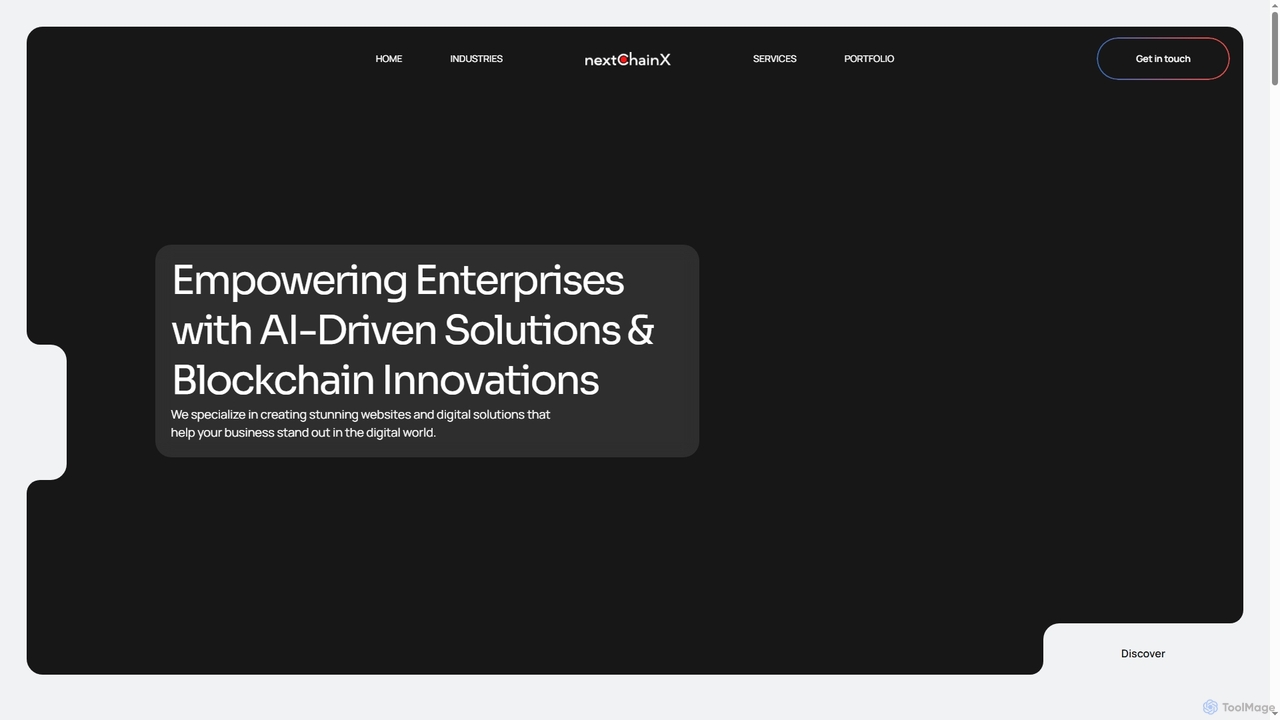
NextChainX

NextChainX specializes in empowering enterprises with advanced AI-driven solutions and blockchain innovations. They offer custom AI assistants, LLM integration, automation tools, and high-performance Solana development for DeFi, NFTs, and dApps, enhancing business intelligence, efficiency, and customer engagement across various industries.

Ai Development
Visits 3.4KFavorites 120Likes 116

About Ai Development

AI Development tools are a class of software platforms, libraries, and frameworks designed to build, train, deploy, and manage artificial intelligence models. These tools leverage core technologies like machine learning, deep learning, and natural language processing to streamline the entire AI lifecycle. They empower developers and data scientists to create custom AI solutions, from predictive analytics to complex generative models, significantly accelerating innovation. This category provides the foundational infrastructure for creating the next generation of intelligent applications.

Core Features

  • Model Training & Experimentation: Provides environments and computing resources for training machine learning models and tracking experiment results.
  • MLOps & Deployment: Offers tools for automating the deployment, monitoring, and management of models in production environments.
  • Data Management & Preprocessing: Includes functionalities for data ingestion, cleaning, labeling, and transformation to prepare it for model training.
  • Pre-built Models & APIs: Grants access to foundational models and specialized APIs that can be fine-tuned or integrated directly into applications.
  • Collaborative Workspaces: Features shared environments, such as notebooks and version control, for teams of data scientists and engineers.

Use Cases

AI Development tools are essential for technology companies, research institutions, and enterprises in sectors like finance, healthcare, and e-commerce. Data scientists use them to build recommendation engines, financial services firms create fraud detection systems, and healthcare researchers develop diagnostic models from medical imaging. They are the backbone for any organization looking to build proprietary AI capabilities.

How to Choose

When selecting an AI Development tool, consider the technical expertise of your team; some platforms are code-centric (Python, R) while others offer low-code interfaces. Evaluate the tool's scalability for handling large datasets and complex computations. Assess its MLOps capabilities for end-to-end lifecycle management. Finally, consider its integration with your existing data infrastructure and the overall cost model.

Featured tool rankings

Ai Development use cases

1

Building a Custom Customer Service Chatbot

A retail company's development team uses an AI development platform to fine-tune a large language model (LLM) on their internal product documentation and past customer support tickets. This process involves using the platform's data preprocessing tools to clean and format the text data. They then run training jobs on the platform's managed infrastructure to create a specialized chatbot. Once deployed via the platform's MLOps features, the chatbot can accurately answer specific customer queries about product features, return policies, and order status, reducing the workload on human agents by 40%.

2

Developing a Product Recommendation Engine

An e-commerce data science team utilizes an AI development environment to build a personalized recommendation system. They use the platform's data connectors to ingest user behavior data, such as clicks, purchases, and browsing history. Using integrated notebooks, they experiment with different machine learning algorithms like collaborative filtering and matrix factorization. The platform's experiment tracking feature allows them to compare model performance systematically. The best-performing model is then deployed as a scalable API, which integrates with the website to provide real-time product suggestions, leading to a 15% increase in average order value.

3

Creating a Medical Image Analysis Model

A healthcare research institute uses a specialized AI development platform for medical imaging. Researchers upload a labeled dataset of MRI scans using the platform's secure data handling features. They leverage a pre-trained computer vision model (like a U-Net architecture) available on the platform and fine-tune it to detect specific types of tumors. The platform provides GPU-accelerated computing for faster training cycles. The resulting model can segment and highlight potential anomalies in new MRI scans with 95% accuracy, assisting radiologists in making faster and more accurate diagnoses.

4

Automating Financial Fraud Detection

A fintech company's machine learning team builds a real-time fraud detection system using an AI development platform. They stream transaction data into the platform and use its features to engineer variables that capture user behavior patterns. They train a gradient boosting model to classify transactions as fraudulent or legitimate. The platform's MLOps capabilities are used to deploy this model as a low-latency microservice. This service analyzes millions of transactions daily, automatically flagging suspicious activities and reducing financial losses from fraud by over 60% while minimizing false positives that inconvenience customers.

5

Optimizing Supply Chain Demand Forecasting

A logistics company's data analytics team uses an AI development platform to improve demand forecasting. They integrate historical sales data, weather information, and economic indicators into the platform. Using time-series analysis models available within the platform's libraries, they build a predictive model that forecasts product demand for the next quarter. The platform's automation features allow the model to be retrained weekly with new data. The more accurate forecasts enable the company to optimize inventory levels, reducing storage costs by 20% and minimizing stockout situations.

6

Personalizing Digital Marketing Campaigns

A marketing analytics team uses a low-code AI development platform to build a customer segmentation model. They upload customer data from their CRM and use the platform's visual interface to train a clustering algorithm (like K-Means) that groups customers based on purchasing behavior and demographics. The platform automatically generates insights for each segment. The marketing team then uses these segments to create highly targeted email campaigns and personalized ad content, resulting in a 30% higher click-through rate and a significant improvement in campaign ROI.

Ai Development FAQ

What are AI Development tools?

AI Development tools are the software environments, libraries, and platforms that developers and data scientists use to build, train, and deploy AI models. Unlike end-user AI applications (like a chatbot or image generator), these tools provide the underlying infrastructure for creating such applications from scratch or by customizing existing models. They typically include features for data preparation, model training, experiment tracking, and deployment management (MLOps).

How to choose the right AI Development platform?

Choosing the right platform depends on several factors. First, assess your team's skill set: do you need a code-first environment (e.g., Python-based) or a low-code/no-code interface? Second, consider your project's scale and complexity, ensuring the platform can handle your data volume and computational needs. Third, evaluate its MLOps capabilities for managing the entire model lifecycle. Finally, check for integrations with your existing data sources and infrastructure, and analyze the pricing model to ensure it fits your budget.

What's the difference between an AI Development platform and a library like TensorFlow?

A library like TensorFlow or PyTorch provides the fundamental building blocks—such as tensors and neural network layers—for creating machine learning models. It requires significant coding and infrastructure setup. An AI Development platform is a more comprehensive, end-to-end solution. It often incorporates libraries like TensorFlow but adds a suite of tools on top, including integrated development environments, data management, automated MLOps pipelines, and collaborative features, aiming to streamline the entire development lifecycle.

Who typically uses AI Development tools?

The primary users are technical professionals involved in creating AI systems. This includes:

  • Machine Learning Engineers: Who build, train, and deploy models into production.
  • Data Scientists: Who explore data, experiment with algorithms, and build predictive models.
  • AI Researchers: Who develop new algorithms and push the boundaries of AI capabilities.
  • Software Developers: Who integrate AI models and features into larger applications.
Some modern low-code platforms also cater to data analysts and business users for specific tasks.

Do I need to be a coding expert to use AI Development tools?

Not necessarily. The field of AI development spans a wide spectrum of technical requirements. While traditional tools and libraries like TensorFlow and PyTorch require strong programming skills, particularly in Python, a growing number of modern platforms offer low-code or no-code interfaces. These platforms use visual workflows and automated machine learning (AutoML) features, making it possible for data analysts, business users, and developers with less specialized AI expertise to build and deploy effective models for specific use cases.