thumbnailchecker
ThumbnailChecker is a free online tool for YouTube creators to optimize video engagement. It allows you to preview, …
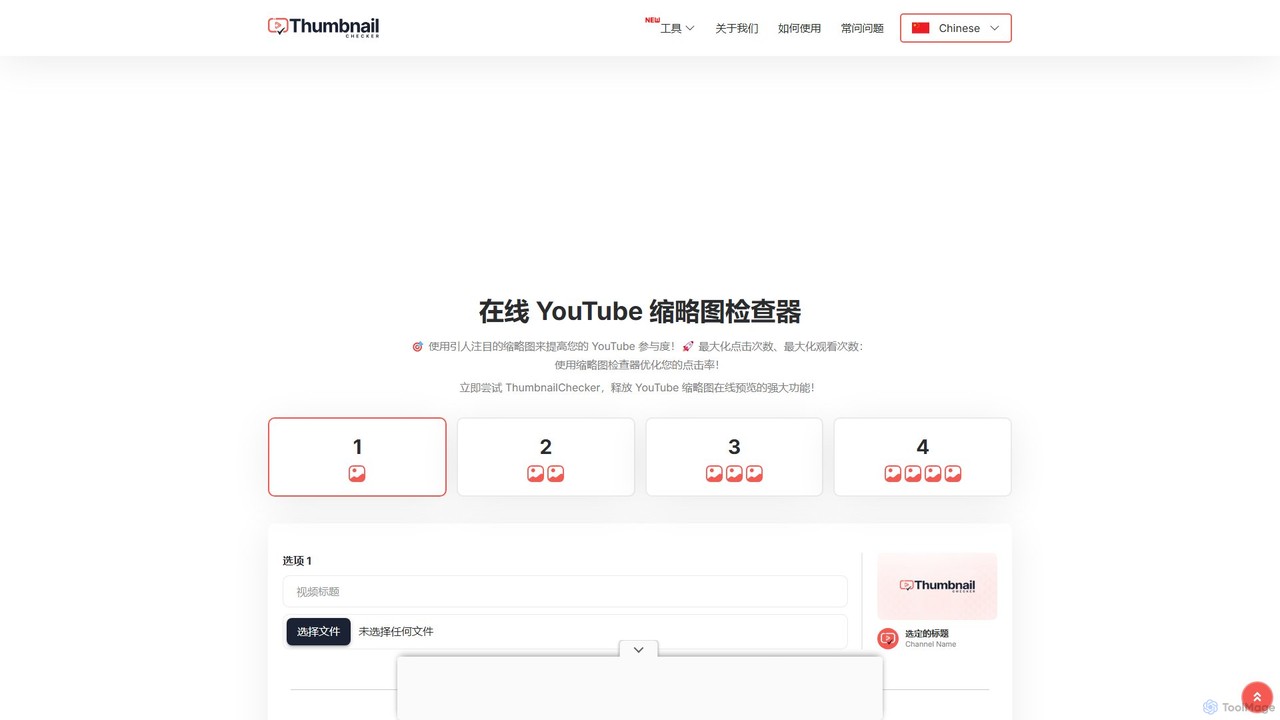
ThumbnailChecker is a free online tool for YouTube creators to optimize video engagement. It allows you to preview, compare, and A/B test up to four different thumbnails and titles simultaneously. By simulating how your video will appear on YouTube's homepage and comparing it against competitors, you can make data-driven decisions to significantly boost your click-through rate (CTR) and attract more viewers.
About Optimization
AI Optimization tools are a class of software designed to analyze and enhance existing content for improved performance. They leverage natural language processing (NLP) and data analysis to refine elements like SEO, readability, and user engagement. The primary value of these tools is to maximize the impact and reach of your content, ensuring it connects effectively with its target audience and achieves its strategic goals. This process transforms good content into high-performing assets.
Core Features
- SEO Analysis: Provides data-driven recommendations on keywords, meta tags, and content structure to improve search engine rankings.
- Readability Scoring: Evaluates text complexity and suggests improvements for clarity and audience comprehension.
- Headline & Title Generation: Creates multiple compelling headline variations to increase click-through rates.
- Content Scoring: Offers an objective score based on various metrics like SEO, originality, and tone of voice to guide improvements.
- Tone & Style Adjustment: Recommends changes to align the content's tone with brand guidelines or specific audience expectations.
Use Cases
These tools are frequently used by SEO specialists, content marketers, copywriters, and bloggers. They are essential for refining blog posts to rank higher, optimizing landing page copy for better conversion rates, and ensuring all published material meets strict quality and performance standards before going live.
How to Choose
When selecting an AI Optimization tool, consider the depth of its analytical features—does it focus more on SEO or conversion? Evaluate its integration capabilities with your existing platforms, such as WordPress or Google Docs. Also, assess the quality of its suggestions and whether its pricing model aligns with your usage frequency and team size.
OptimizationUse Cases
Improving Blog Post SEO Ranking
A content marketer has a blog post that ranks on the second page of Google. They use an AI Optimization tool to analyze the content against top-ranking competitors. The tool identifies missing LSI keywords, suggests a more compelling meta description, and recommends restructuring H2 and H3 headings for better semantic flow. After implementing these changes, the post's relevance score increases, helping it climb to the first page and significantly boosting organic traffic.
Enhancing Landing Page Conversion Rates
A copywriter is tasked with improving a landing page's low conversion rate. They input the existing copy into an AI Optimization tool. The AI analyzes the text for persuasive language, clarity, and emotional tone. It suggests replacing a weak call-to-action with a more urgent and benefit-driven phrase, simplifying technical jargon, and generating three alternative headlines for A/B testing. The revised copy leads to a measurable increase in user sign-ups.
Refining Academic Papers for Clarity
A researcher is preparing a manuscript for a scientific journal. To meet the journal's strict readability standards, they use an AI Optimization tool. The tool scans the paper for passive voice, overly long sentences, and ambiguous phrasing. It provides a readability score (e.g., Flesch-Kincaid) and highlights specific sentences to rephrase. This helps the researcher simplify complex ideas without losing technical accuracy, increasing the paper's chances of acceptance.
Optimizing Email Subject Lines for Open Rates
An email marketing team is launching a new campaign but is unsure which subject line will perform best. They use an AI Optimization tool to generate ten different subject lines based on the email's body content. The tool then scores each option based on predicted open rates, spam trigger words, and emotional sentiment. The team selects the top three highest-scoring options to run an A/B test, ensuring the campaign starts with the most effective messaging.
Adapting Content for Social Media Platforms
A social media manager needs to promote a new, in-depth research report across multiple platforms. Instead of manually writing different posts, they input the report's executive summary into an AI Optimization tool. The tool generates several content variations tailored for each platform: a concise and professional post for LinkedIn, a multi-tweet thread for Twitter, and an engaging, question-based post for Facebook. This saves time and ensures the messaging is optimized for each platform's unique audience and format.
Updating and Refreshing Outdated Content
An SEO specialist identifies a two-year-old article with declining traffic. They use an AI Optimization tool to perform a content gap analysis against current top-ranking pages. The tool suggests adding new sections to cover topics that have emerged since the article was published, updating outdated statistics, and improving internal linking. By refreshing the content based on these AI-driven insights, the specialist revitalizes the article, regaining its search rankings and traffic.