
Content Delivery Best in category 1 results Cdn AI Tool

Popular AI tools in the Cdn field of Content Delivery include Fastly, etc., helping you quickly improve efficiency.

Fastly

Fastly

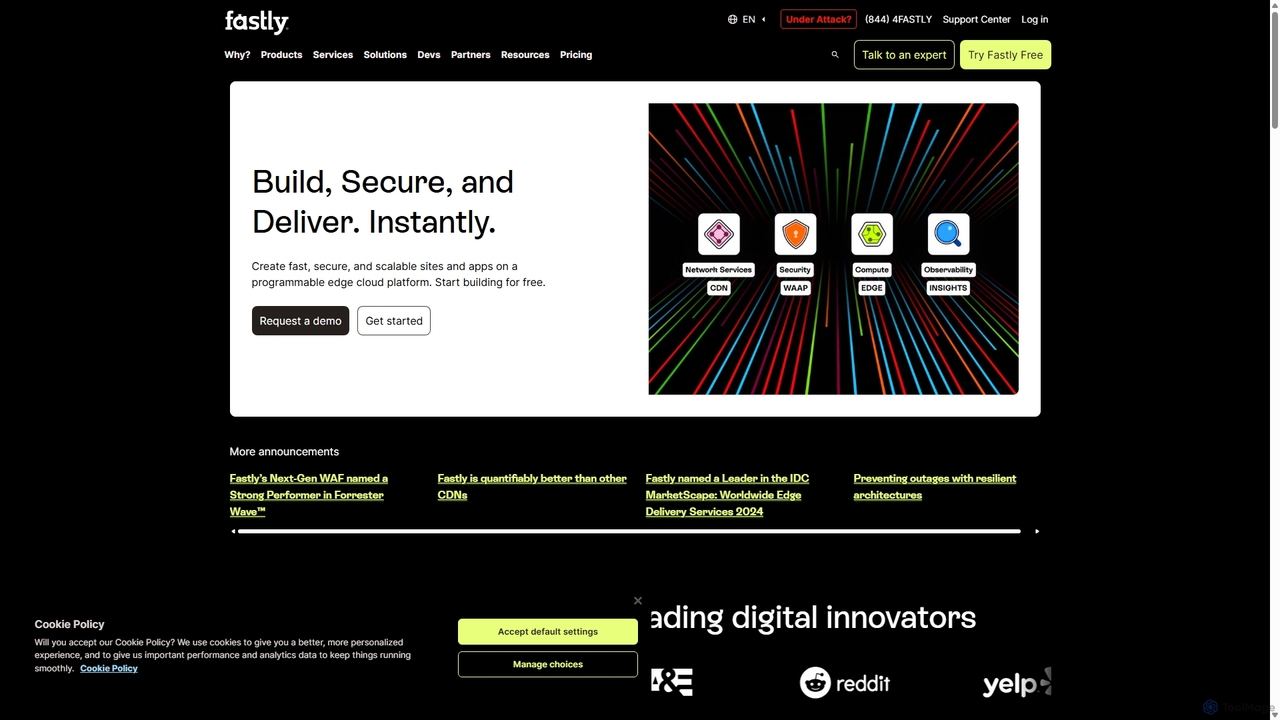
Fastly is a leading edge cloud platform designed to build, secure, and deliver fast, scalable digital experiences. It …

327.5K

About Cdn

A Content Delivery Network (CDN) is a geographically distributed group of servers that work together to provide fast delivery of internet content. The core principle is to cache content like images, videos, and stylesheets in multiple locations (Points of Presence, or PoPs) around the world. When a user requests content, the CDN redirects the request to the server closest to them, significantly reducing latency and improving load times. This architecture not only accelerates website performance but also enhances reliability and provides a crucial layer of security.

Core Features

  • Global Caching: Stores copies of static assets (images, CSS, JavaScript) on edge servers worldwide for faster delivery to local users.
  • Dynamic Content Acceleration: Optimizes network paths and protocols to speed up the delivery of non-cacheable, dynamic content.
  • DDoS Mitigation: Absorbs and filters malicious traffic at the network edge, protecting the origin server from distributed denial-of-service attacks.
  • Load Balancing: Distributes user traffic across multiple servers to prevent any single server from becoming overwhelmed, ensuring high availability.
  • Web Application Firewall (WAF): Provides a security layer at the edge to block common web threats and vulnerabilities before they reach the application.

Applicable Scenarios

CDNs are essential for any online service with a global or geographically dispersed audience. This includes e-commerce platforms seeking to reduce page load times, media companies streaming high-definition video, SaaS providers delivering applications worldwide, and online gaming companies aiming to minimize latency for players.

Selection Criteria

When choosing a CDN, evaluate the provider's network size and the geographic distribution of its Points of Presence (PoPs). Consider the specific features offered, such as support for dynamic content, advanced security options like WAF and bot management. Also, analyze the pricing model (e.g., pay-as-you-go vs. fixed plans) and the quality of technical support and documentation.

CdnUse Cases

1

Accelerating Global E-commerce Websites

An international e-commerce brand uses a CDN to improve the shopping experience for its global customer base. By caching product images, CSS, and JavaScript files on servers in North America, Europe, and Asia, the site's pages load nearly instantaneously for users in those regions. This reduction in latency directly leads to lower bounce rates, higher conversion rates, and increased customer satisfaction, especially during high-traffic events like Black Friday sales.

2

Delivering High-Quality Live Video Streams

A media broadcasting company leverages a CDN to stream a major international sports event live to millions of viewers. The CDN ingests the video stream at a central point and distributes it across its global network. Viewers connect to their nearest edge server, which delivers the video segments with minimal buffering and delay. This ensures a smooth, high-definition viewing experience, regardless of the viewer's location or the number of concurrent users.

3

Distributing Software and Game Patches

A video game developer needs to release a large multi-gigabyte update to its player base worldwide. Instead of serving the download from a single origin server, which would be slow and costly, they use a CDN. The update file is distributed across the CDN's network. When players initiate the download, they fetch the file from a local edge server, resulting in significantly faster download speeds and reducing the load on the developer's core infrastructure.

4

Enhancing SaaS Application Performance

A provider of a web-based project management SaaS platform uses a CDN to ensure its application is fast and responsive for business users globally. The CDN caches the application's static assets, such as the user interface components, icons, and libraries. This allows the application's front-end to load quickly in the user's browser, providing a fluid, desktop-like experience even for users located far from the main data center.

5

Securing APIs and Mobile Applications

A financial technology company uses a CDN to protect and accelerate the API endpoints that power its mobile banking app. The CDN acts as a reverse proxy, providing DDoS protection and a Web Application Firewall (WAF) to block malicious requests before they reach the sensitive origin servers. It also caches frequent, non-sensitive API responses at the edge, reducing latency for mobile users and offloading traffic from the core API infrastructure.

6

Improving Ad-Tech Platform Response Times

An advertising technology platform relies on a CDN to deliver ad creatives (images and videos) with ultra-low latency. In real-time bidding, response time is critical. The CDN ensures that when an ad is won, the creative is served from an edge server closest to the end-user, maximizing the chance it will load before the user scrolls away. This improves ad viewability rates and overall campaign performance for advertisers.

CdnFrequently Asked Questions