Fastly
Fastly is a leading edge cloud platform designed to build, secure, and deliver fast, scalable digital experiences. It …
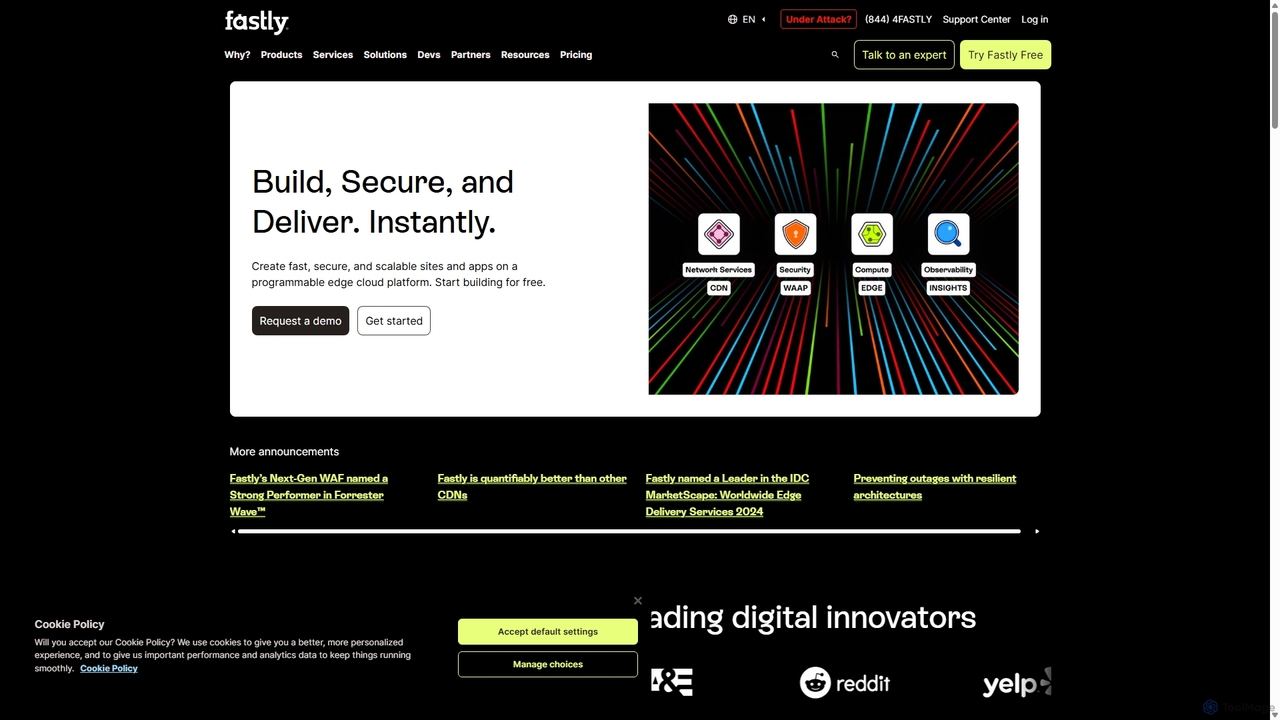
Fastly is a leading edge cloud platform designed to build, secure, and deliver fast, scalable digital experiences. It combines a modern CDN, robust security features like a Next-Gen WAF, and a powerful serverless compute environment. Fastly helps businesses improve performance, enhance security, and innovate closer to their users, with specific solutions for e-commerce, streaming, and AI-powered applications.
About Content Delivery
Content Delivery tools are AI-powered solutions that optimize, personalize, and automate the distribution and presentation of digital content to end-users. These tools leverage machine learning and data analytics to understand user behavior, content relevance, and optimal delivery channels. Their primary goal is to enhance user experience, improve engagement, and ensure timely, relevant content reaches the right audience at the right moment. By dynamically adapting content and delivery strategies, they significantly boost content effectiveness and operational efficiency.
Core Features
- Personalized Content Recommendation: Analyzes user data and behavior to suggest highly relevant content, products, or services.
- Dynamic Content Optimization: Automatically adapts content elements (e.g., headlines, images, calls-to-action) based on real-time user interaction and performance data.
- Intelligent A/B Testing & Experimentation: Automates the testing of different content variations and delivery methods to identify the most effective strategies.
- Audience Segmentation & Targeting: Uses AI to segment users into granular groups and deliver highly targeted content experiences.
- Predictive Content Scheduling: Optimizes content publication times based on audience activity patterns and predicted engagement.
Applicable Scenarios
Content Delivery AI tools are crucial for businesses in e-commerce, media, education, and marketing. They empower content creators, marketers, and product managers to deliver highly engaging and effective digital experiences. For instance, an e-commerce platform can use these tools to recommend products tailored to individual shopping histories, while a news outlet can personalize article feeds based on reading preferences.
How to Choose
When selecting Content Delivery AI tools, consider the depth of personalization capabilities, integration with existing content management systems (CMS) and customer relationship management (CRM) platforms, scalability to handle varying content volumes and user traffic, and the robustness of analytics and reporting features. Evaluate the ease of use for non-technical teams and the level of support provided for implementation and ongoing optimization.
Content DeliveryUse Cases
Personalized E-commerce Product Recommendations
E-commerce platforms utilize AI Content Delivery tools to analyze individual browsing history, purchase patterns, and demographic data. This enables them to dynamically recommend products tailored to each shopper's unique preferences and needs, significantly increasing conversion rates and the average order value by presenting highly relevant items at the right moment.
Dynamic News Feed Personalization
Media companies leverage AI to curate news feeds for individual users, prioritizing articles based on past reading habits, interests, and real-time trends. By dynamically adjusting the content presented, these tools boost user engagement, increase the time spent on site, and ensure readers receive the most relevant and compelling news stories without manual curation.
Targeted Marketing Campaign Delivery
Marketers employ AI Content Delivery tools to segment audiences into highly specific groups based on demographics, behavior, and intent. The tools then dynamically deliver ad creatives, email content, or landing page variations that are most likely to resonate with each specific user segment, thereby optimizing campaign ROI and improving overall marketing effectiveness through precision targeting.
Optimized E-learning Path Adaptation
Educational platforms utilize AI Content Delivery to analyze student progress, learning styles, and performance data. The tools dynamically adjust course content, recommend supplementary materials, or suggest alternative learning paths tailored to each student's needs. This personalized approach improves educational outcomes, increases student engagement, and makes learning more efficient and effective by adapting to individual pace and comprehension.
Intelligent Content Caching & CDN Optimization
Websites and streaming services use AI Content Delivery to predict content demand and user locations. The tools intelligently cache content closer to users and optimize CDN (Content Delivery Network) routes to reduce latency and improve loading speeds. This ensures a seamless and fast content consumption experience for users globally, minimizing buffering and improving overall service quality.
Automated A/B Testing for Website Content
Webmasters and UX designers use AI Content Delivery tools to continuously test different versions of website elements (e.g., headlines, images, button texts) and content layouts. The AI automatically identifies and deploys the highest-performing variations to maximize user engagement and conversion goals, streamlining the optimization process and ensuring data-driven improvements without constant manual intervention.