Content Detection Best in category 2 results Ai Content Detection AI Tool

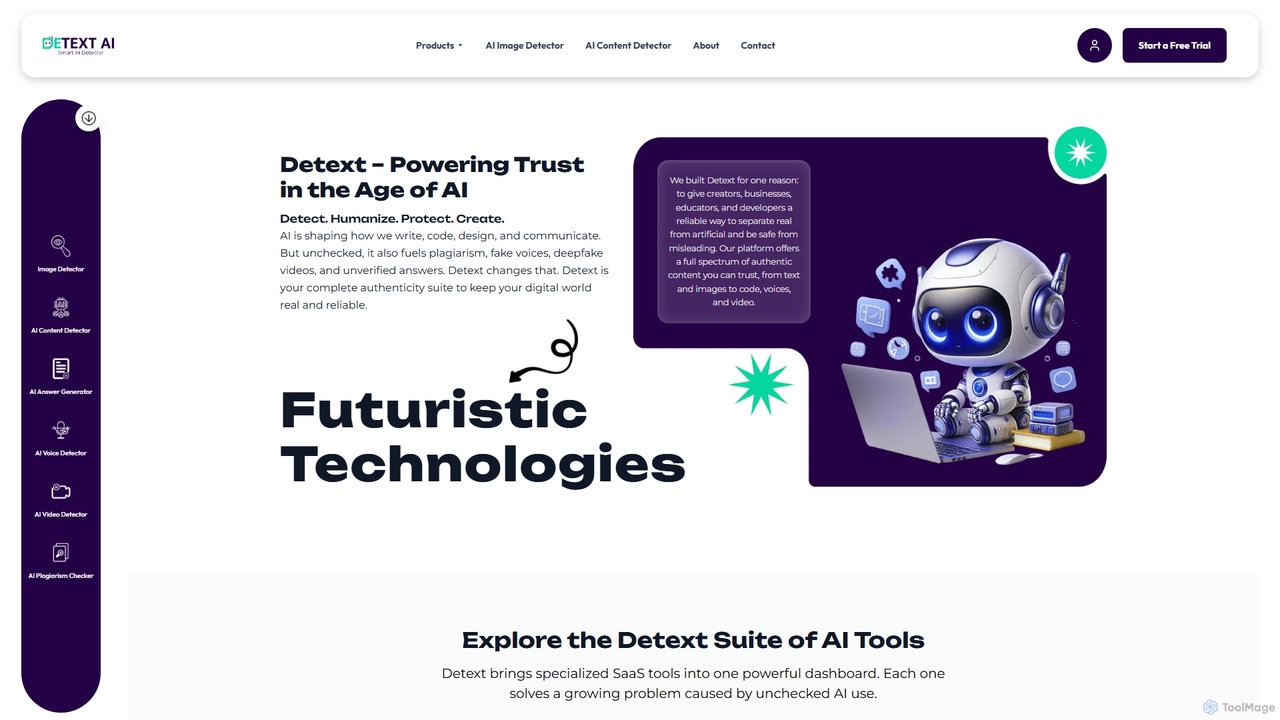
Popular AI tools in the Ai Content Detection field of Content Detection include AIDetector、Detext, etc., helping you quickly improve efficiency.

Free
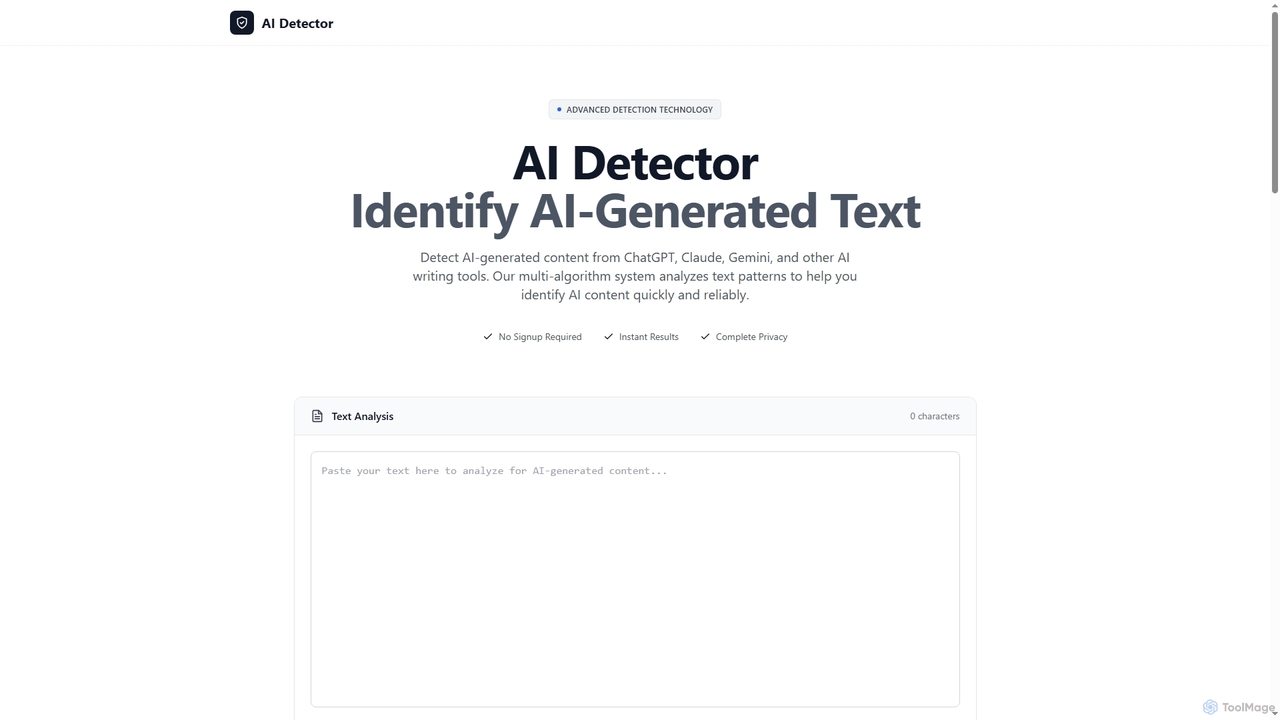
AIDetector

AIDetector

AIDetector is an advanced, multi-algorithm AI content detection tool designed to accurately identify text generated by leading AI …

4.5K
Detext

Detext

Detext is a comprehensive AI authenticity suite offering advanced tools to detect AI-generated content across text, images, audio, …

2.9K

About Ai Content Detection

AI Content Detection tools are specialized software solutions designed to identify text, images, or other media generated by artificial intelligence models. Unlike traditional plagiarism checkers, these tools leverage advanced machine learning and natural language processing (NLP) to analyze intricate patterns, stylistic nuances, and linguistic fingerprints characteristic of AI-generated output. They help users verify the authenticity and originality of content, ensuring transparency and combating misinformation in an era of rapidly evolving generative AI. These sophisticated systems are crucial for maintaining trust, academic integrity, and brand reputation across various digital platforms by providing a critical layer of content verification.

Core Features

  • AI Model Fingerprinting: Identifies specific linguistic patterns, sentence structures, and vocabulary choices commonly produced by large language models (LLMs) like GPT-3, GPT-4, and other generative AI systems.
  • Stylometric Analysis: Evaluates writing style, sentence complexity, vocabulary richness, and overall coherence to distinguish human-written content from AI-generated text, often highlighting subtle inconsistencies.
  • Deepfake Text Detection: Employs specialized algorithms to spot highly sophisticated AI-generated text designed to mimic human writing, which can be used in disinformation campaigns, fake reviews, or automated propaganda.
  • Multi-language Support: Offers the ability to analyze and detect AI-generated content across various languages, adapting to different linguistic structures, grammatical rules, and cultural nuances.
  • Confidence Scoring & Reporting: Provides a clear probability score or percentage indicating the likelihood that content was generated by AI, often accompanied by detailed reports highlighting suspicious sections for further review.
  • Evolving Model Adaptation: Continuously updates its detection algorithms to keep pace with the rapid advancements and new iterations of generative AI models, ensuring ongoing accuracy.

Applicable Scenarios

AI content detection is vital for educators to prevent academic dishonesty in essays and assignments, for content publishers and news organizations to maintain editorial integrity and combat fake news, and for marketing teams to ensure authenticity and originality in their campaigns. It helps identify AI-generated submissions in creative writing contests, detect automated spam or sophisticated phishing attempts, and verify the originality of research papers, legal documents, or news articles before publication. Furthermore, it assists social media platforms in moderating AI-generated misinformation.

How to Choose

When selecting an AI content detection tool, prioritize its accuracy, especially its ability to keep pace with the latest and most advanced AI models. Consider its language support, the depth of its analytical capabilities (e.g., does it just flag, or does it explain why?), and its integration capabilities with your existing content management or learning platforms. Evaluate the tool's false positive/negative rates, the clarity and actionability of its detection reports, and its overall ease of use, ensuring it effectively meets your specific needs for content verification, academic integrity, or brand protection. Scalability and pricing models are also crucial factors for larger organizations.

Ai Content DetectionUse Cases

1

Verifying Academic Integrity in Education

Educators and academic institutions utilize AI content detection tools to scrutinize student submissions, including essays, research papers, and reports. By analyzing linguistic patterns and stylistic markers, these tools help identify instances where students might have used generative AI to produce their work, ensuring fairness and upholding academic honesty. This allows instructors to focus on critical thinking and original thought, rather than just content generation.

2

Ensuring Originality for Content Publishers

Content creators, journalists, and publishing houses employ AI content detection to verify the authenticity of articles, blog posts, and news pieces before publication. This is crucial for maintaining editorial standards and preventing the spread of AI-generated misinformation or low-quality content. The tools help ensure that published material reflects genuine human insight and original research, protecting the publisher's reputation and credibility.

3

Moderating AI-Generated Spam and Misinformation

Social media platforms and online forums use these tools to automatically detect and flag AI-generated spam, fake reviews, or disinformation campaigns. By quickly identifying text patterns indicative of generative AI, platforms can prevent the rapid spread of harmful content, protect user experience, and maintain a trustworthy online environment. This proactive approach is essential for large-scale content moderation.

4

Authenticating Marketing and Brand Communications

Marketing professionals and brand managers leverage AI content detection to ensure that all external communications, from ad copy to press releases, are genuinely human-crafted. This prevents the accidental or intentional use of AI-generated text that might lack brand voice, nuance, or legal compliance. It helps maintain brand authenticity and build trust with the audience, ensuring messages resonate effectively.

5

Screening Job Applications and Resumes

HR departments and recruiters can use AI content detection to screen job applications, cover letters, and resumes for AI-generated content. While AI can assist in writing, a fully AI-generated application might indicate a lack of genuine effort or understanding from the candidate. These tools help identify such instances, allowing recruiters to prioritize candidates who demonstrate authentic communication skills and personal investment.

6

Protecting Intellectual Property in Creative Fields

Artists, writers, and creative agencies use AI content detection to protect their intellectual property and ensure the originality of submissions in contests or collaborative projects. By identifying AI-generated text or concepts, they can prevent plagiarism of AI models and ensure that awards or recognition are given to genuine human creativity. This safeguards the integrity of creative industries.

Ai Content DetectionFrequently Asked Questions