ToolMage
Sign in

Best 3 Content Repurposing AI tools

Popular Content Repurposing AI tools include Swell AI, YT Copycat, and ConversionPrime, helping you work more efficiently.

Freemium

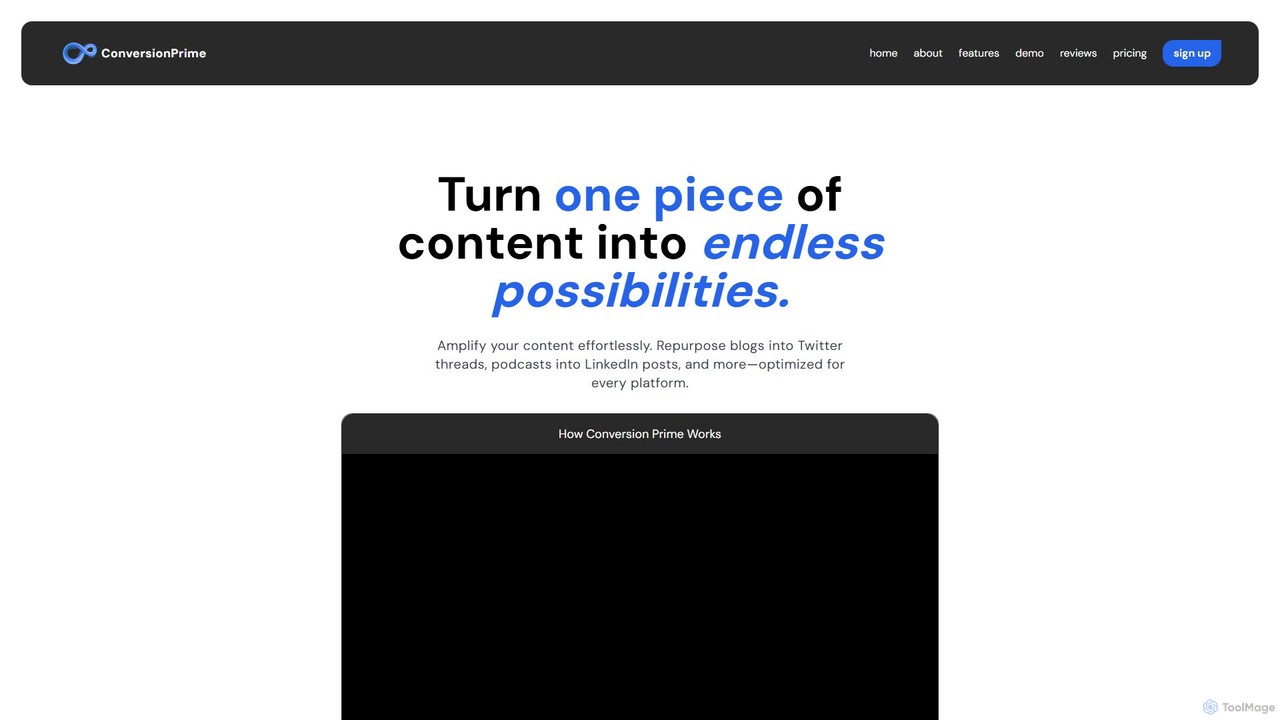
ConversionPrime

ConversionPrime is an AI-powered content repurposing tool designed for creators, marketers, and businesses. It effortlessly transforms a single piece of content, like a blog post or video, into multiple high-performing formats optimized for various social media platforms such as Twitter and LinkedIn. This helps you maximize reach, boost engagement, and scale your content strategy efficiently, saving significant time and effort while preventing creator burnout.

Automation
Visits 3.4KFavorites 106Likes 112
Freemium

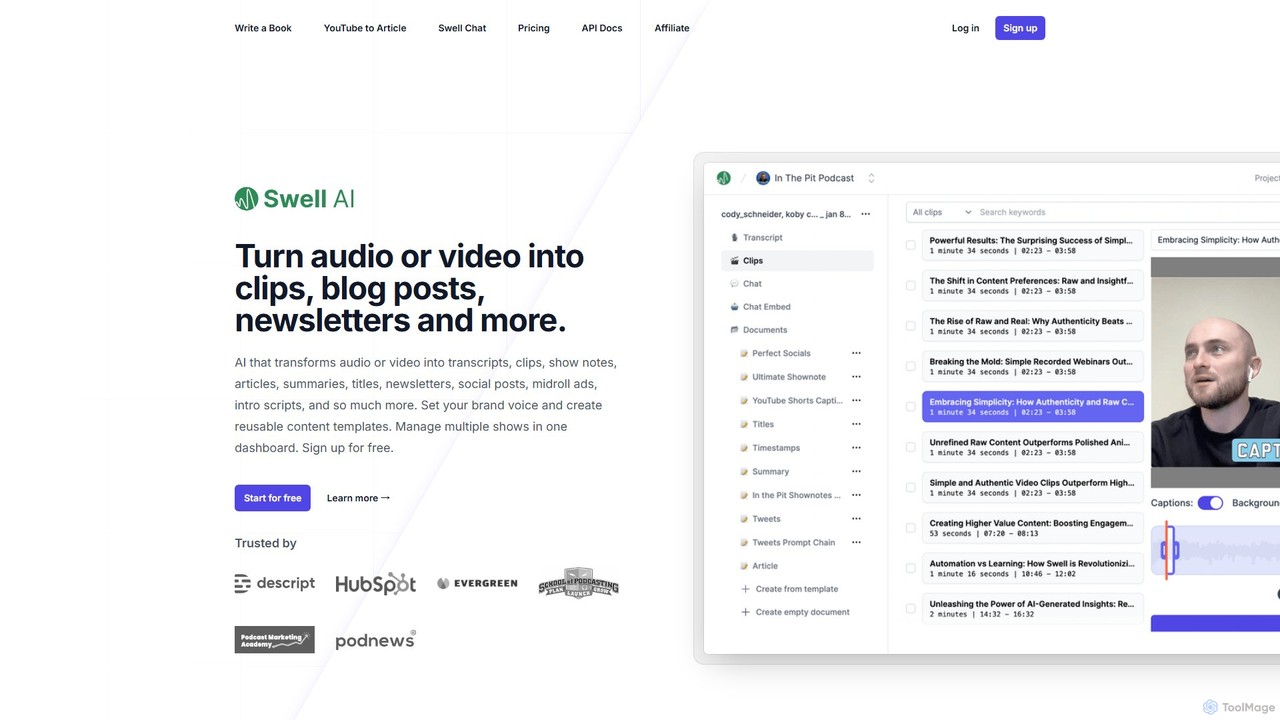
Swell AI

Swell AI is an AI-powered platform that transforms audio and video content into a wide range of written assets. It automatically generates transcripts, show notes, articles, summaries, and social media posts, helping podcasters and content creators repurpose their content efficiently for every marketing channel. Features include a transcript editor, AI-suggested clips, customizable brand voice, and chatbot creation.

Video To Text
Visits 65.8KFavorites 90Likes 96
Paid

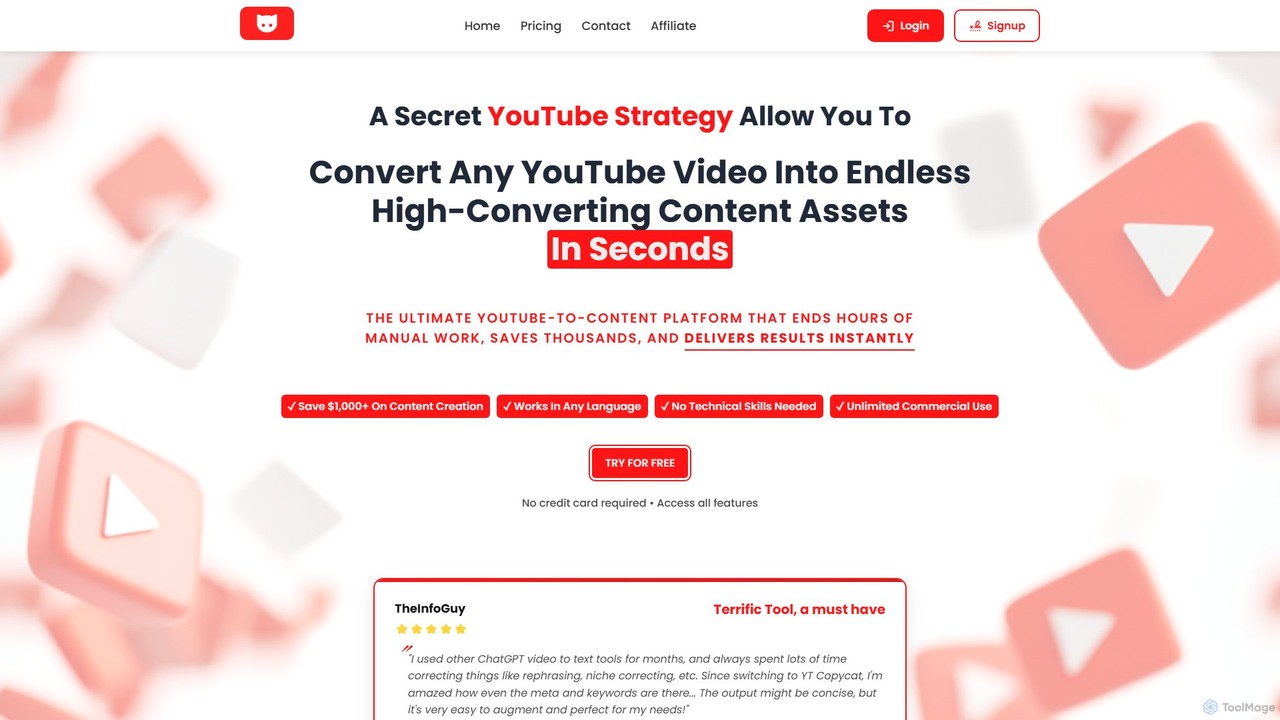
YT Copycat

YT Copycat is an AI-powered platform that instantly converts any YouTube video into multiple high-converting content formats. It transforms videos into SEO-optimized blog posts, social media threads, professional newsletters, podcasts with studio-quality audio, and more. Designed for content creators, marketers, and businesses, it automates content repurposing, saving significant time and money while boosting productivity and online presence across various platforms.

Video To Text
Visits 3.8KFavorites 105Likes 118

About Content Repurposing

Content Repurposing tools are AI-powered platforms that automatically transform a single piece of content into multiple formats for various channels. These tools use natural language processing (NLP) and machine learning to analyze source material like blog posts, videos, or podcasts and generate derivatives such as social media posts, summaries, video clips, and articles. The primary value is maximizing the reach and lifespan of original content while significantly reducing the manual effort required for multi-platform distribution. They enable creators and marketers to maintain a consistent presence across different audiences with tailored content.

Core Features

  • Multi-Format Transformation: Automatically convert long-form text into tweet threads, video scripts, or LinkedIn articles.
  • Video & Audio Clipping: Identify and extract key moments from long videos or podcasts to create short, shareable clips.
  • Content Summarization: Generate concise summaries, key takeaways, and headlines from lengthy articles or transcripts.
  • Cross-Platform Adaptation: Tailor the tone, length, and format of content to fit the specific requirements of different social media platforms.
  • Media Asset Generation: Create supplementary assets like quote images, audiograms, or infographics based on the source content.

Use Cases

Content Repurposing tools are widely used by content marketers, social media managers, digital agencies, and individual creators like podcasters and YouTubers. For example, a marketing team can upload a one-hour webinar and receive dozens of assets: a summary blog post, short video clips for TikTok and Reels, quote graphics for Instagram, and a detailed LinkedIn post. This allows them to populate a content calendar for weeks from a single event.

How to Choose

When selecting a Content Repurposing tool, consider the following: First, evaluate the supported input and output formats to ensure they match your content strategy (e.g., video-to-text, audio-to-video). Second, assess the quality of the AI-generated output; a good tool should require minimal manual editing. Third, check for integrations with your existing workflow, such as social media schedulers or cloud storage. Finally, consider the level of customization available for branding, style, and tone.

Featured tool rankings

Content Repurposing use cases

1

Turn a Blog Post into a Social Media Campaign

A content marketer publishes a comprehensive 2,000-word guide on their company blog. Instead of manually creating social posts, they input the blog post's URL into a content repurposing tool. The AI analyzes the text and automatically generates a 10-part Twitter thread with key insights, a professional LinkedIn post summarizing the guide's value for businesses, five eye-catching quote images for Instagram, and a concise summary for their weekly email newsletter. This process turns one asset into nearly 20 pieces of micro-content in minutes, maximizing the guide's visibility across all channels.

2

Create Short Video Clips from a Long Webinar

A B2B company hosts a one-hour webinar featuring an industry expert. After the event, the marketing team uploads the video recording to a repurposing tool. The AI transcribes the entire session and identifies the most impactful moments, such as key statistics, audience questions, and powerful statements from the speaker. It then automatically generates 7-10 short, subtitled video clips (30-90 seconds each), perfectly formatted for platforms like YouTube Shorts, Instagram Reels, and LinkedIn. This saves the video editor days of work and provides a steady stream of engaging video content for social media.

3

Repurpose a Podcast into a Blog Post and Audiograms

A podcaster releases a 45-minute interview episode. They upload the audio file to a repurposing platform. The tool first generates a highly accurate transcript. From this transcript, it creates a well-structured blog post, complete with headings, bullet points, and speaker labels. Simultaneously, the AI identifies several powerful quotes and generates shareable audiogram clips—short videos featuring the audio snippet, a waveform animation, and branded background—ideal for promoting the episode on Instagram and Facebook. This transforms a single audio recording into multiple content types, attracting both readers and visual-first audiences.

4

Automate Content Distribution for a Digital Agency

A digital agency manages social media for ten clients. To streamline their workflow, they connect each client's blog RSS feed to a content repurposing tool. The tool is configured with pre-set rules and brand templates for each client. Now, whenever a client publishes a new blog post, the system automatically pulls the content, generates a set of on-brand social media posts (e.g., three tweets, one LinkedIn update, one Facebook post), and places them in a draft folder in their social media scheduler for final approval. This automation saves the agency dozens of hours per week and ensures a consistent content flow for all clients.

5

Generate Micro-Content from Customer Testimonials

A SaaS company has a library of long-form video testimonials from happy customers. To leverage this social proof, they use a repurposing tool to process these videos. The AI identifies the most compelling sentences and phrases from each testimonial. It then generates two types of assets: short, impactful video clips highlighting these key quotes, and static, branded images featuring the customer's quote and headshot. These bite-sized pieces of content are perfect for sharing on social media, embedding on landing pages, and including in sales presentations to build trust and credibility with potential buyers.

6

Adapt a Research Report for a Wider Audience

An analyst firm publishes a dense, 50-page research report. To make the findings more accessible, they upload the PDF to a repurposing tool. The AI extracts the executive summary, key data points, and charts. It then generates several pieces of content: a 1,000-word blog post that explains the core findings in plain language, a series of social media posts each highlighting a single compelling statistic, and a script for a short animated explainer video. This strategy allows the firm to reach a broader, non-technical audience that would not typically read the full report, increasing the impact of their research.

Content Repurposing FAQ

What are AI Content Repurposing tools?

AI Content Repurposing tools are software platforms that use artificial intelligence to automatically transform one piece of content into multiple different formats. They analyze a source file, such as a video, podcast, or article, and use technologies like NLP and machine learning to generate new assets. Common outputs include social media posts, blog articles, video clips, summaries, and quote images. Their main purpose is to help creators and marketers maximize the value of their content by distributing it across more channels with less manual effort.

How do I choose the right Content Repurposing tool?

To choose the right tool, consider these four factors:

  • Supported Formats: Ensure the tool handles your primary content types (e.g., video, audio, text) as inputs and can generate the output formats you need for your channels (e.g., tweet threads, Reels, blog posts).
  • Quality of AI Output: Evaluate how well the AI extracts key points, summarizes content, and maintains context. A good tool should produce content that requires minimal editing.
  • Workflow Integration: Look for integrations with platforms you already use, such as social media schedulers (like Buffer), cloud storage (like Google Drive), or content platforms (like YouTube).
  • Customization and Branding: Check if you can apply your own brand templates, colors, and fonts, and if you can guide the AI's tone and style to match your brand voice.
What is the main benefit of using AI for content repurposing?

The primary benefit is achieving efficiency at scale. Manually repurposing a single piece of content—like cutting a one-hour video into clips and writing corresponding social posts—can take many hours. An AI tool can perform these tasks in minutes. This allows a small team or individual creator to maintain a high-volume, multi-platform content strategy that would otherwise require a much larger team and budget. It multiplies the return on investment (ROI) for every piece of content created.

What are the key functions of Content Repurposing tools?

Most Content Repurposing tools share a set of core functions:

  • Content Ingestion: The ability to accept various inputs, such as URLs, text files, audio files (MP3, WAV), and video files (MP4).
  • Transcription: Converting spoken words from audio or video into written text, which serves as the basis for many other features.
  • Summarization & Highlighting: Using AI to identify and extract the most important ideas, quotes, or data points from a larger piece of content.
  • Format Conversion: Actively transforming content from one medium to another, such as creating a blog post from a podcast transcript or generating a video script from an article.
  • Template-based Generation: Creating new media assets, like quote images or video clips, by applying pre-designed or custom brand templates.
How do Content Repurposing tools differ from content schedulers?

Content Repurposing tools and content schedulers serve different, but complementary, functions in a content workflow. A Content Repurposing tool *creates* new content assets from an existing source. Its job is to generate the raw materials (posts, clips, images). A content scheduler (like Hootsuite or Buffer) *distributes* these assets. Its job is to publish the content you've already created to various platforms at specific times. An effective workflow often uses both: first, a repurposing tool to generate a batch of content, and second, a scheduler to plan and automate its publication over days or weeks.