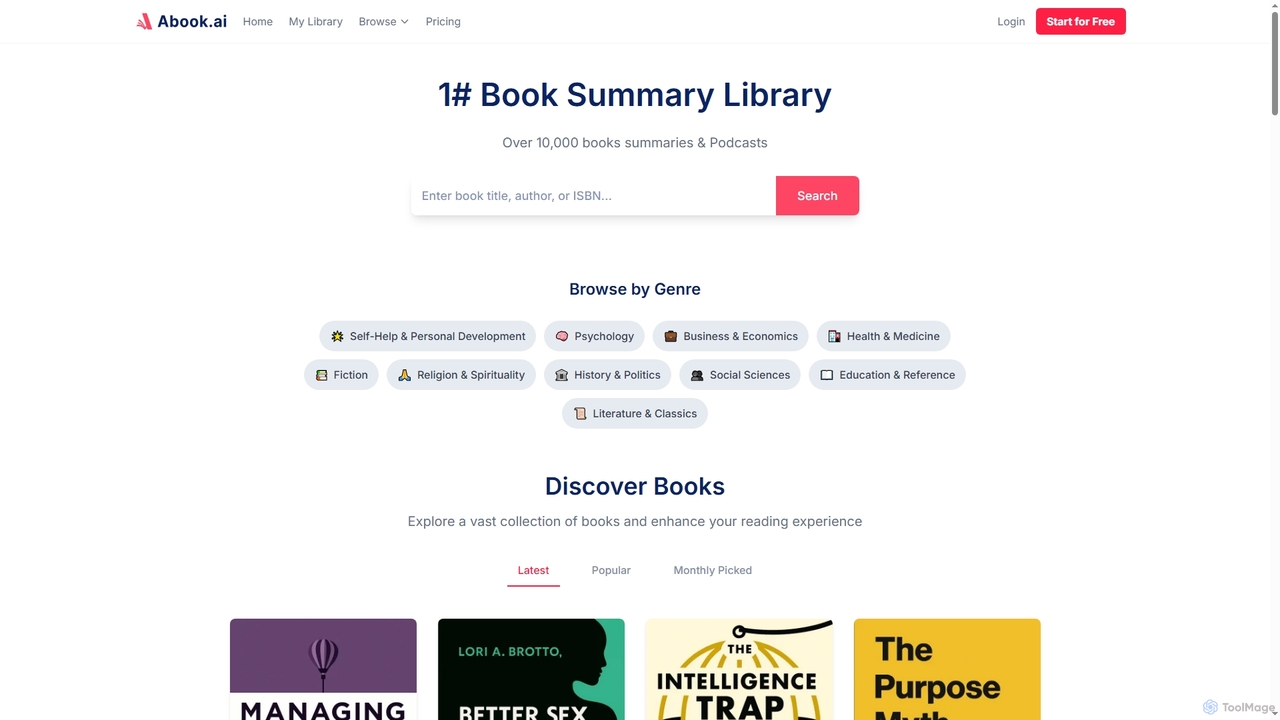
Content Summarization tools are AI-powered applications designed to automatically condense long-form text into shorter, coherent summaries. These tools leverage advanced Natural Language Processing (NLP) and Large Language Models (LLMs) to identify key ideas, main arguments, and crucial information within a document. They enable users to quickly grasp the essence of articles, reports, research papers, or even videos without needing to read the entire source material. This significantly accelerates research, learning, and decision-making processes by filtering out redundant information and presenting only the most vital points.
Core Features
- Extractive Summarization: Identifies and pulls the most important sentences directly from the original text to form a summary.
- Abstractive Summarization: Generates new, unique sentences that paraphrase and capture the core meaning of the source content.
- Customizable Summary Length: Allows users to define the desired output length, such as a specific number of sentences, bullet points, or a percentage of the original text.
- Multi-Format Support: Processes content from various sources, including plain text, web page URLs, uploaded documents (PDF, DOCX), and sometimes audio/video files.
- Key Topic Extraction: Automatically identifies and lists the main keywords, topics, and named entities discussed in the content.
Use Cases
These tools are widely used by students, researchers, journalists, and business analysts to quickly review large volumes of information. For example, a researcher can summarize dozens of academic papers to build a literature review, while a market analyst can condense industry reports into an executive summary for stakeholders. Content creators also use them to repurpose long articles into social media posts or newsletters.
How to Choose
When selecting a Content Summarization tool, consider the type of summarization offered (extractive vs. abstractive), as abstractive models often produce more natural-sounding text. Evaluate the accuracy and coherence of the summaries. Also, check for essential features like multi-language support, integration with other apps (e.g., browser extensions), supported input formats, and a pricing model that aligns with your usage volume.