Orivfy
Orivfy is an advanced AI content authenticator and digital content police, designed to instantly verify whether text, video, …
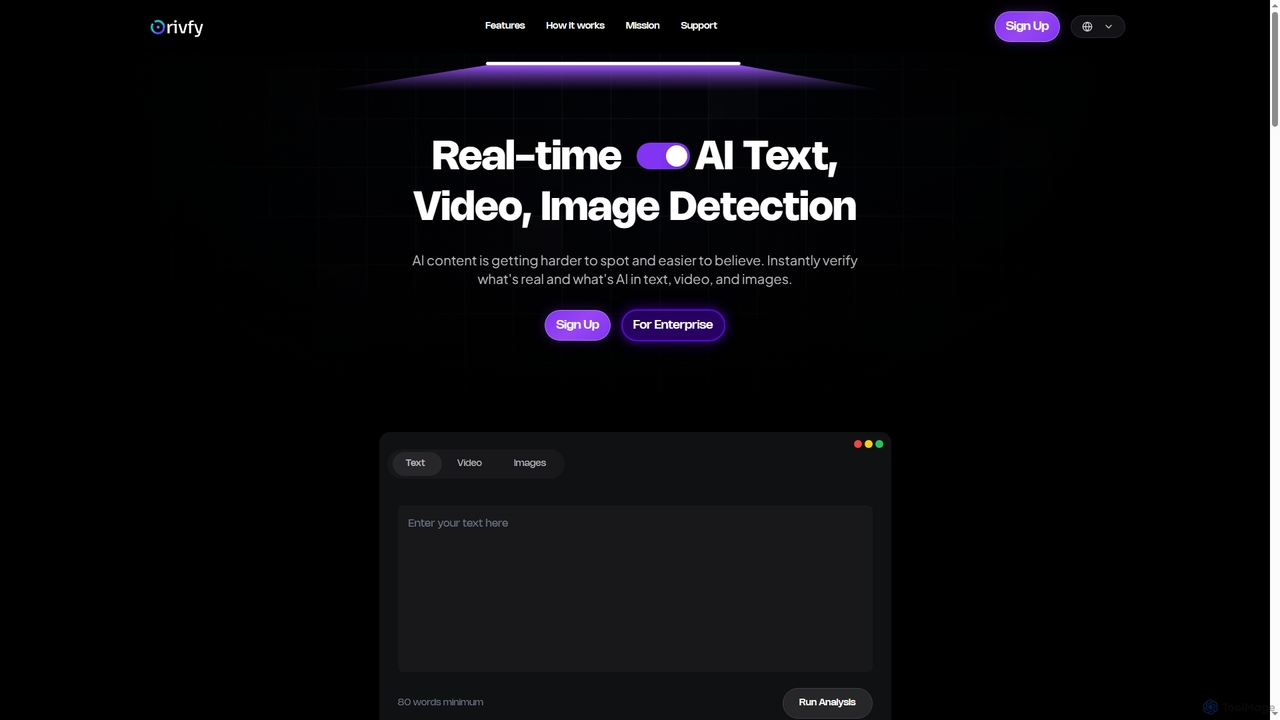
Orivfy is an advanced AI content authenticator and digital content police, designed to instantly verify whether text, video, or images are human-generated or created by AI. It helps users navigate a world increasingly filled with synthetic media by providing real-time detection and detailed insights.
About Ai Detection
AI Detection tools are a specialized category of software designed to analyze content and determine the likelihood that it was generated by an artificial intelligence model. These tools employ advanced algorithms to examine text, images, or audio for statistical patterns, linguistic artifacts, and other subtle indicators characteristic of machine generation. Their primary value lies in verifying content authenticity, upholding academic integrity, and combating the spread of AI-generated misinformation, making them a crucial component of modern content verification workflows.
Core Features
- Textual Analysis: Scans written content for patterns in perplexity, burstiness, and sentence structure to identify AI authorship.
- Multimedia Detection: Examines images, video, and audio for digital artifacts and inconsistencies typical of deepfakes or synthetic media.
- Probability Scoring: Provides a quantifiable score or percentage indicating the likelihood that the content is AI-generated rather than human-created.
- Source Highlighting: Pinpoints specific sentences or sections within a text that are most likely to be machine-written, allowing for targeted review.
Use Cases
These tools are widely used in academia by educators to check student submissions, by publishers and media outlets to verify the originality of contributed articles, and by fact-checking organizations to identify synthetic media in news and social media.
How to Choose
When selecting an AI Detection tool, consider its accuracy rates and false positive/negative statistics. Also evaluate the types of content it supports (text, image, audio), its integration capabilities with platforms like an LMS or CMS, and its pricing model, which may be based on word count or number of scans.

Ai DetectionUse Cases
Upholding Academic Integrity in Education
Educators and academic institutions use AI Detection tools to maintain fairness and originality in student work. When a student submits an essay, a teacher can run it through a detector to check for AI-generated text. The tool highlights suspicious passages and provides a probability score, helping the instructor identify potential academic misconduct and open a dialogue with the student about proper AI usage policies. This process helps preserve the value of genuine academic effort.
Verifying Authenticity for Content Publishers
Editorial teams at online publications and content agencies must ensure the authenticity of submitted articles. Before publishing a piece from a freelance writer, an editor uses an AI detector to scan the text. This step helps confirm that the content is the writer's original work and not simply generated by a large language model. It protects the publisher's reputation, maintains content quality standards, and ensures transparency with their audience.
Combating Misinformation and Deepfakes
Journalists and fact-checkers use AI Detection tools to analyze suspicious content on social media and news platforms. When a viral image, video, or controversial text appears, these tools can help determine if it's a deepfake or synthetically generated propaganda. By identifying machine-made content, they can quickly debunk false narratives and inform the public, playing a critical role in fighting digital disinformation campaigns.
Auditing SEO Content for Originality
SEO specialists and digital marketing agencies use AI detectors to audit website content and ensure compliance with search engine guidelines on helpful, human-first content. Before launching a new blog post, they scan the text to confirm it doesn't trigger AI detection flags. This proactive check helps mitigate the risk of search ranking penalties and ensures the content reflects genuine human expertise, which is increasingly valued by algorithms.
Screening User-Generated Content at Scale
Online platforms and forums that rely on user-generated content (UGC) face the challenge of spam and fake reviews created by AI bots. By integrating an AI Detection API, these platforms can automatically scan new submissions. Content flagged as highly likely to be AI-generated can be quarantined for human review or automatically rejected, protecting the community from spam and maintaining the trustworthiness of user contributions.
Validating Digital Evidence in Legal Contexts
In legal and forensic investigations, verifying the authenticity of digital evidence is paramount. AI Detection tools can be used to analyze images, audio recordings, or documents submitted as evidence. A forensic analyst might use a tool to check if a key photo has been manipulated by AI or if an audio recording is a synthetic deepfake voice. This analysis helps establish the credibility of evidence presented in legal proceedings.