Best of the Year 1 results Content Verification AI Tools

Popular AI tools in the Content Verification field include Orivfy, etc., helping you quickly improve efficiency.

Orivfy

Orivfy

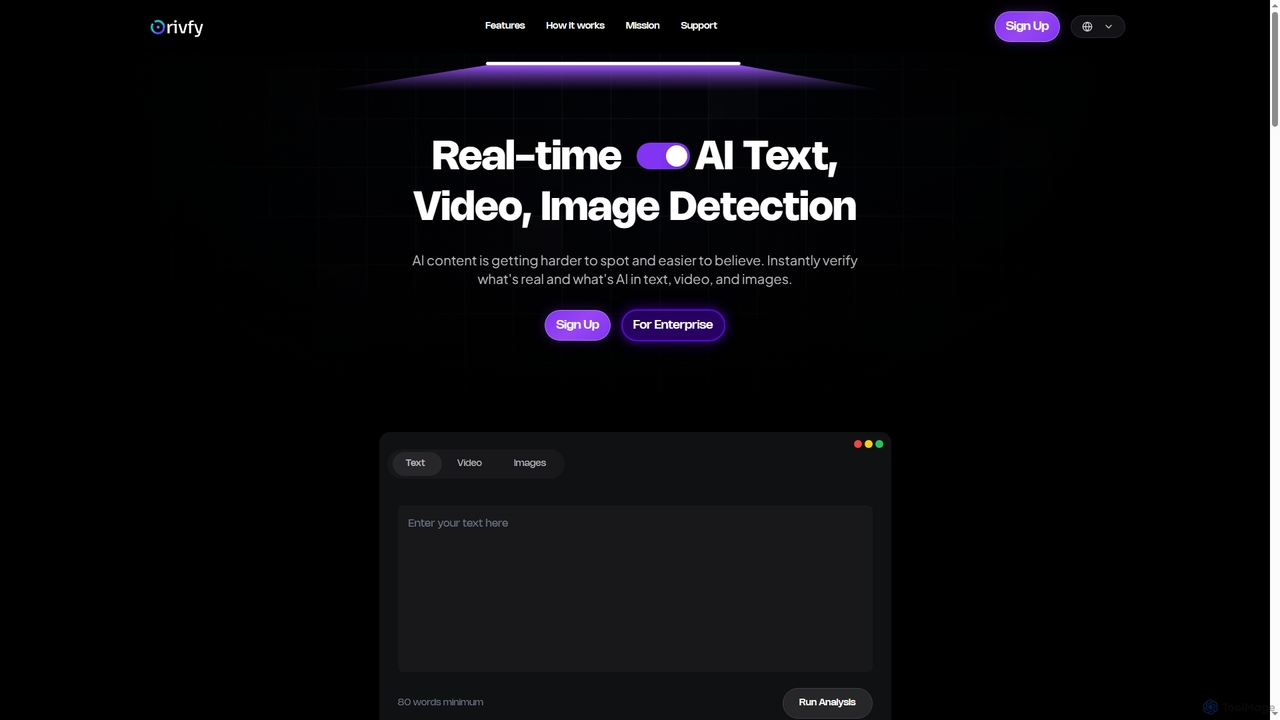
Orivfy is an advanced AI content authenticator and digital content police, designed to instantly verify whether text, video, …

2.5K

About Content Verification

Content Verification tools are AI-powered solutions designed to analyze and validate the authenticity, accuracy, and safety of digital content. Leveraging natural language processing (NLP) and machine learning, these tools detect plagiarism, identify AI-generated text, fact-check claims, and scan for harmful material. They are essential for publishers, academic institutions, and businesses to maintain content integrity, protect intellectual property, and mitigate reputational risks. Unlike manual checks, AI-driven verification provides rapid, scalable, and in-depth analysis across massive volumes of content.

Core Features

  • Plagiarism Detection: Scans content against a vast database of web pages and academic papers to identify copied passages.
  • AI Content Detection: Analyzes text for linguistic patterns characteristic of AI models to estimate the probability of machine generation.
  • Fact-Checking: Cross-references claims and data points within a text against reliable sources to assess accuracy.
  • Brand Safety Analysis: Monitors content for inappropriate language, hate speech, or topics that conflict with brand guidelines.
  • Originality Scoring: Provides a quantitative score representing the uniqueness of the content, helping creators ensure their work is original.

Applicable Scenarios

These tools are widely used in academia to check student submissions and in publishing to verify the originality of articles. Marketing and legal teams use them to ensure brand safety in user-generated content and to check for unauthorized use of copyrighted material in documents. SEO agencies also rely on them to audit content quality and originality.

Selection Criteria

When choosing a Content Verification tool, consider the scope of its features—whether you need plagiarism, AI detection, or both. Evaluate the comprehensiveness of its comparison database and its integration capabilities via API or plugins for your existing workflows. Also, assess the accuracy of its detection algorithms and the clarity of its reporting to ensure it meets your standards.

Content VerificationUse Cases

1

Ensuring Academic Integrity in Education

An educator at a university uses a content verification tool to process hundreds of student essays submitted at the end of a semester. The tool automatically scans each document against a vast database of academic papers and online sources, flagging any instances of potential plagiarism. It also provides an AI-generated content score, helping the educator identify submissions that may not be the student's original work. This process allows for fair and consistent evaluation, upholding the institution's academic integrity standards while saving the educator dozens of hours of manual checking.

2

Verifying Originality for SEO Content Production

An SEO agency manages content creation for multiple clients and needs to ensure all articles are original to avoid search engine penalties. They integrate a content verification API into their workflow. Before publishing, every article from their team of writers is automatically checked for plagiarism and AI generation. The system generates a report with an originality score and highlights any problematic sections. This allows editors to quickly request revisions, ensuring that only high-quality, unique content is delivered to clients, thereby protecting and improving their search rankings.

3

Fact-Checking News Articles Before Publication

A digital news publisher aims to maintain a high standard of journalistic accuracy. An editor uses a content verification tool to analyze a draft article about a complex economic report. The tool automatically extracts key claims, statistics, and quotes from the text. It then cross-references them with a database of trusted financial reports, academic studies, and official government sources. The tool flags a statistic that appears to be misinterpreted from its original source, allowing the editor to correct it before publication, thereby preventing the spread of misinformation and upholding the publisher's credibility.

4

Moderating User-Generated Content for Brand Safety

An e-commerce platform with a large community forum needs to ensure all user-generated content aligns with its brand safety guidelines. They employ an AI content verification tool to automatically scan every new post and comment in real-time. The system is trained to detect and flag profanity, hate speech, personal attacks, and spam. Flagged content is held in a moderation queue for a human moderator to review. This automated first-pass moderation reduces the manual workload by over 80% and ensures a safer, more positive community environment for all users.

5

Authenticating Legal Documents and Contracts

A corporate legal department handles numerous contracts daily. To prevent fraud and ensure compliance, they use a content verification tool to compare new contract drafts against approved templates and past agreements. The tool highlights any deviations, additions, or omissions from the standard clauses, even if the wording is slightly different. This allows legal professionals to quickly spot unauthorized changes or critical errors, reducing the risk of costly legal disputes and ensuring all contracts adhere to company policy before being signed.

6

Detecting Fake User Reviews on E-commerce Sites

A popular online marketplace wants to maintain the trustworthiness of its product review system. They implement an AI verification tool that analyzes the linguistic patterns of incoming reviews. The tool identifies characteristics common in fake reviews, such as overly generic praise, unusual sentence structures, and clusters of similar reviews posted in a short time frame from new accounts. By flagging these suspicious reviews for removal, the platform protects genuine customers from misleading information and maintains a fair and reliable environment for both buyers and sellers.

Content VerificationFrequently Asked Questions