Immerse
Immerse is an AI-powered language training platform for enterprises, using immersive VR, desktop, and mobile experiences. It combines …
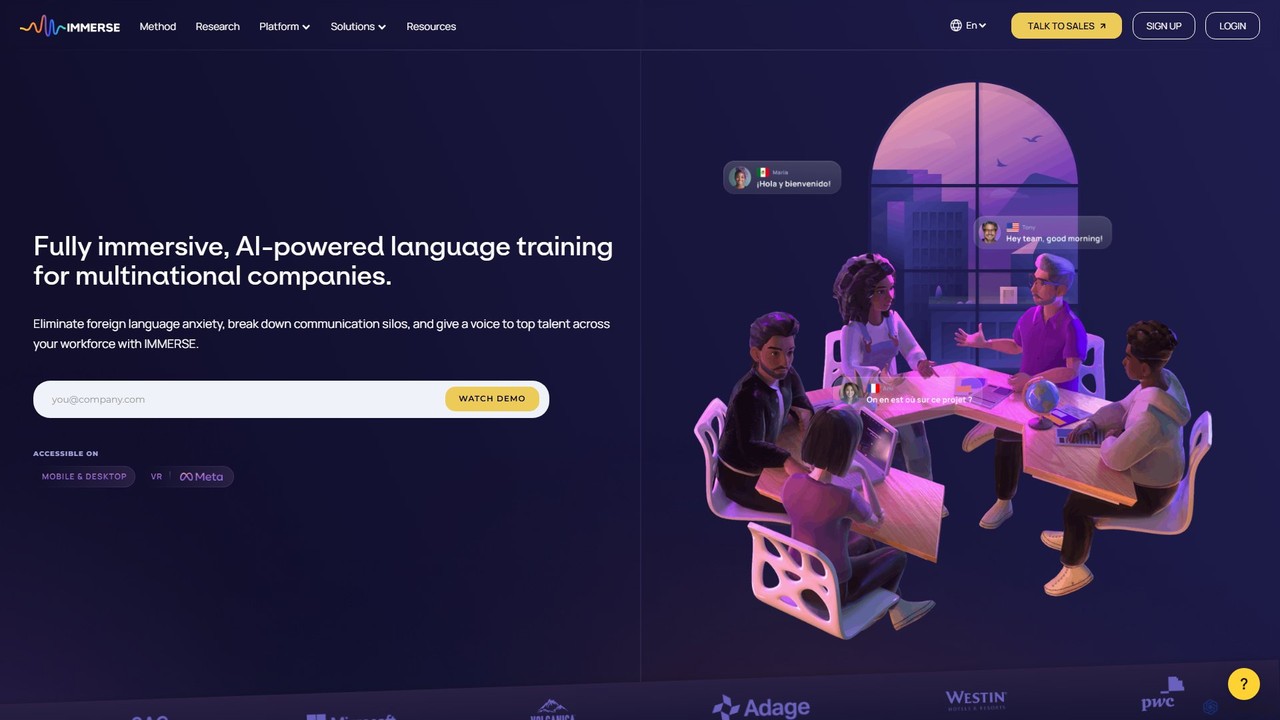
Immerse is an AI-powered language training platform for enterprises, using immersive VR, desktop, and mobile experiences. It combines AI avatar coaching, real-world simulations, and live instructor-led classes to eliminate language anxiety, boost conversational fluency, and increase employee engagement up to 9x faster than traditional methods.
About Employee Training
AI Employee Training tools are a class of software that uses artificial intelligence to create, manage, and personalize corporate learning experiences. These platforms leverage machine learning to analyze employee performance, identify skill gaps, and automatically recommend relevant training content. This approach moves beyond one-size-fits-all training, enabling organizations to deliver highly targeted and adaptive learning paths that improve knowledge retention and accelerate skill development. Many tools also feature AI-powered simulations and chatbots for interactive, on-demand practice.
Core Features
- Personalized Learning Paths: AI analyzes individual needs and career goals to create customized training curricula for each employee.
- Skills Gap Analysis: Automatically identifies discrepancies between current employee skills and required business competencies.
- Automated Content Creation: Generates training materials like quizzes, summaries, and video scripts from existing corporate documents.
- AI-Powered Simulations: Creates realistic role-playing scenarios for sales, customer service, or leadership training in a safe environment.
- Predictive Performance Analytics: Provides deep insights into learning progress, engagement, and the impact of training on business outcomes.
Use Cases
These tools are primarily used by Human Resources (HR) and Learning & Development (L&D) departments in mid-to-large enterprises. They are particularly valuable for industries with rapidly changing skill requirements, such as technology, finance, and healthcare. Common applications include automating new hire onboarding, upskilling technical teams, delivering scalable compliance training, and developing leadership skills.
How to Choose
When selecting an AI Employee Training tool, consider its integration capabilities with your existing HRIS or LMS. Evaluate the sophistication of its AI for personalization and content generation. Assess the depth of its analytics and reporting to measure ROI. Finally, ensure the platform is scalable to support your company's growth and user-friendly for both administrators and employees.

Employee TrainingUse Cases
Automate New Hire Onboarding
HR managers use AI training tools to streamline the onboarding process for new employees. The system automatically assigns a personalized 30-day learning plan, delivering modules on company culture, compliance policies, and role-specific software. AI chatbots answer common questions 24/7, reducing the burden on HR staff. The platform tracks completion rates and quiz scores, flagging individuals who may need additional support, ensuring a consistent and efficient onboarding experience for every new hire.
Develop Sales Skills with AI Simulations
A sales manager aims to improve their team's objection handling skills. They use an AI training tool to create realistic, interactive role-playing simulations. Sales reps practice conversations with an AI-powered virtual customer that presents common objections. The AI provides instant feedback on tone, word choice, and strategy. The manager can review performance dashboards to identify common sticking points across the team and assign targeted micro-learning modules to address those specific weaknesses, leading to more confident and effective sales calls.
Scale Mandatory Compliance Training
A compliance officer in a financial firm needs to ensure all 5,000 employees complete annual anti-money laundering (AML) training. Using an AI platform, they deploy the training module to all employees. The AI adapts the difficulty of quizzes based on each user's performance, ensuring true comprehension, not just completion. The system automatically sends reminders to those who are behind schedule and generates a comprehensive audit trail for regulators. This automates a logistical nightmare, saves hundreds of administrative hours, and reduces compliance risk.
Identify and Close Critical Skill Gaps
An L&D specialist at a tech company needs to upskill their developers in machine learning. The AI platform analyzes the team's existing skills by scanning their project contributions and self-assessments. It identifies specific gaps (e.g., proficiency in TensorFlow but not PyTorch). Based on this analysis, the AI curates a personalized learning path for each developer, recommending a mix of online courses, internal workshops, and relevant project tasks. This targeted approach ensures training investment is focused precisely where it's needed most, accelerating the team's readiness for new projects.
Develop Leadership and Soft Skills
An L&D department wants to provide scalable leadership coaching for new managers. They use an AI tool that offers a virtual coaching chatbot. Managers can practice difficult conversations, such as giving constructive feedback or managing conflict, in a safe, simulated environment. The AI analyzes their responses, providing guidance on empathy, clarity, and tone. This on-demand practice helps managers build confidence and competence without the high cost and scheduling challenges of one-on-one human coaching, making soft skills development accessible across the organization.
Generate Training Content from Existing Documents
An instructional designer is tasked with creating a new training course on a complex internal software product. Instead of starting from scratch, they upload the 200-page technical documentation into an AI training tool. The AI analyzes the document and automatically generates a course outline, key learning objectives, a series of micro-learning videos with scripts, and a final quiz. The designer then reviews and refines this AI-generated content, reducing the course development time from weeks to days and ensuring consistency with the source material.