Cost Management Best in category 1 results Ai Resource AI Tool

Popular AI tools in the Ai Resource field of Cost Management include BYOKList, etc., helping you quickly improve efficiency.

Free
BYOKList

BYOKList

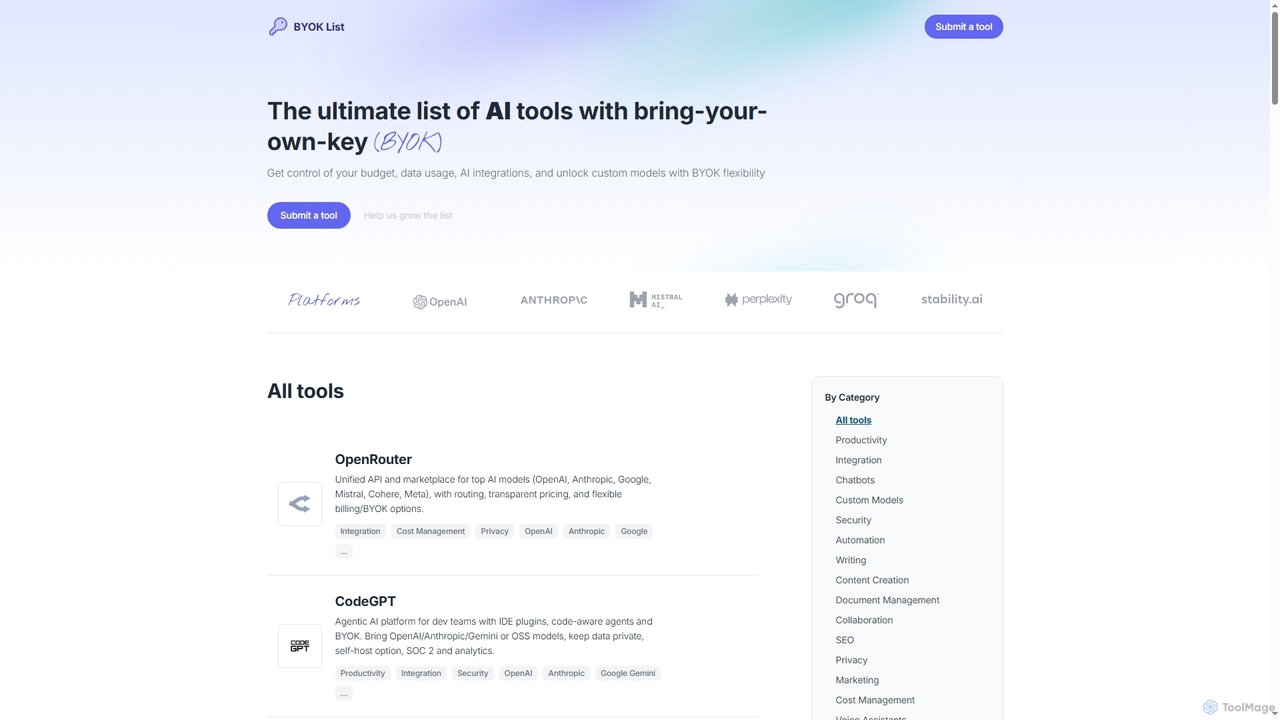
BYOKList is the ultimate directory for discovering AI tools that support Bring-Your-Own-Key (BYOK) functionality. It empowers users to …

5.2K

About Ai Resource

Ai Resource tools are specialized platforms designed to optimize and manage the costs associated with artificial intelligence projects. These tools provide detailed cost insights by monitoring key metrics across computing resources, API usage, data storage, and model deployments. Their primary goal is to help businesses and developers effectively control AI expenditures, enhance resource utilization, and maximize the return on AI investments. They often integrate cost forecasting, budget management, and intelligent optimization recommendations for granular control over AI infrastructure and service spending.

Core Features

  • Cost Monitoring & Analysis: Real-time tracking of AI computing resources (GPU/CPU), API calls, data storage, and other expenditures with visual reports.
  • Budget Management & Alerts: Setting AI project budgets and automatically issuing alerts when spending approaches or exceeds predefined limits.
  • Resource Optimization Recommendations: Intelligent suggestions for more economical compute instances, storage solutions, or API calling strategies based on usage patterns and cost data.
  • Multi-Cloud/Multi-Service Integration: Support for integrating cost data from major cloud providers (AWS, Azure, GCP) and third-party AI services (e.g., OpenAI, Anthropic).
  • Cost Attribution & Allocation: Helps identify cost ownership for different AI models, projects, or teams, facilitating internal cost allocation and accounting.

Use Cases

These tools are crucial for organizations and individuals deeply involved in AI development and deployment. They are utilized by data scientists, ML engineers, IT and finance departments, and project managers to gain transparency and control over AI-related spending. Specific scenarios include optimizing model training costs, managing API call budgets, and ensuring efficient use of cloud AI infrastructure.

How to Choose

When selecting an Ai Resource management tool, consider its integration capabilities with your existing cloud and AI service providers, the granularity of cost insights it offers, and its ability to provide actionable optimization recommendations. Evaluate its budget management features, real-time alerting system, and the ease of attributing costs to specific projects or teams. Scalability and user-friendliness are also important factors for long-term adoption and effectiveness.

Ai ResourceUse Cases

1

Optimizing Cloud Spend for AI Training

A data science lead needs to train multiple large language models on cloud GPUs. Using an Ai Resource tool, they monitor real-time GPU utilization and data transfer costs, receiving alerts when spending exceeds thresholds. The tool suggests rightsizing instances or scheduling training during off-peak hours, reducing monthly cloud bills by 15-20% without compromising model performance.

2

Optimize AI Model Training Costs

Data scientists and ML engineers often face high costs when training complex AI models. By using Ai Resource management tools, they can monitor GPU utilization, data transfer fees, and storage costs in real-time. This allows them to identify inefficiencies, adjust training parameters, or switch to more cost-effective cloud instances, significantly reducing the overall expenditure for model development and iteration cycles.

3

Managing Third-Party AI API Costs

A product development team integrates several external AI APIs for features like sentiment analysis and image recognition. An Ai Resource platform tracks API call volumes, identifies underutilized or over-costly services, and provides a consolidated view of spending across all vendors. This allows the team to negotiate better API contracts and switch to more cost-effective alternatives when available.

4

Control AI API Call Expenditures

Developers and product managers leveraging third-party AI APIs, such as large language models, need to manage their usage carefully to avoid unexpected cost spikes. Ai Resource tools enable them to monitor API call volumes and associated fees, set usage limits, and configure real-time alerts. This proactive approach helps prevent overspending due to high-frequency calls or misconfigurations, ensuring API usage aligns with budget constraints.

5

Forecasting AI Project Budgets

A finance manager is planning the budget for a new AI-driven customer service chatbot. By inputting historical data from similar projects and projected usage, an Ai Resource tool generates accurate cost forecasts for model development, deployment, and ongoing inference. This enables precise budget allocation and avoids unexpected expenditures.

6

Refine AI Infrastructure Budget Management

Enterprise IT and finance departments require precise control over their AI cloud infrastructure budgets. Ai Resource tools provide capabilities for detailed budget planning, cost forecasting, and real-time tracking of cloud resources like specialized AI services (e.g., AWS SageMaker, Azure ML). This ensures that AI infrastructure investments remain within financial targets, preventing budget overruns and enabling strategic resource allocation for future AI initiatives.

7

Identifying Cost Inefficiencies in MLOps

An MLOps engineer observes fluctuating costs for their deployed AI models. An Ai Resource tool analyzes inference patterns, identifies models with high idle times or inefficient resource allocation, and pinpoints specific operations contributing to unnecessary spend. This leads to adjustments in deployment strategies, such as auto-scaling policies, saving significant operational costs.

8

Evaluate Cost-Effectiveness of AI Solutions

Decision-makers often need to compare the cost-effectiveness of building in-house AI models versus utilizing third-party AI services. Ai Resource tools facilitate this by providing comprehensive cost breakdowns for both approaches, including compute, storage, API fees, and maintenance. This data-driven comparison helps organizations make informed strategic decisions, ensuring they choose the most economically viable and performant AI solution for their specific needs.

9

Allocating AI Costs to Specific Teams/Projects

A large enterprise runs numerous AI projects across different departments. An Ai Resource solution tags and attributes AI-related cloud and API costs to specific teams or projects. This provides clear visibility into each department's AI spending, enabling accurate internal chargebacks and fostering greater financial accountability for AI initiatives.

10

Automate AI Resource Idle Detection

Operations teams often struggle with identifying and shutting down idle AI computing instances or unused storage volumes, leading to unnecessary cloud resource waste. Ai Resource management tools can automate the detection of such inactive resources based on predefined rules or usage patterns. This automation helps reduce wasteful spending by ensuring that resources are only active when needed, contributing to significant cost savings over time.

11

Evaluating Cost-Effectiveness of AI Model Choices

A machine learning researcher needs to choose between several pre-trained AI models or developing a custom one. An Ai Resource tool helps compare the total cost of ownership, including inference costs, fine-tuning expenses, and potential API fees, for each option. This data-driven comparison ensures the most cost-effective model is selected for the specific business problem.

12

Ensure AI Project Cost Transparency

Project managers and department heads need clear visibility into the actual expenditures of each AI project for accurate reporting and internal cost allocation. Ai Resource tools provide detailed, granular cost reports that break down spending by project, team, or specific AI service. This transparency enables better accountability, facilitates internal chargebacks, and supports data-driven decisions for future project planning and resource allocation.

Ai ResourceFrequently Asked Questions