ThriftyAI
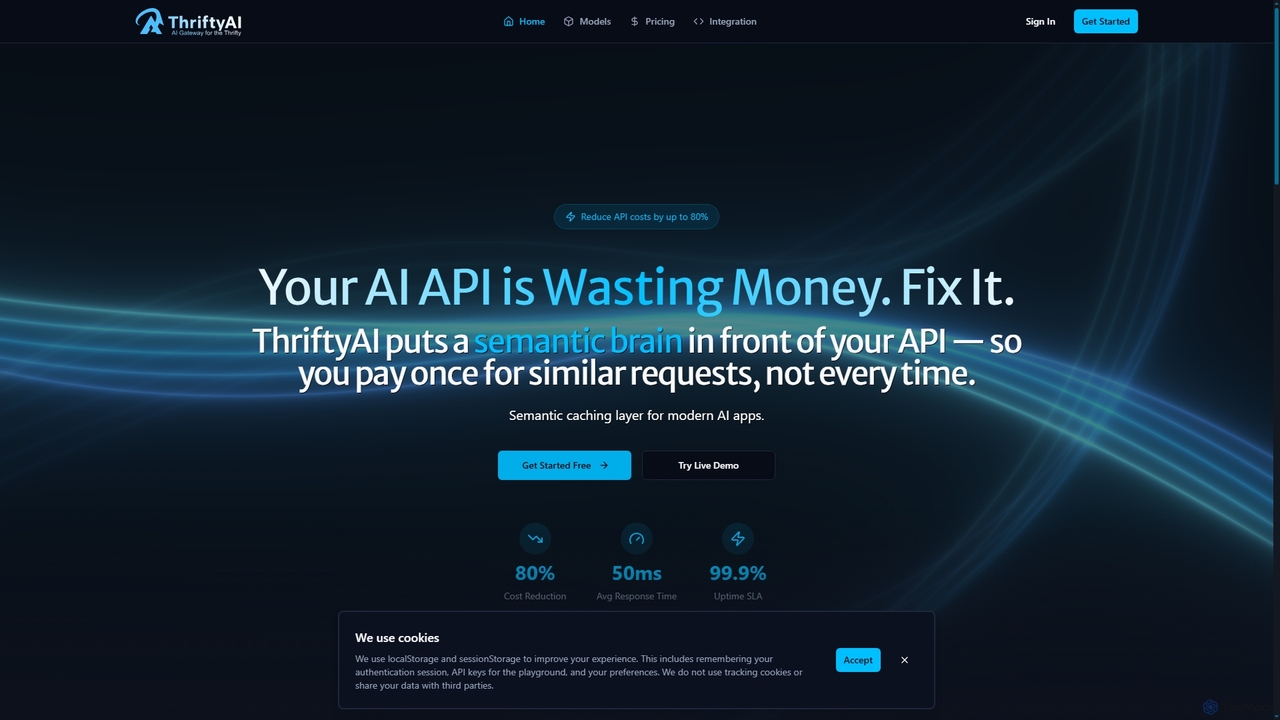
ThriftyAI is an advanced AI gateway and semantic caching layer designed to significantly reduce AI API costs by …
ThriftyAI is an advanced AI gateway and semantic caching layer designed to significantly reduce AI API costs by up to 80% and accelerate response times. It intelligently caches similar requests, masks sensitive data, and provides robust safety features, making it ideal for modern AI applications seeking efficiency and enterprise-grade security.
BYOKList
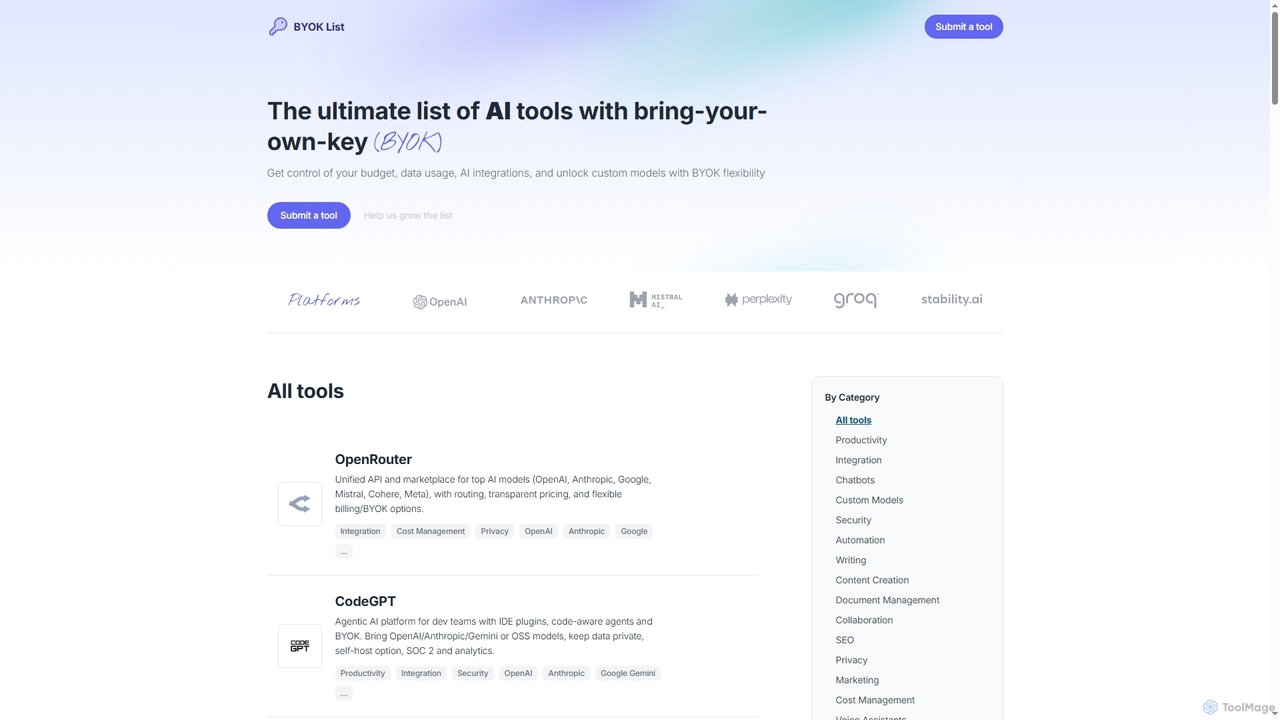
BYOKList is the ultimate directory for discovering AI tools that support Bring-Your-Own-Key (BYOK) functionality. It empowers users to …
BYOKList is the ultimate directory for discovering AI tools that support Bring-Your-Own-Key (BYOK) functionality. It empowers users to manage their budget, data usage, and AI integrations, while also enabling access to custom models with enhanced flexibility.
About Cost Management
Cost Management tools are AI-powered solutions designed to help organizations monitor, analyze, and optimize their expenditures. These tools leverage advanced machine learning algorithms to process vast amounts of financial data, identify spending patterns, and predict future costs. By automating expense tracking and providing actionable insights, they enable businesses to reduce operational overhead, enhance financial transparency, and make more informed budgetary decisions.
Core Features
- Spend Categorization: Automatically classifies expenses into predefined or custom categories for better visibility.
- Anomaly Detection: Identifies unusual spending patterns or potential fraud through real-time monitoring and alerts.
- Predictive Analytics: Forecasts future costs and budget requirements based on historical data and market trends.
- Budget Optimization: Provides recommendations for reallocating resources and identifying areas for potential savings.
- Vendor Negotiation Support: Analyzes vendor performance and contract terms to inform better negotiation strategies.
Use Cases
Finance departments utilize these tools to gain granular control over budgets, ensuring compliance and identifying cost-saving opportunities. Procurement teams leverage AI for optimizing supplier contracts and managing purchasing efficiency. Project managers also benefit by accurately forecasting project expenditures and preventing budget overruns, leading to more successful project deliveries.
How to Choose
When selecting an AI Cost Management tool, consider its integration capabilities with existing ERP or accounting systems to ensure seamless data flow. Evaluate the accuracy and customization options of its AI models for specific business needs. Look for robust reporting and visualization features that provide clear, actionable insights. Finally, assess the scalability and security measures to support your organization's growth and data protection requirements.
Cost ManagementUse Cases
Optimizing Cloud Spend for IT Operations
IT departments and cloud architects utilize AI Cost Management tools to analyze complex cloud usage data across platforms like AWS, Azure, and Google Cloud. These tools identify underutilized resources, recommend rightsizing instances, and suggest optimal purchasing options (e.g., reserved instances, spot instances). This enables organizations to reduce their monthly cloud bills by 20-40% while maintaining performance, ensuring efficient resource allocation and preventing costly overprovisioning.
Real-time Budget Monitoring & Alerts
Finance managers can use AI cost management tools to continuously track departmental spending against allocated budgets. The AI automatically flags any expenditures exceeding predefined thresholds or showing unusual spikes, sending instant alerts. This proactive approach allows teams to address potential overspending immediately, preventing significant budget deviations and maintaining financial discipline across the organization.
Automating Invoice Processing and Auditing
Finance teams and accounts payable specialists leverage AI Cost Management tools to automate the entire invoice processing workflow. AI extracts key data from invoices, matches them against purchase orders and receipts, and flags any discrepancies or potential fraud. This significantly reduces manual data entry errors, accelerates payment cycles, and ensures compliance with financial policies, saving hundreds of hours monthly and improving audit readiness.
Optimizing Cloud Infrastructure Costs
IT operations teams leverage these tools to analyze cloud service usage across platforms like AWS, Azure, or Google Cloud. The AI identifies idle resources, inefficient configurations, and opportunities for reserved instance purchases. By providing actionable recommendations, it helps reduce unnecessary cloud spending, ensuring that compute and storage resources are utilized efficiently and cost-effectively.
Predictive Budgeting for Marketing Campaigns
Marketing managers and strategists employ AI Cost Management tools to forecast campaign costs with greater accuracy. By analyzing historical campaign performance, market trends, competitor spending, and audience engagement data, AI predicts optimal budget allocations across various channels. This allows for proactive adjustments to marketing spend, maximizing ROI and ensuring campaigns stay within budget, leading to more effective resource utilization and improved campaign outcomes.
Automated Invoice Processing & Auditing
Accounts payable departments can automate the processing of incoming invoices. AI tools extract relevant data, match invoices against purchase orders and contracts, and identify discrepancies or duplicate entries. This not only accelerates the payment cycle but also significantly reduces manual errors and the risk of overpayment, enhancing the accuracy and integrity of financial records.
Supply Chain Cost Reduction and Optimization
Procurement and logistics teams utilize AI Cost Management tools to identify inefficiencies and cost-saving opportunities throughout the supply chain. AI analyzes supplier performance, shipping routes, inventory levels, and material price fluctuations to recommend optimal sourcing strategies, negotiate better contract terms, and predict demand. This leads to reduced procurement costs, optimized logistics, minimized waste, and improved overall supply chain resilience, often resulting in 5-15% cost savings.
Strategic Vendor Contract Analysis
Procurement specialists utilize AI to analyze complex vendor contracts, identifying key terms, potential risks, and opportunities for negotiation. The tools can benchmark pricing against market rates and historical data, providing insights that strengthen negotiation positions. This leads to more favorable contract terms, reduced supplier costs, and improved overall vendor management.
Employee Expense Management and Policy Compliance
HR and finance departments deploy AI Cost Management tools to streamline the processing of employee expense reports. AI automatically scans receipts, categorizes expenses, and cross-references them with company policies to detect violations or duplicate submissions. This accelerates reimbursement times, reduces administrative burden, and ensures strict adherence to expense policies, minimizing fraud and improving overall financial governance for the organization.
Predictive Project Cost Forecasting
Project managers employ AI cost management to forecast future project expenses with greater accuracy. By analyzing historical project data, resource allocation, and external market factors, the AI can predict potential cost overruns or savings. This enables managers to adjust project plans proactively, allocate resources more effectively, and ensure projects stay within budget, improving overall project profitability.
Energy Consumption Optimization for Facilities
Facility managers and operations teams use AI Cost Management tools to monitor and analyze energy usage patterns in commercial buildings or industrial sites. AI identifies peak consumption times, detects inefficient equipment, and recommends adjustments to HVAC systems, lighting, and machinery schedules. This proactive approach leads to significant reductions in electricity, heating, and cooling costs, often achieving 10-25% savings annually, while also contributing to sustainability goals.
Identifying & Eliminating Redundant Subscriptions
Businesses often accumulate numerous software subscriptions that may become redundant or underutilized over time. AI tools can analyze usage data for all subscribed services, identifying licenses that are no longer needed or could be consolidated. This helps organizations eliminate unnecessary recurring expenses, streamlining their software portfolio and achieving significant savings on operational software costs.