ToolMage
Sign in

Best 1 Automation AI tools for Crm Integration

Popular Automation AI tools in Crm Integration include Report Fox AI, helping you work more efficiently.

Report Fox AI
Freemium

Report Fox AI

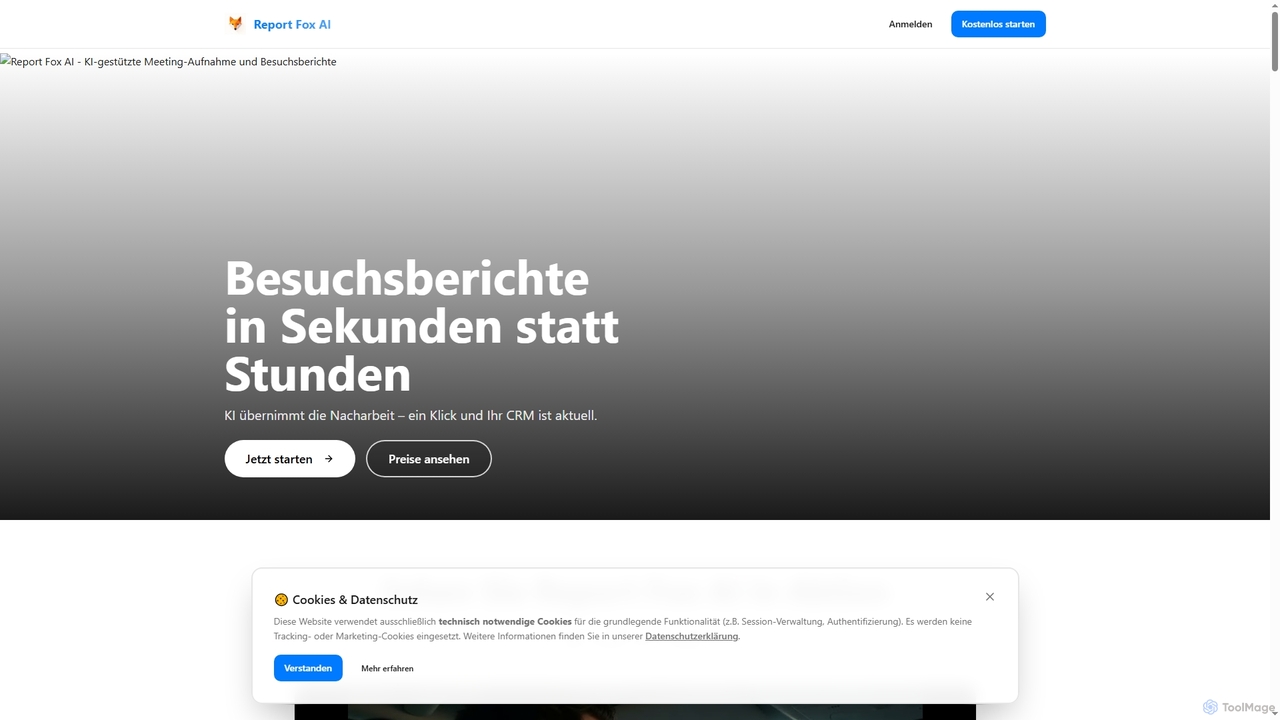
Report Fox AI is an innovative AI tool designed to transform sales meeting documentation from hours to seconds. It automates the creation of professional visit reports, extracts key insights, and seamlessly integrates with CRM systems like Salesforce and Dynamics 365, significantly boosting sales team productivity and data accuracy.

Transcription
Visits 5.5KFavorites 124Likes 133

About Automation

AI Automation tools are a category of software designed to streamline and execute repetitive tasks and complex workflows within business operations, often integrating seamlessly with CRM systems. Leveraging artificial intelligence, these tools can learn patterns, make data-driven decisions, and automate processes that traditionally required human intervention. Their primary value lies in enhancing operational efficiency, reducing manual errors, and freeing up human resources for more strategic activities, particularly in areas like sales, marketing, and customer service within a CRM environment.

Core Features

  • Workflow Orchestration: Automates multi-step processes across different applications, ensuring smooth data flow and task execution.
  • Intelligent Data Entry: Uses AI to automatically extract, validate, and input data into CRM fields, minimizing manual effort and errors.
  • Automated Lead Nurturing: Triggers personalized communication sequences based on lead behavior and CRM data, improving conversion rates.
  • Predictive Task Assignment: Employs AI to analyze customer profiles and assign tasks or leads to the most suitable team member.
  • Real-time Reporting: Automatically generates and updates performance dashboards and reports based on live CRM data.

Use Cases

These tools are invaluable for sales teams, marketing departments, and customer support centers looking to optimize their CRM usage. They automate everything from initial lead qualification and data synchronization to personalized customer outreach and post-sale follow-ups. Businesses can leverage AI automation to ensure consistent customer experiences, accelerate sales cycles, and gain deeper insights from their CRM data without extensive manual oversight.

How to Choose

When selecting an AI Automation tool for CRM, consider its integration compatibility with your existing CRM platform and other business applications. Evaluate its customization capabilities to adapt workflows to your specific needs, scalability for future growth, and the sophistication of its AI features, such as natural language processing for intelligent routing or predictive analytics for task prioritization. Security protocols and data privacy compliance are also crucial considerations.

Automation use cases

1

Automating Lead Qualification and Assignment

Sales development representatives (SDRs) often spend significant time manually qualifying leads and assigning them. AI automation tools can automatically score incoming leads based on predefined criteria, enrich lead data from various sources, and instantly assign them to the most appropriate sales representative within the CRM, ensuring faster follow-up and improved conversion potential.

2

Streamlining Customer Service Ticket Routing

Customer support teams can utilize AI automation to intelligently route incoming support tickets. Based on keywords, sentiment analysis, and customer history within the CRM, the tool can automatically categorize tickets, prioritize urgent issues, and assign them to the specialist best equipped to handle the query, reducing response times and improving customer satisfaction.

3

Automating Personalized Email Marketing Campaigns

Marketing teams can leverage AI automation to create highly personalized email campaigns. By integrating with CRM data, these tools can automatically segment audiences, trigger specific email sequences based on customer behavior (e.g., website visits, purchase history), and even optimize send times for maximum engagement, leading to higher open and click-through rates.

4

Synchronizing Data Across Business Applications

Operations managers frequently face challenges with data silos between CRM, ERP, and marketing automation platforms. AI automation tools can automatically synchronize customer data, sales figures, and inventory levels across these disparate systems in real-time, ensuring data consistency, reducing manual data entry errors, and providing a unified view of customer interactions.

5

Generating Automated Sales Performance Reports

Sales managers need up-to-date performance insights but manual report generation is time-consuming. AI automation can automatically pull relevant sales data from the CRM, analyze key metrics (e.g., win rates, pipeline velocity), and generate customized reports or dashboards on a scheduled basis, providing actionable insights without manual intervention.

6

Automating Post-Interaction Follow-up Tasks

After a sales call or customer interaction, sales and support agents often have follow-up tasks like sending summaries, scheduling next steps, or updating CRM records. AI automation tools can detect interaction completion and automatically create these follow-up tasks, send pre-approved communication, or update CRM statuses, ensuring no critical steps are missed and improving efficiency.

Automation FAQ

What are AI Automation tools in the context of CRM?

AI Automation tools in CRM are software solutions that use artificial intelligence to automate repetitive, rule-based, and even complex decision-making tasks within customer relationship management processes. They aim to enhance efficiency by handling data entry, lead management, customer service interactions, and personalized communications, freeing up human agents for more strategic engagement.

How do AI Automation tools enhance CRM efficiency?

AI Automation tools significantly boost CRM efficiency by reducing manual workload, minimizing human errors, and accelerating response times. They automate tasks like lead scoring, data synchronization, email scheduling, and report generation, allowing sales, marketing, and support teams to focus on building relationships and strategic initiatives rather than administrative overhead.

What's the difference between general automation and AI automation in CRM?

General automation in CRM typically follows predefined rules and fixed workflows (e.g., "if X, then Y"). AI automation, however, uses machine learning and natural language processing to understand context, adapt to new data, and make intelligent decisions beyond simple rules. This allows for more dynamic lead scoring, personalized customer interactions, and predictive analytics, offering greater flexibility and sophistication.

What should I consider when choosing an AI Automation tool for my CRM?

When selecting an AI Automation tool, prioritize seamless integration with your existing CRM and other business systems. Evaluate its specific AI capabilities, such as natural language understanding or predictive analytics, and ensure it offers sufficient customization options for your unique workflows. Scalability, security features, ease of use, and vendor support are also crucial factors to consider for long-term success.

Can AI Automation tools integrate with existing CRM systems?

Yes, the primary value of AI Automation tools in this context is their ability to integrate deeply with existing CRM systems like Salesforce, HubSpot, or Zoho CRM. They typically connect via APIs or native connectors to access and update customer data, trigger workflows, and ensure a unified view of customer interactions across your entire technology stack, enhancing the CRM's capabilities.