Report Fox AI
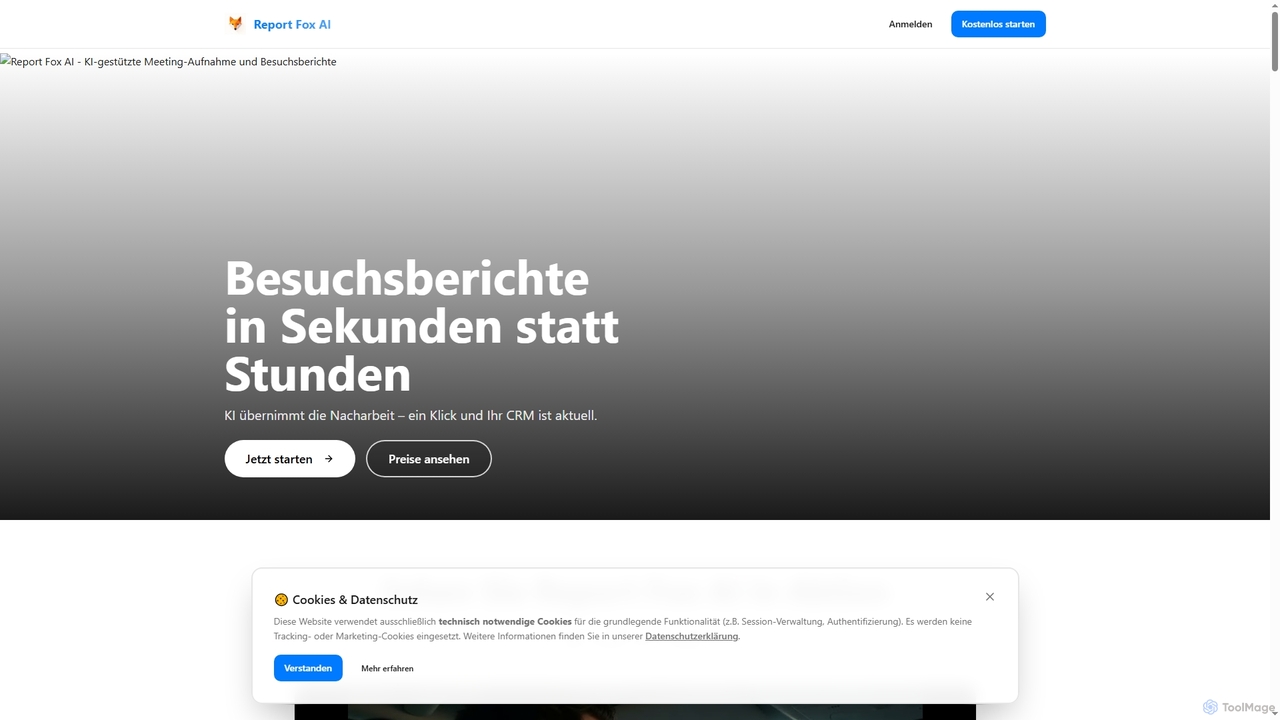
Report Fox AI is an innovative AI tool designed to transform sales meeting documentation from hours to seconds. …
Report Fox AI is an innovative AI tool designed to transform sales meeting documentation from hours to seconds. It automates the creation of professional visit reports, extracts key insights, and seamlessly integrates with CRM systems like Salesforce and Dynamics 365, significantly boosting sales team productivity and data accuracy.
About Crm Integration
CRM Integration are AI-powered tools that seamlessly connect Customer Relationship Management (CRM) systems with other business applications. These tools leverage artificial intelligence to automate data synchronization, streamline workflows, and provide a unified view of customer interactions across various platforms. By breaking down data silos, CRM Integration enhances operational efficiency, improves customer experience, and empowers businesses with actionable insights for better decision-making.
Core Features
- Automated Data Synchronization: Real-time or scheduled transfer of customer data, sales activities, and communication logs between CRM and other systems (e.g., ERP, marketing automation, support platforms).
- Workflow Automation: Triggering actions in one system based on events in another, such as creating a support ticket from a CRM note or updating lead status from a marketing campaign.
- Unified Customer View: Consolidating customer information from all integrated sources into a single, comprehensive profile within the CRM, providing a 360-degree perspective.
- Predictive Analytics & Insights: Utilizing AI to analyze integrated data for forecasting sales trends, identifying churn risks, and personalizing customer engagement strategies.
- Personalized Communication: Enabling tailored messaging and outreach across different channels by leveraging rich, integrated customer data for more relevant interactions.
Use Cases
Businesses across various sectors, including sales, marketing, and customer service, utilize CRM Integration to optimize their operations. Sales teams integrate CRM with email and calendar tools to automate meeting scheduling and follow-ups. Marketing departments connect CRM with marketing automation platforms to personalize campaigns based on customer behavior. Customer service teams integrate CRM with helpdesk software to access complete customer histories for faster, more informed support.
How to Choose
When selecting a CRM Integration solution, consider the depth and breadth of its integration capabilities with your existing tech stack, ensuring compatibility with critical business applications. Evaluate the AI features offered, such as predictive analytics or intelligent automation, to match your specific needs for enhanced insights and efficiency. Assess the scalability of the solution to accommodate future growth, its ease of implementation, and the level of data security and compliance it provides. Finally, compare pricing models and vendor support to ensure a cost-effective and reliable partnership.
Crm IntegrationUse Cases
Automating Lead Qualification and Routing
Sales teams often receive leads from various sources like website forms, social media, and email campaigns. With CRM Integration, AI tools can automatically capture these leads, enrich them with public data, qualify them based on predefined criteria (e.g., budget, industry), and then route them to the most appropriate sales representative within the CRM. This ensures no lead is missed, accelerates the sales cycle, and allows sales reps to focus on high-potential prospects, significantly improving conversion rates.
Personalizing Customer Communication at Scale
Marketing departments aim to deliver highly relevant messages to customers. By integrating CRM with marketing automation platforms, businesses can leverage comprehensive customer data—including purchase history, browsing behavior, and support interactions—to segment audiences precisely. AI-powered CRM Integration tools then enable the creation and delivery of personalized email campaigns, product recommendations, and promotional offers across multiple channels, leading to higher engagement rates and improved customer loyalty.
Enhancing Customer Service with Unified Data
Customer service agents frequently switch between multiple systems to gather information about a customer's history, orders, and previous interactions. CRM Integration unifies this data from helpdesk software, e-commerce platforms, and communication tools directly within the CRM. This provides agents with a 360-degree view of the customer at their fingertips, allowing them to resolve issues faster, offer more informed solutions, and deliver a consistently positive service experience, reducing resolution times and increasing customer satisfaction.
Streamlining Sales Pipeline Management
Sales managers need real-time visibility into their pipeline to forecast accurately and identify bottlenecks. CRM Integration connects the CRM with sales enablement tools, communication platforms, and even financial systems. This allows for automated updates of deal stages, tracking of sales activities, and generation of comprehensive reports. AI can then analyze this integrated data to predict deal closures, suggest next best actions for sales reps, and optimize the overall sales process, leading to more efficient pipeline management and increased revenue.
Proactive Customer Retention and Churn Prediction
Businesses strive to retain existing customers and reduce churn. CRM Integration, especially with AI capabilities, can analyze customer behavior patterns, usage data from product platforms, and support interactions to identify early warning signs of potential churn. For instance, a drop in product usage combined with multiple support tickets might trigger an alert. This allows customer success teams to proactively reach out with targeted interventions, special offers, or personalized support, significantly improving customer retention rates.
Automating Post-Sale Onboarding and Follow-ups
After a sale is closed, effective onboarding and follow-up are crucial for customer success. CRM Integration can automate this process by connecting the CRM with project management tools, email marketing platforms, and customer success software. Once a deal is marked "closed-won" in the CRM, it can automatically trigger a welcome email sequence, assign onboarding tasks to the relevant team, and schedule follow-up calls. This ensures a smooth transition for new customers and maintains engagement, fostering long-term relationships.