Crm Best in category 1 results Sales Enablement AI Tool

Popular AI tools in the Sales Enablement field of Crm include Pod, etc., helping you quickly improve efficiency.

Pod

Pod

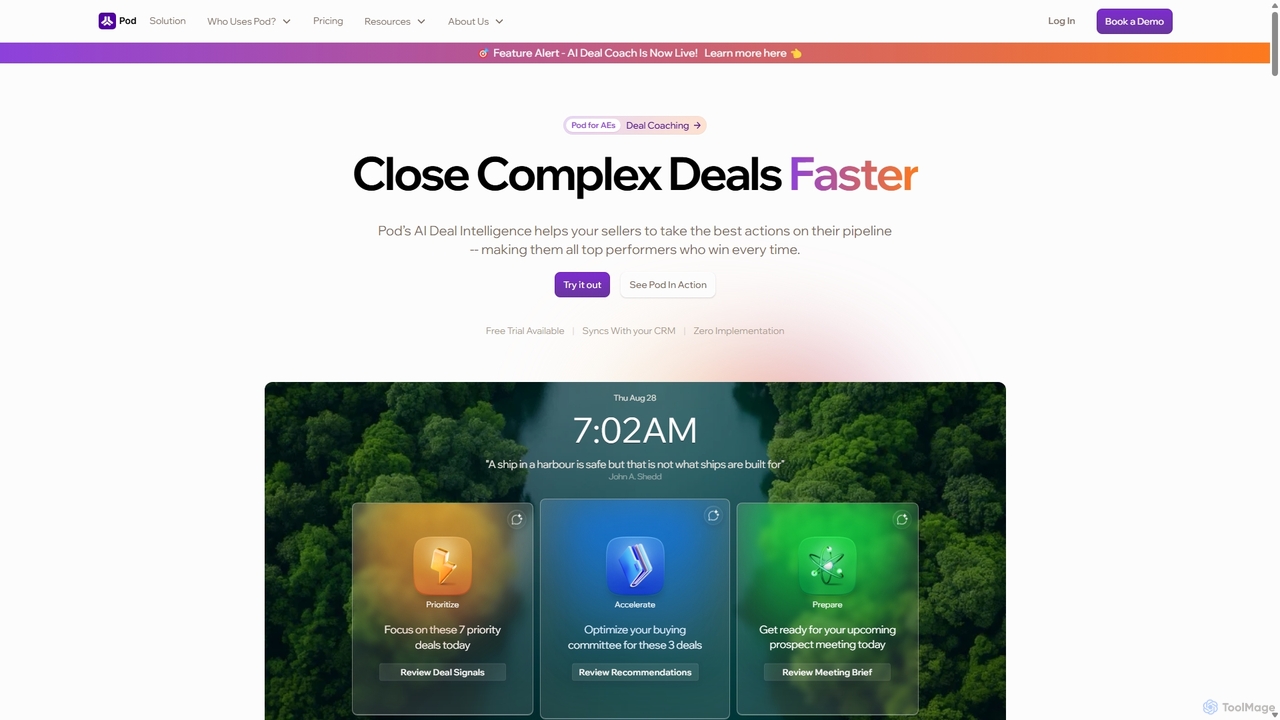
Pod is an AI-powered sales coach for B2B sellers, designed to accelerate deal closures and enhance pipeline management. …

8.4K

About Sales Enablement

Sales Enablement tools are AI-powered platforms that equip sales teams with the content, training, and insights needed to engage buyers effectively. These tools often integrate with or extend CRM systems, using AI to analyze sales interactions, recommend relevant content in real-time, and provide data-driven coaching. Their primary purpose is to increase sales productivity, shorten sales cycles, and improve quota attainment. By delivering actionable intelligence directly into the sales workflow, they bridge the gap between strategy and execution.

Core Features

  • AI Content Recommendation: Suggests the most impactful content (e.g., case studies, battle cards) for each specific sales scenario.
  • Conversation Intelligence: Records and analyzes sales calls to identify winning patterns, highlight coaching opportunities, and ensure message consistency.
  • Buyer Engagement Tracking: Monitors how prospects interact with shared materials, providing insights into their level of interest.
  • Sales Coaching & Training: Delivers automated, personalized feedback and just-in-time micro-training modules to reps.
  • Playbook Automation: Structures and automates sales processes, guiding reps through the optimal steps for each deal stage.

Use Cases

These tools are most beneficial for B2B organizations, especially those with complex products, long sales cycles, or large sales teams. They are used by sales representatives to prepare for calls, by sales managers to coach their teams, and by marketing to ensure content is being used effectively to drive revenue.

How to Choose

When selecting a Sales Enablement tool, prioritize its integration capabilities with your existing CRM. Evaluate the sophistication of its AI-driven analytics and coaching features. Assess the user interface for ease of use by sales reps, and consider the platform's content management system and reporting functionalities to measure ROI.

Sales EnablementUse Cases

1

Real-time Coaching During Sales Calls

A new sales representative at a SaaS company is on a live demo call with a key prospect. The Sales Enablement tool's conversation intelligence feature analyzes the conversation in real-time. When the prospect raises a complex objection about a competitor, the AI instantly displays a 'battle card' on the rep's screen with key talking points and differentiators. This allows the rep to confidently address the concern without hesitation, improving call outcomes and accelerating their ramp-up time.

2

Automating Personalized Sales Outreach

A marketing team creates a new case study. They upload it to the Sales Enablement platform and tag it by industry, company size, and product interest. When an account executive prepares an email for a prospect in the manufacturing sector, the tool's AI automatically suggests this new case study as a relevant attachment. It also provides a proven email template for this scenario, allowing the executive to send a highly personalized and effective outreach email in seconds, increasing engagement rates.

3

Identifying Winning Sales Patterns

A sales manager wants to understand why top performers are so successful. Using the Sales Enablement platform, they analyze call recordings and engagement data across the entire team. The AI identifies that top reps consistently mention a specific customer success story and ask a particular qualifying question early in the call. The manager uses these insights to update the official sales playbook and create a micro-training module, effectively cloning the best practices of top performers across the entire team.

4

Streamlining Sales Onboarding

A company is rapidly expanding its sales team. Instead of relying solely on in-person training, they use a Sales Enablement platform to create a structured onboarding program. New hires complete self-paced learning modules, practice pitches in a virtual coaching environment that provides AI-driven feedback, and are tested on key product knowledge. This ensures all new reps achieve a consistent level of competency before they begin interacting with customers, reducing ramp time by over 30%.

5

Measuring Content ROI and Effectiveness

The marketing department has invested heavily in creating a library of sales collateral. To understand what works, they use the Sales Enablement tool's analytics. The platform tracks which pieces of content are most frequently shared by sales reps and, more importantly, which ones are viewed and engaged with by prospects who ultimately become customers. This data allows marketing to double down on creating high-performing content and retire assets that don't contribute to revenue, directly linking content creation to sales outcomes.

6

Ensuring Consistent Messaging Across a Global Team

An enterprise with a distributed sales team across different continents struggles with maintaining a consistent brand message. They implement a Sales Enablement platform as a single source of truth for all approved marketing collateral and sales playbooks. The conversation intelligence feature is used to flag calls where outdated terminology or incorrect product positioning is used. This allows managers to provide targeted coaching, ensuring that every salesperson, regardless of location, is delivering a unified and on-brand message to the market.

Sales EnablementFrequently Asked Questions