
Intract
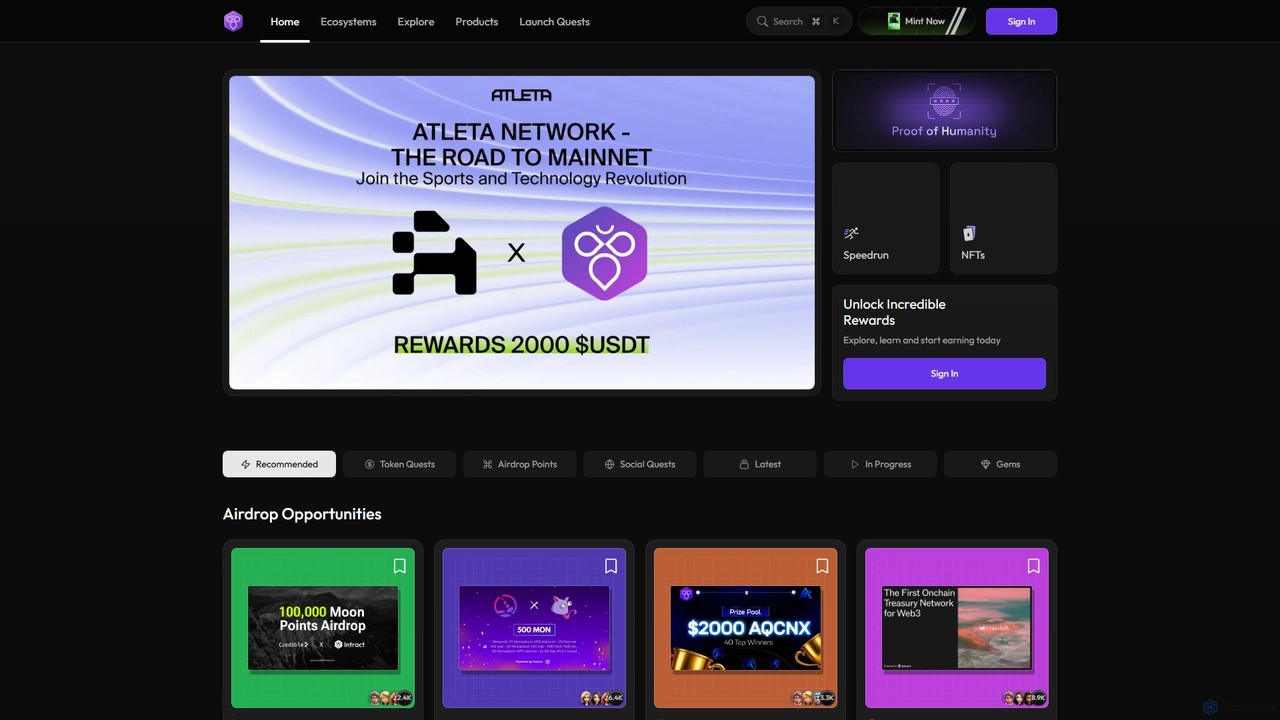
Intract is a leading Web3 learning and discovery platform that guides users through the world of crypto with …
Intract is a leading Web3 learning and discovery platform that guides users through the world of crypto with gamified quests. Participate in tasks from top Web3 projects, learn about new technologies, and earn rewards like crypto and NFTs in a fun, interactive environment.
About Airdrops
Airdrops are a marketing strategy in the cryptocurrency space where free tokens or NFTs are distributed to wallet addresses. These tools leverage blockchain technology to automatically send digital assets, aiming to promote new cryptocurrency projects, build communities, and increase token distribution. They serve as an effective method for generating awareness and rewarding early adopters.
Core Features
- Token Distribution: Automatically sends new or existing cryptocurrency tokens or NFTs to a large number of eligible wallet addresses.
- Community Engagement: Rewards active users or early supporters, fostering loyalty and participation within a project's ecosystem.
- Awareness Generation: Creates buzz and attracts attention to new blockchain projects, increasing their visibility in the market.
- Decentralization Promotion: Distributes tokens widely to prevent concentration of ownership, supporting a more decentralized network.
Applicable Scenarios
Airdrops are widely used by new blockchain projects for initial token distribution and marketing. They are also employed by established projects to reward loyal community members, incentivize participation in decentralized applications (DApps), or promote new features and governance models.
How to Choose
When considering participation in airdrops, research the legitimacy of the project and its team to avoid scams. Verify the eligibility criteria, such as holding specific tokens or performing certain on-chain actions. Always use a secure, dedicated wallet for airdrops and never share your private keys or seed phrases.
AirdropsUse Cases
Launch New Cryptocurrency Projects
Blockchain startups utilize airdrops to distribute initial tokens to early supporters and potential users. This strategy helps kickstart a new network by ensuring a broad initial distribution of governance or utility tokens, fostering decentralization from day one. It also generates significant buzz and attracts a foundational community before a public sale.
Reward Active Blockchain Users
Projects often conduct airdrops to reward users who have actively participated in their ecosystem, such as holding specific tokens for a period, staking assets, or using a decentralized application (DApp). This incentivizes continued engagement and strengthens the loyalty of the existing user base, recognizing their contributions to the network's growth.
Promote Decentralized Autonomous Organizations (DAOs)
Airdrops are a common method for distributing governance tokens for new DAOs. By giving tokens to a wide range of participants, projects aim to establish a decentralized governance structure from the outset, encouraging community members to actively participate in voting and decision-making processes for the protocol's future direction.
Increase Brand Awareness for NFTs
NFT projects can use airdrops to distribute free non-fungible tokens to a targeted audience, generating excitement and awareness for a new collection or platform. This can attract collectors, build a community around the art or utility of the NFTs, and drive engagement before a full collection launch or marketplace listing.
Attract Users to a New DeFi Protocol
Decentralized Finance (DeFi) protocols often use airdrops to attract initial liquidity and users. By distributing native tokens, they incentivize early participation in lending, borrowing, or yield farming activities. This helps bootstrap the protocol's ecosystem, increase total value locked (TVL), and establish a competitive position in the crowded DeFi landscape.
Compensate for Past Network Issues
In some cases, projects may conduct airdrops as a form of compensation to users affected by network outages, security breaches, or other unforeseen issues. This goodwill gesture helps restore trust, mitigate negative sentiment, and retain users by acknowledging the inconvenience caused and providing a tangible form of redress.