
Kaisel
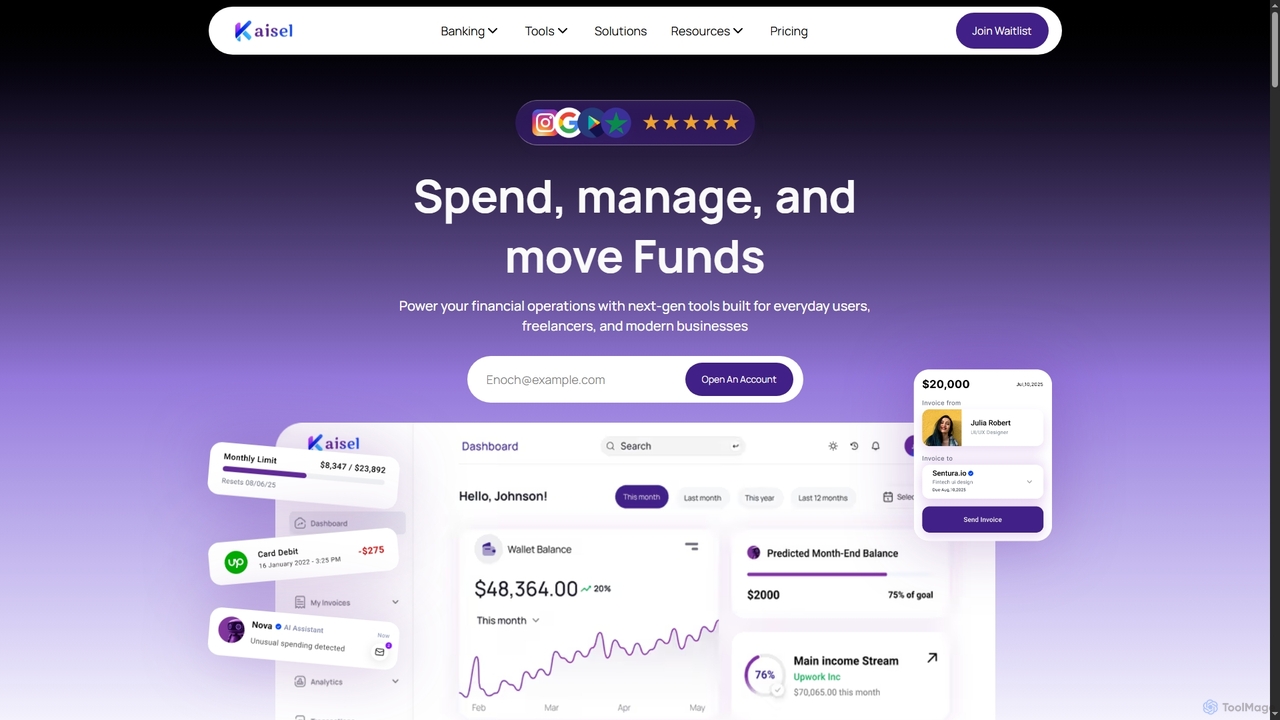
Kaisel is an AI-powered financial platform designed for everyday users, freelancers, and modern businesses to intelligently manage, spend, …
Kaisel is an AI-powered financial platform designed for everyday users, freelancers, and modern businesses to intelligently manage, spend, and move funds globally. It offers smart tools for international payments, virtual cards, expense tracking, invoicing, and AI-driven financial forecasting.
About Wallet
Crypto Wallets are essential tools within the cryptocurrency ecosystem, designed for securely managing digital assets like cryptocurrencies and NFTs. They function as interfaces that allow users to store private keys, send and receive digital currencies, and interact with decentralized applications (DApps) on various blockchain networks. These wallets provide users with full ownership and control over their digital funds, distinguishing them from traditional banking accounts.
Core Features
- Private Key Management: Securely stores the cryptographic keys that prove ownership of digital assets.
- Transaction Execution: Facilitates sending and receiving cryptocurrencies and tokens across blockchain networks.
- DApp Interaction: Connects users to decentralized applications, enabling participation in DeFi, NFTs, and Web3 services.
- Multi-Asset Support: Often supports a wide range of cryptocurrencies and tokens from different blockchains.
- Security Measures: Implements encryption, seed phrases, and sometimes multi-factor authentication to protect assets.
Use Cases
Crypto wallets are indispensable for anyone engaging with digital assets, from individual investors managing their portfolios to developers interacting with smart contracts. They are used for daily transactions, long-term asset storage, and participating in the broader Web3 economy.
How to Choose
When selecting a crypto wallet, consider its security features (e.g., hardware vs. software), the range of cryptocurrencies and networks it supports, its user interface and ease of use, and its compatibility with DApps. Evaluate whether it's a hot (online) or cold (offline) wallet based on your security and accessibility needs.
WalletUse Cases
Securely Storing Digital Assets
Long-term cryptocurrency investors use wallets to securely hold their Bitcoin, Ethereum, and other digital assets offline or in highly encrypted environments. This protects their investments from online threats and exchange hacks, ensuring the safety of their private keys and providing peace of mind for future growth. Cold wallets, in particular, are favored for this purpose due to their enhanced security features.
Securely Storing Long-Term Cryptocurrency Investments
An individual investor uses a hardware wallet (a type of cold wallet) to store their significant long-term holdings of Bitcoin and Ethereum. By keeping their private keys offline, they protect their assets from online hacking attempts and malware, ensuring maximum security for their valuable investments over many years.
Executing Cryptocurrency Transactions
Traders and everyday users rely on wallets to quickly and securely send and receive various cryptocurrencies. Whether it's making a payment, transferring funds between exchanges, or sending crypto to a friend, wallets facilitate the signing and broadcasting of transactions to the blockchain, ensuring efficient and verifiable transfers. Hot wallets are often preferred for their convenience in frequent transactions.
Interacting with Decentralized Finance (DeFi) Protocols
A DeFi enthusiast connects their software wallet (e.g., MetaMask) to a decentralized exchange (DEX) to swap tokens, provide liquidity, or stake assets. The wallet acts as their identity and transaction signer, enabling seamless participation in complex financial operations without intermediaries, directly from their browser or mobile device.
Interacting with Decentralized Applications (DApps)
Web3 enthusiasts connect their wallets to decentralized applications for activities like yield farming, NFT minting, or playing blockchain games. The wallet acts as an identity provider and transaction signer, allowing users to participate in the decentralized ecosystem without revealing personal information, while securely managing their digital assets. This seamless integration is crucial for engaging with DeFi and the broader Web3 space.
Collecting and Displaying Non-Fungible Tokens (NFTs)
A digital artist or collector uses a crypto wallet that supports NFT standards (like ERC-721 or ERC-1155) to store their unique digital art pieces, collectibles, or gaming assets. The wallet not only secures these NFTs but also often provides an interface to view their artwork, verify ownership, and showcase their collection to others.
Managing Multiple Cryptocurrencies
Individuals with a wide range of cryptocurrencies and tokens use multi-currency wallets to consolidate and track their entire portfolio from a single interface. This simplifies asset management, allows for easy monitoring of balances, and provides a comprehensive overview of their digital wealth across different blockchain networks, eliminating the need for multiple separate wallets.
Making Everyday Cryptocurrency Payments and Transfers
A user employs a mobile crypto wallet for quick, everyday transactions, such as paying for goods and services at merchants that accept cryptocurrency, or sending funds to friends and family. The convenience of a hot wallet allows for instant access to funds and fast transaction processing, making digital currency practical for daily use.
Receiving and Sending Payments
Freelancers, businesses, or individuals accepting cryptocurrency as payment utilize wallets to generate unique receiving addresses and securely store incoming funds. They can then easily send payments for services or convert crypto to fiat, streamlining international transactions and reducing traditional banking fees. Wallets provide the necessary infrastructure for peer-to-peer digital currency transfers.
Participating in Blockchain Gaming and Metaverse
Gamers and metaverse enthusiasts connect their crypto wallets to blockchain-based games or virtual worlds. This allows them to manage in-game assets (often NFTs), participate in play-to-earn economies, and verify their identity within virtual environments. The wallet serves as their digital passport and inventory for their virtual possessions.
Participating in Staking or Yield Farming
Users seeking passive income from their crypto assets connect their wallets to staking platforms or decentralized finance (DeFi) protocols. The wallet enables them to lock up their tokens for staking rewards or provide liquidity for yield farming, securely managing their participation and claiming earned interest or tokens. This allows for direct engagement with advanced financial strategies in the crypto space.
Receiving Airdrops and Staking Rewards
Cryptocurrency users utilize their wallets to receive various forms of digital asset distributions, such as airdrops from new projects or rewards generated from staking their existing tokens. The wallet's public address is used to receive these assets directly, ensuring that users maintain full control and ownership of any newly acquired tokens or coins.