Customer Feedback Best in category 1 results Analytics AI Tool

Popular AI tools in the Analytics field of Customer Feedback include Blitzllama, etc., helping you quickly improve efficiency.

Blitzllama

Blitzllama

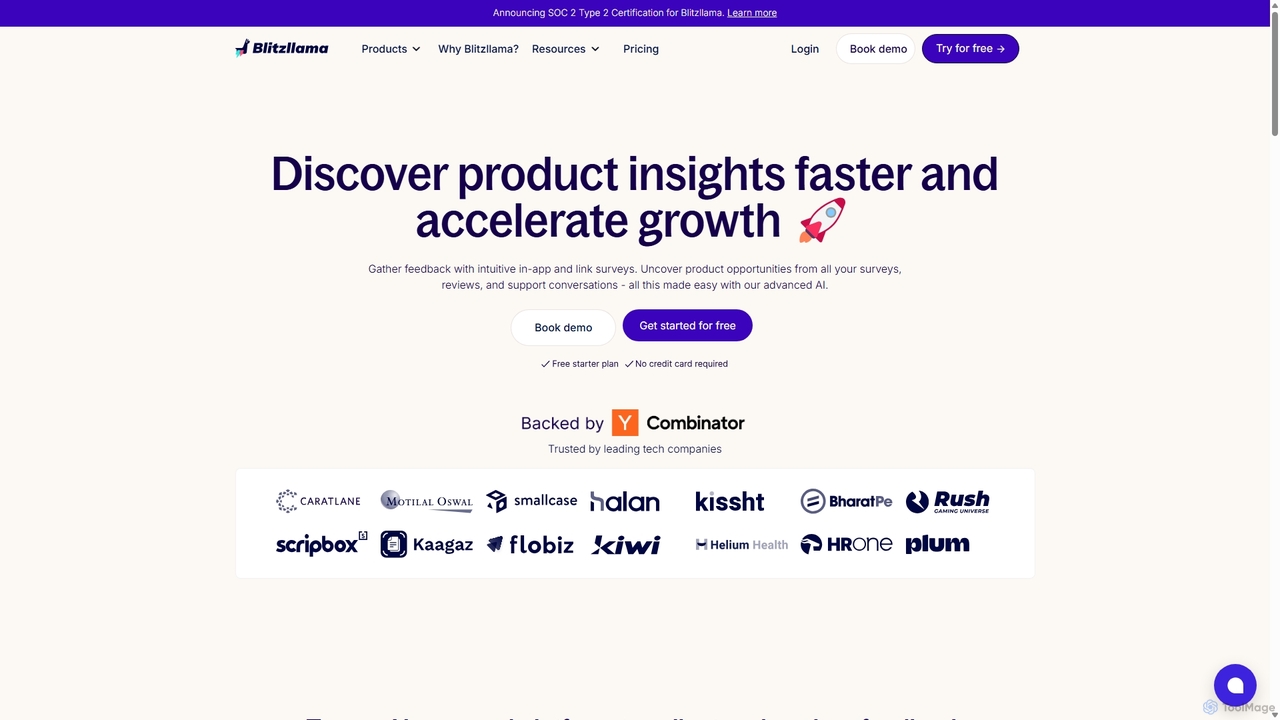
Blitzllama is an AI-powered product insights platform designed to help teams collect and analyze customer feedback. It unifies …

14.3K

About Analytics

Analytics tools for customer feedback are a class of AI-powered software designed to automatically process and extract insights from large volumes of qualitative user data. They leverage Natural Language Processing (NLP) to identify themes, sentiment, and trends within text from sources like surveys, reviews, and support tickets. This enables businesses to quickly understand customer pain points and priorities without manual analysis, turning unstructured feedback into actionable intelligence. These platforms transform raw opinions into structured data for strategic decision-making.

Core Features

  • Sentiment Analysis: Automatically determines the emotional tone (positive, negative, neutral) behind customer comments.
  • Topic & Theme Detection: Identifies and groups recurring topics and themes mentioned in feedback, such as 'pricing' or 'user interface'.
  • Keyword Extraction: Pinpoints the most frequently used words and phrases to highlight key areas of concern or praise.
  • Trend Analysis: Tracks changes in feedback volume, sentiment, and topics over time to spot emerging issues or successes.
  • Root Cause Analysis: Helps uncover the underlying reasons for customer satisfaction or dissatisfaction by connecting related feedback points.

Use Cases

These tools are essential for product managers prioritizing feature roadmaps, marketing teams refining messaging, and customer support leaders identifying training needs. For instance, a SaaS company can analyze thousands of support tickets to find the most common bugs, while an e-commerce brand can sift through product reviews to understand drivers of negative ratings.

How to Choose

When selecting a feedback analytics tool, consider its integration capabilities with your existing data sources (e.g., Zendesk, App Store, SurveyMonkey). Evaluate the accuracy of its NLP models, especially for industry-specific jargon. Also, assess the quality of its data visualization and reporting features, and ensure its pricing scales with your feedback volume.

AnalyticsUse Cases

1

Prioritize Product Roadmap with User Feedback

A product manager at a SaaS company needs to decide which features to build next. They use an AI analytics tool to aggregate and analyze feedback from multiple channels, including Intercom chats, user surveys, and feature request forums. The tool identifies that 'integration with Slack' is the most requested feature and has a high positive sentiment among power users. It also highlights recurring complaints about the 'confusing settings page'. Based on this data-driven insight, the manager prioritizes developing the Slack integration and redesigning the settings page, ensuring development efforts align with actual user needs.

2

Improve Customer Support Agent Performance

A customer support manager wants to identify areas for team improvement. They feed transcripts from thousands of support calls and emails into an analytics platform. The AI analyzes conversations and tags tickets by root cause, such as 'billing issue' or 'technical bug'. It also measures customer sentiment throughout the interaction. The manager discovers that tickets handled by a specific agent consistently result in lower customer satisfaction scores when dealing with 'billing issues'. This insight allows for targeted coaching for that agent on handling financial queries, leading to improved team performance and higher overall customer satisfaction.

3

Monitor Brand Perception on Social Media

A marketing team for a consumer electronics brand wants to track public opinion after a new product launch. They use an AI analytics tool to monitor mentions of their brand and new product on Twitter, Reddit, and tech forums. The tool performs real-time sentiment analysis, categorizing posts as positive, negative, or neutral. It identifies a spike in negative sentiment related to 'battery life'. The team is immediately alerted, allowing them to quickly issue a public statement with battery-saving tips and inform the engineering team to investigate, mitigating a potential PR crisis before it escalates.

4

Analyze Employee Feedback from Annual Surveys

An HR department collects thousands of open-ended responses from its annual employee engagement survey. Manually coding this data would take weeks. Instead, they upload the responses to an AI analytics tool. The platform automatically identifies key themes like 'work-life balance', 'career growth opportunities', and 'management communication'. It reveals that while 'compensation' is a positive theme, 'career growth' is a significant area of concern, particularly among junior employees. This allows HR to focus their efforts on developing clearer career progression paths, addressing a core driver of employee dissatisfaction.

5

Uncover Insights from Customer Exit Surveys

An e-commerce subscription service wants to understand why customers are canceling their subscriptions. They analyze the open-text responses from their exit survey using an AI tool. The analysis reveals that 'delivery issues' is the most cited reason for cancellation, followed by 'lack of product variety'. The tool also performs sentiment analysis, showing that comments related to delivery are overwhelmingly negative. Armed with this specific data, the company can prioritize negotiations with their logistics partner and task their procurement team with sourcing a wider range of products to reduce customer churn.

6

Validate New Feature Ideas with Market Data

A software development team is brainstorming new features for their project management tool. To validate their ideas, they use an analytics tool to scan competitor reviews and public forums for discussions related to project management software. The analysis highlights a strong, unmet need for 'advanced dependency management' and 'time tracking for freelancers'. This market-driven data provides objective validation for their feature ideas, giving them the confidence to invest development resources into features that potential customers are actively seeking, rather than relying solely on internal assumptions.

AnalyticsFrequently Asked Questions