Customer Service Best in category 1 results Feedback Analysis AI Tool

Popular AI tools in the Feedback Analysis field of Customer Service include Bizu, etc., helping you quickly improve efficiency.

Bizu

Bizu

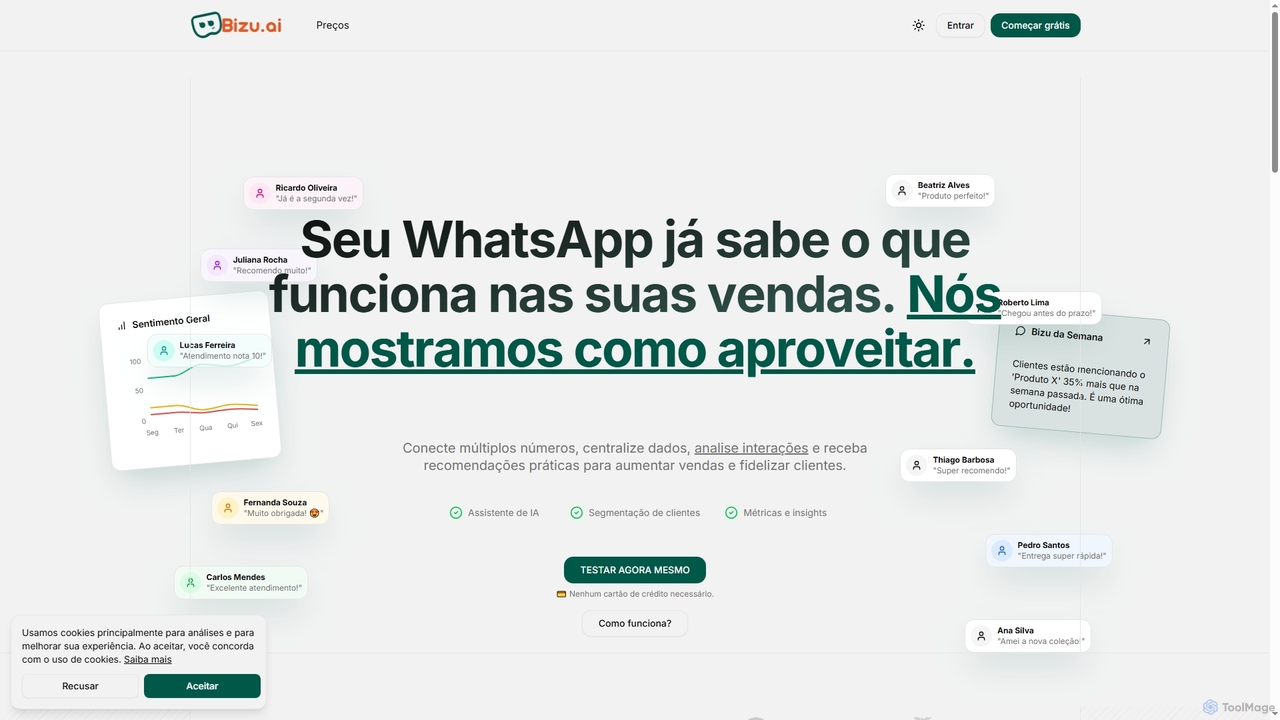
Bizu is an AI-powered platform designed for retailers to transform WhatsApp conversations into actionable sales insights. It centralizes …

4.1K

About Feedback Analysis

Feedback Analysis tools are AI-powered solutions designed to automatically collect, process, and interpret customer feedback from various sources. Leveraging advanced Natural Language Processing (NLP) and machine learning, these tools transform unstructured text data into actionable insights, helping businesses understand customer sentiment, identify emerging trends, and pinpoint areas for improvement within customer service and product development. They are essential for enhancing customer experience and making data-driven decisions.

Core Features

  • Sentiment Analysis: Automatically detects and categorizes the emotional tone (positive, negative, neutral) of customer comments and reviews.
  • Topic Modeling: Identifies recurring themes and key discussion points within large volumes of feedback data.
  • Root Cause Analysis: Helps uncover the underlying reasons behind customer dissatisfaction or specific issues by correlating feedback with operational data.
  • Trend Identification: Monitors changes in customer sentiment and topic prevalence over time, alerting businesses to new opportunities or potential problems.
  • Data Visualization: Presents complex feedback data through intuitive dashboards and reports, making insights easily digestible.

Applicable Scenarios

These tools are invaluable for customer service managers seeking to improve support quality, product teams aiming to refine features based on user input, and marketing professionals monitoring brand perception. They are used across industries to gain a deeper understanding of customer needs and expectations, driving strategic improvements in service delivery and product offerings.

How to Choose

When selecting a Feedback Analysis tool, consider its ability to integrate with your existing data sources (e.g., CRM, helpdesk), the accuracy and language support of its NLP models, the depth of its analytical features (e.g., sentiment granularity, topic clustering), and the customizability of its reporting and dashboards. Scalability and pricing models are also crucial factors for long-term value.

Feedback AnalysisUse Cases

1

Analyze Customer Support Tickets for Service Improvement

Customer service managers utilize Feedback Analysis tools to automatically process thousands of support tickets. By applying sentiment analysis and topic modeling, they can quickly identify common pain points, recurring technical issues, or areas where agent training might be lacking. This leads to targeted improvements in service protocols, faster resolution times, and enhanced customer satisfaction.

2

Extract Insights from Product Reviews and App Store Feedback

Product development teams and UX researchers use these tools to sift through vast amounts of unstructured text from product reviews, app store comments, and online forums. The analysis helps them understand user preferences, discover desired features, identify bugs, and prioritize development roadmaps based on direct user feedback, ensuring products evolve in line with customer needs.

3

Monitor Brand Sentiment Across Social Media and Online Mentions

Marketing and PR teams deploy Feedback Analysis tools to track public perception and brand sentiment across social media platforms, news articles, and blogs. This allows them to quickly detect negative trends, respond to crises, measure the impact of campaigns, and understand how their brand is perceived in real-time, enabling proactive reputation management.

4

Automate Analysis of Customer Survey Responses (NPS, CSAT, CES)

Businesses regularly conduct surveys like NPS, CSAT, and CES. Feedback Analysis tools automate the qualitative analysis of open-ended survey responses, providing deeper context beyond numerical scores. They identify specific reasons behind high or low scores, allowing businesses to address precise issues and reinforce positive aspects of their customer experience.

5

Identify Emerging Market Trends and Competitor Perceptions

Market research analysts leverage Feedback Analysis to monitor industry-wide discussions, competitor reviews, and public forums. By analyzing feedback related to specific products, services, or market segments, they can identify emerging trends, gauge competitor strengths and weaknesses, and uncover unmet customer needs, informing strategic business decisions.

6

Personalize Customer Interactions by Understanding Individual Feedback

Sales and account management teams can use these tools to analyze individual customer feedback history, including past interactions, preferences, and sentiment expressed. This enables them to tailor future communications, offer personalized solutions, and proactively address potential issues, fostering stronger customer relationships and increasing loyalty.

Feedback AnalysisFrequently Asked Questions