
ToolMage
Sign in

Best 1 Automated Communication AI tools for Customer Support

Popular Automated Communication AI tools in Customer Support include Textdrip, helping you work more efficiently.

Textdrip
Paid

Textdrip

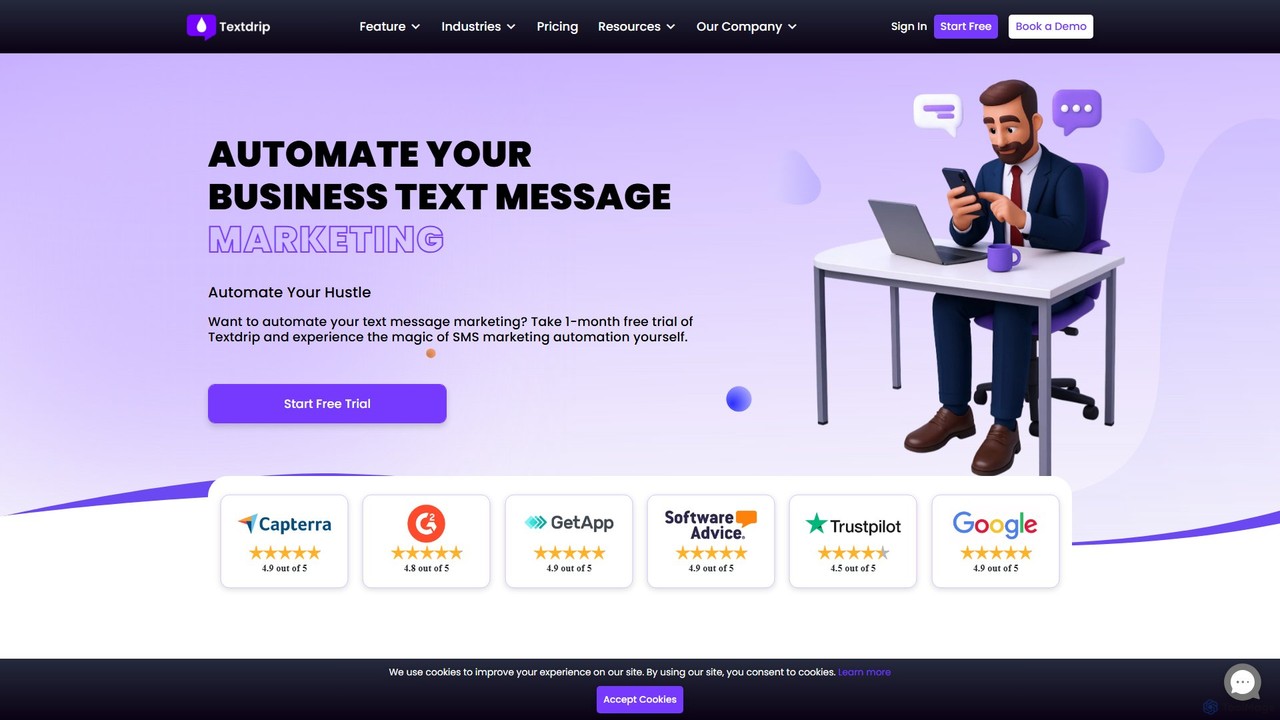
Textdrip is an advanced SMS marketing and automation platform designed for businesses. It enables users to send bulk texts, create automated drip campaigns, personalize messages, and manage customer conversations efficiently. With features like AI text generation, pipeline management, and a mobile app, it helps businesses increase sales and streamline communication.

Automated Communication
Visits 52KFavorites 126Likes 150

About Automated Communication

Automated Communication tools are AI-powered solutions designed to handle customer interactions and information delivery without direct human intervention. Leveraging natural language processing (NLP) and machine learning, these tools provide instant responses, proactive outreach, and personalized support at scale. They significantly enhance customer experience and operational efficiency within broader customer support ecosystems.

Core Features

  • AI Chatbots & Virtual Assistants: Provide instant, 24/7 responses to common queries across various channels.
  • Automated Email & Messaging: Generate and send personalized replies or notifications based on predefined triggers or user input.
  • Proactive Notifications: Deliver timely updates (e.g., order status, appointment reminders) via SMS, email, or in-app messages.
  • Sentiment Analysis: Analyze customer tone and emotion to prioritize urgent cases or route complex issues to human agents.
  • Knowledge Base Integration: Automatically retrieve and present relevant information from a centralized knowledge base to users.

Applicable Scenarios

Automated Communication tools are invaluable for businesses seeking to scale their support, reduce response times, and offer consistent service. They are widely used in e-commerce for order tracking, in SaaS for onboarding and FAQs, and in telecommunications for account management and troubleshooting.

How to Choose

When selecting an Automated Communication platform, consider its integration capabilities with existing CRM and ticketing systems, the robustness of its NLP for understanding diverse user inputs, scalability to handle peak volumes, and the range of communication channels it supports. Evaluate customization options for branding and specific business logic, along with analytics features for performance monitoring.

Automated Communication use cases

1

24/7 Instant Customer Support via Chatbot

An e-commerce retailer deploys an AI-powered chatbot on its website and messaging apps to handle common customer inquiries around the clock. Customers receive immediate answers to questions about order status, returns, product information, and FAQs, significantly reducing wait times and freeing human agents to focus on more complex issues. This ensures consistent support availability, even outside business hours.

2

Automated Lead Qualification and Routing

A B2B SaaS company uses an automated communication tool on its website to engage visitors. The tool asks a series of qualifying questions (e.g., company size, industry, specific needs) to assess lead potential. Based on the responses, it automatically routes high-potential leads to the sales team for immediate follow-up, while providing self-service resources to less qualified leads, streamlining the sales funnel and improving conversion rates.

3

Proactive Order Status Updates

An online retail store uses automated communication to keep customers informed about their purchases. After a customer places an order, they receive automated SMS or email notifications confirming the order, providing shipping updates, and notifying them upon delivery. This proactive approach significantly reduces inbound customer inquiries about order status, enhancing customer satisfaction and trust in the brand.

4

Personalized Marketing Campaign Automation

A marketing team leverages automated communication tools to execute highly personalized campaigns. By integrating with customer data platforms, the tools segment audiences based on behavior, preferences, and purchase history. They then automatically trigger tailored email sequences, in-app messages, or push notifications with relevant product recommendations or special offers, driving higher engagement and conversion rates compared to generic mass communications.

5

Internal IT Support Automation for Employees

A large enterprise implements an automated communication system, often an internal chatbot, to streamline IT support for its employees. Employees can ask questions about password resets, software access, network issues, or hardware requests directly to the bot. The system provides instant solutions for common problems or automatically creates a support ticket and routes it to the appropriate IT specialist, significantly reducing the workload on the IT help desk.

6

Multilingual Customer Service Expansion

A global travel agency utilizes an automated communication platform with advanced NLP capabilities to offer multilingual customer service. The system can understand and respond to customer queries in multiple languages, providing consistent support to a diverse international clientele without the need for a large, multilingual human support team. This expands market reach and improves customer satisfaction for non-English speaking users.

Automated Communication FAQ

What are Automated Communication tools?

Automated Communication tools are AI-driven software solutions that facilitate interactions with customers or users without requiring direct human intervention. They leverage technologies like natural language processing (NLP) and machine learning to understand queries, provide instant responses, and perform tasks such as sending notifications or qualifying leads. These tools are crucial for scaling customer support, improving response times, and maintaining consistent service quality across various digital channels.

How do Automated Communication tools differ from traditional customer support?

Automated Communication tools primarily differ from traditional customer support by replacing or augmenting human interaction with AI-driven systems. Traditional support relies on human agents, which can lead to longer wait times, limited 24/7 availability, and higher operational costs. Automated tools offer instant, consistent, and scalable responses, reducing the need for human intervention for routine queries. While traditional support excels in handling complex, empathetic interactions, automated tools provide efficiency and speed for high-volume, repetitive tasks, often working in conjunction with human teams in a hybrid model.

What are the key benefits of implementing Automated Communication?

Implementing Automated Communication offers several key benefits. Firstly, it provides 24/7 availability, ensuring customers receive instant support regardless of time zones or business hours. Secondly, it significantly improves efficiency by handling high volumes of routine queries, freeing human agents for more complex issues. Thirdly, it ensures consistency in responses and brand messaging. Additionally, these tools can reduce operational costs, enhance customer satisfaction through quick resolutions, and offer valuable data insights for continuous service improvement. They also enable proactive outreach, improving customer engagement.

What should I consider when choosing an Automated Communication platform?

When selecting an Automated Communication platform, several factors are crucial. Evaluate its natural language processing (NLP) capabilities to ensure it accurately understands diverse user inputs. Consider its integration with your existing CRM, ticketing systems, and communication channels (e.g., website chat, email, social media). Assess its scalability to handle current and future customer volumes, and its customization options for branding and specific business logic. Look for robust analytics and reporting features to monitor performance and identify areas for improvement. Finally, consider the vendor's support, pricing model, and security measures.

Can Automated Communication tools handle complex customer issues?

While Automated Communication tools excel at handling routine and repetitive queries, their ability to manage complex customer issues is generally limited. For intricate problems requiring deep understanding, empathy, or nuanced problem-solving, human agents remain essential. However, many automated systems are designed with seamless handover capabilities, allowing them to escalate complex cases to a human agent with all relevant context. This hybrid approach ensures that customers receive efficient automated support for simple issues and personalized human assistance for more challenging ones, optimizing the overall customer support experience.