ToolMage
Sign in

Best 1 Omnichannel Communication AI tools for Customer Support

Popular Omnichannel Communication AI tools in Customer Support include MessageCentral, helping you work more efficiently.

MessageCentral
Freemium

MessageCentral

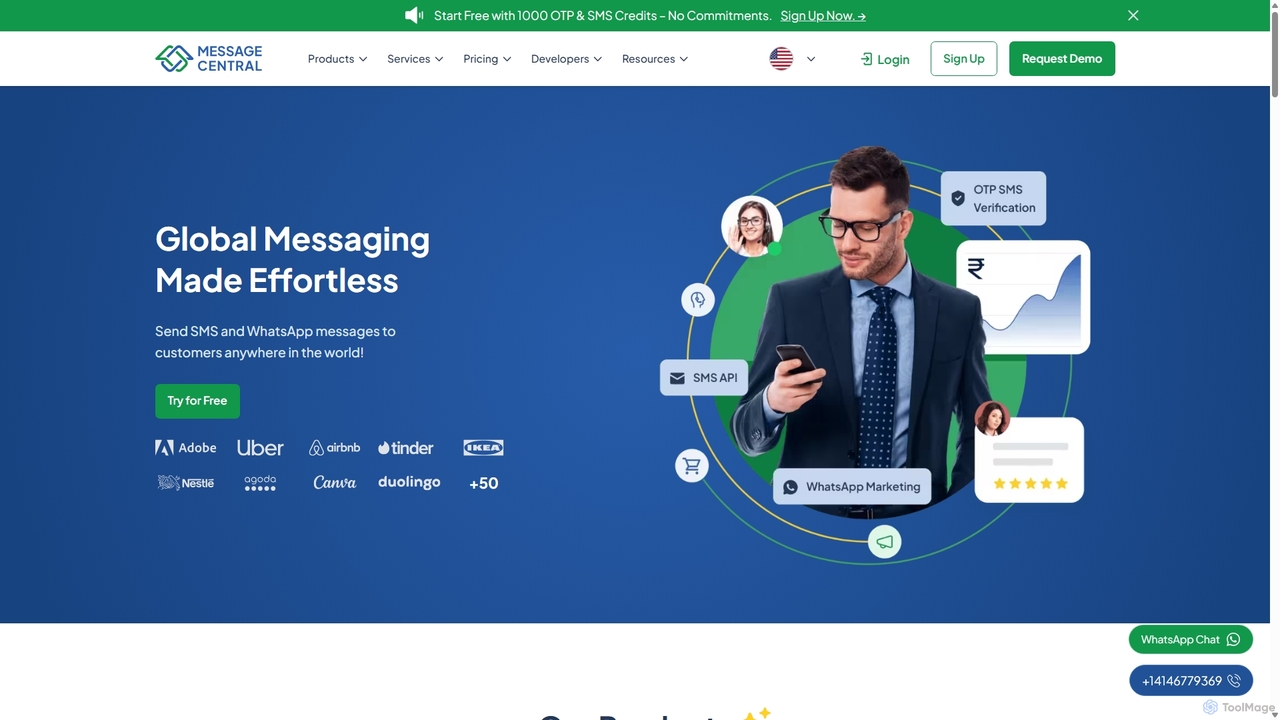
MessageCentral is a comprehensive CPaaS (Communications Platform as a Service) solution offering powerful APIs for SMS, WhatsApp, and RCS messaging. It enables businesses to enhance customer engagement through OTP verification, bulk SMS marketing, and omnichannel communication, featuring high deliverability, real-time analytics, and global coverage.

Omnichannel Communication
Visits 78.1KFavorites 160Likes 171

About Omnichannel Communication

Omnichannel Communication AI tools are designed to integrate various customer interaction channels, such as chat, email, social media, and voice, into a single, unified platform. These tools leverage artificial intelligence to provide a seamless and consistent customer experience across all touchpoints. By centralizing customer data and interaction history, they enable businesses to deliver personalized support and engagement, significantly enhancing customer satisfaction and operational efficiency.

Core Features

  • Unified Inbox: Centralized management of all customer interactions from diverse channels.
  • AI-powered Routing: Intelligently directs customer queries to the most appropriate agent or automated resource.
  • Automated Responses: AI chatbots provide instant, consistent answers to common questions across multiple channels.
  • Customer Journey Mapping: Tracks and visualizes customer interactions across their entire journey for a holistic view.
  • Personalized Engagement: Delivers tailored messages and offers based on individual customer history and preferences.

Applicable Scenarios

These tools are vital for customer service centers handling high volumes of inquiries across diverse channels, ensuring agents have a complete customer history. E-commerce businesses utilize them to provide consistent pre-sales and post-sales support, maintaining brand voice and service quality. Marketing teams also benefit by orchestrating personalized campaigns that reach customers on their preferred platforms, improving engagement and conversion rates.

How to Choose

When selecting an Omnichannel Communication AI tool, consider its channel coverage, ensuring it supports all your critical communication platforms. Evaluate the depth of its AI capabilities, including automation, personalization, and analytics features. Assess its integration potential with existing CRM, ERP, and other business systems. Finally, consider scalability to accommodate future growth and the robustness of its analytics and reporting for actionable insights.

Omnichannel Communication use cases

1

Streamlining Customer Support Across Channels

A customer service manager needs to efficiently handle inquiries coming from email, live chat, social media, and phone calls. An Omnichannel Communication AI tool centralizes all these interactions into a unified inbox. AI-powered routing directs queries to the most suitable agent, who can view the customer's complete history across all channels, leading to faster resolution times and a consistent, high-quality customer experience. This reduces agent workload by 20% and improves customer satisfaction scores by 15%.

2

Personalized Marketing Campaigns

A marketing specialist aims to deliver targeted messages to customers across their preferred channels for a new product launch. An Omnichannel Communication AI tool analyzes customer data to segment audiences and orchestrates personalized messages via email, SMS, and in-app notifications, ensuring consistency in branding and messaging. This approach results in higher engagement rates, increased conversions by up to 25%, and improved customer loyalty due to relevant and timely communication.

3

Proactive Customer Engagement

An e-commerce business owner wants to proactively engage customers to reduce abandoned carts and increase repeat purchases. An Omnichannel Communication AI tool monitors customer behavior, such as browsing history or items left in a cart. It then triggers automated, personalized messages (e.g., discount offers, helpful tips) via the customer's preferred channel (email, SMS, or push notification), leading to a 10% reduction in cart abandonment and a 5% increase in repeat customer rate.

4

Unified Sales & Support Hand-off

A sales and support team lead aims to ensure smooth transitions between sales and support interactions, preventing information silos. An Omnichannel Communication platform provides sales agents with a full support history and support agents with sales context, all within a single view. This eliminates the need for customers to repeat information, resulting in faster issue resolution, improved cross-functional collaboration, and a significantly better overall customer experience, reducing resolution time by 20%.

5

Crisis Communication Management

A public relations manager needs to disseminate critical information quickly and consistently across all public channels during an unforeseen incident. An Omnichannel Communication AI tool allows for rapid drafting and simultaneous deployment of messages to social media, website announcements, email lists, and press releases. AI monitoring sentiment across channels helps to gauge public reaction and adapt communication strategies in real-time, minimizing reputational damage and ensuring timely updates to stakeholders.

6

Employee Internal Communication

An HR manager needs to ensure all employees receive important updates and can access resources easily, regardless of their preferred communication method. An AI-powered internal omnichannel platform delivers announcements via email, internal chat, intranet portals, and mobile apps. Employees can choose how they receive information and ask questions, with AI chatbots handling common HR queries. This improves employee engagement by 15% and reduces HR workload by 10% through better information dissemination and self-service options.

Omnichannel Communication FAQ

What are Omnichannel Communication AI tools?

Omnichannel Communication AI tools are integrated platforms that unify customer interactions across various channels like chat, email, social media, and voice. They leverage AI to provide a consistent, personalized customer experience by centralizing data and automating responses. These tools aim to create a seamless customer journey, improving satisfaction and operational efficiency for businesses by ensuring context is maintained across all touchpoints.

How do Omnichannel Communication tools differ from Multi-channel tools?

The key difference lies in integration and context. Multi-channel tools offer customers multiple independent channels to interact with a business, but these channels often operate in silos without shared information. Omnichannel tools, however, integrate all channels into a unified system, ensuring that customer data and interaction history are shared across every touchpoint. This provides a seamless, continuous customer journey where context is always maintained, regardless of how the customer chooses to communicate.

What are the key benefits of using AI in Omnichannel Communication?

AI significantly enhances omnichannel communication by enabling intelligent automation, personalization, and predictive analytics. AI-powered chatbots provide instant, 24/7 support across channels, handling routine queries and freeing up human agents. It facilitates smart routing of complex issues, analyzes customer sentiment for proactive engagement, and personalizes interactions based on comprehensive customer data. This leads to improved customer satisfaction, reduced operational costs, and more efficient resource allocation.

What should I consider when choosing an Omnichannel Communication platform?

When selecting an Omnichannel Communication platform, prioritize comprehensive channel coverage that aligns with your customer's preferred touchpoints. Evaluate the depth of its AI capabilities, including automation for routine tasks, personalization features, and advanced analytics for insights. Crucially, assess its integration capabilities with your existing CRM, ERP, and other business systems to ensure seamless data flow. Also, consider scalability for future growth, security features, and the pricing model to match your budget and needs.

Which industries benefit most from Omnichannel Communication AI?

Industries that heavily rely on customer interactions and aim for personalized, consistent experiences benefit most. This includes e-commerce and retail, where seamless pre-sales and post-sales support across various channels drives loyalty. Customer service centers, finance, and healthcare also gain significantly by streamlining complex inquiries, providing secure multi-channel support, and maintaining a unified view of customer history. Any business seeking to enhance customer engagement and operational efficiency through integrated communication will find these tools invaluable.