Hootsuite
Hootsuite is an all-in-one social media management platform that empowers businesses to schedule posts, manage engagement, and analyze …
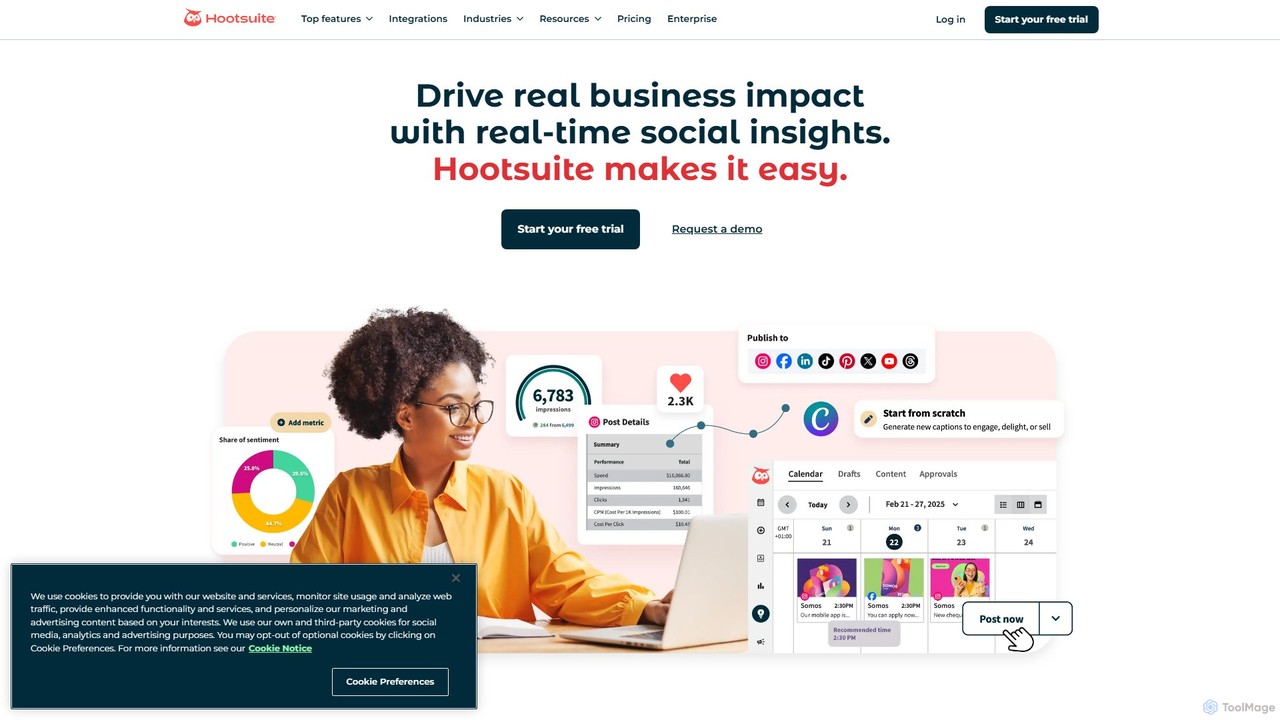
Hootsuite is an all-in-one social media management platform that empowers businesses to schedule posts, manage engagement, and analyze performance across multiple networks. Featuring OwlyGPT, its proprietary AI, it helps create trend-informed content, automate responses, and gain deep insights through social listening and competitive benchmarking. It's designed for teams of all sizes to save time, streamline workflows, and drive real business impact from social media.
About Social Crm
Social CRM is a class of tools that integrates social media channels directly into customer relationship management strategies. These platforms utilize AI to monitor social media conversations, track brand mentions, and analyze customer sentiment in real-time. The primary value of Social CRM lies in enabling businesses to engage with customers on their preferred platforms, providing faster support and gathering valuable insights for a complete 360-degree customer view. This approach transforms social media from a simple marketing channel into a vital hub for customer service, sales, and product feedback.
Core Features
- Social Listening: Automatically tracks mentions, keywords, and hashtags across multiple social networks to identify relevant conversations.
- Unified Social Inbox: Consolidates all messages, comments, and mentions from different platforms into a single, manageable stream for support teams.
- Customer Profile Enrichment: Links social media profiles to existing CRM contacts, adding rich contextual data to customer records.
- AI-Powered Sentiment Analysis: Gauges the emotional tone of social posts to prioritize urgent issues and measure brand perception.
- Automated Workflows: Routes social interactions to the appropriate team or agent and suggests replies based on conversation context.
Use Cases
Social CRM tools are widely used by B2C companies, especially in retail, e-commerce, and hospitality, where public customer interaction is frequent. Marketing, customer support, and community management teams use them to manage brand reputation, resolve issues proactively, and identify sales opportunities. They are essential for any organization aiming to build a strong online community and leverage social data for business decisions.
How to Choose
When selecting a Social CRM tool, first evaluate its supported social media channels to ensure it covers your target audience's platforms. Assess the depth of its integration with your existing CRM system for seamless data synchronization. Also, consider the sophistication of its AI features, such as the accuracy of sentiment analysis and the flexibility of its automation rules. Finally, review its analytics capabilities to ensure it can provide clear, actionable reports on team performance and customer engagement.

Social CrmUse Cases
Proactive Customer Support on Social Media
A customer support team for a global electronics brand uses a Social CRM tool to monitor mentions of their product names alongside keywords like 'issue' or 'broken'. When a user posts on X (formerly Twitter) about a problem with their new headphones, the tool instantly creates a ticket in the unified inbox. An agent can then reply directly to the post, offering assistance and guiding the user to a private message to resolve the issue. This proactive approach resolves problems before they escalate, turning a negative experience into a positive public interaction and demonstrating excellent customer care.
Managing Brand Reputation During a Crisis
A fast-food chain faces online backlash after a negative video goes viral. The marketing team uses their Social CRM's sentiment analysis to track the spread of negative comments in real-time across all platforms. The unified inbox allows them to quickly identify and respond to key influencers and media outlets with official statements. They can also tag conversations by theme (e.g., 'customer complaint,' 'media inquiry') to organize their response effort. This centralized management helps the brand control the narrative, mitigate damage, and monitor the recovery of public sentiment over time.
Identifying Sales Leads from Social Conversations
A sales representative at a SaaS company sets up social listening for keywords like 'looking for CRM software' or 'recommend a project management tool'. When a potential lead posts such a query on LinkedIn, the Social CRM tool alerts the rep. The rep can then view the user's public profile to qualify them as a lead and engage in the conversation by offering helpful advice, not just a sales pitch. This interaction is logged in the CRM, linking the social profile to a new lead record, allowing for personalized follow-up and tracking the lead's journey from social media to conversion.
Gathering Product Feedback for R&D
A product manager for a mobile app uses a Social CRM to track conversations about their app on Reddit and developer forums. They set up listeners for feature requests (e.g., 'wish the app had...') and bug reports. All relevant posts are automatically tagged and funneled into a specific folder. The product team can then analyze this qualitative data to identify common themes and prioritize the development roadmap. By linking these social users to their CRM profiles, the team can even reach out directly to ask for more detailed feedback or invite them to beta testing programs.
Identifying and Engaging Brand Advocates
A community manager for a cosmetics brand uses their Social CRM to identify users who frequently post positive content about their products. The tool can score users based on engagement rates and positive sentiment. The manager creates a list of these 'brand advocates' within the CRM. They then engage with this group by sending them exclusive content, early access to new products, or personalized thank-you messages. This nurtures a loyal community, encourages user-generated content, and amplifies positive word-of-mouth marketing organically.
Competitive Analysis through Social Listening
A marketing analyst at a travel agency uses a Social CRM to monitor the social media activities of its main competitors. They track competitors' campaign announcements, customer complaints, and overall brand sentiment. For instance, by analyzing negative comments on a competitor's Facebook page about poor customer service, the analyst identifies a key weakness. This insight is used to inform their own marketing campaigns, highlighting their agency's award-winning 24/7 support. The tool provides reports comparing share of voice and sentiment trends, offering a clear view of the competitive landscape.