ToolMage
Sign in

Best 1 Social Media Engagement AI tools for Customer Support

Popular Social Media Engagement AI tools in Customer Support include Redplus, helping you work more efficiently.

Redplus
Freemium

Redplus

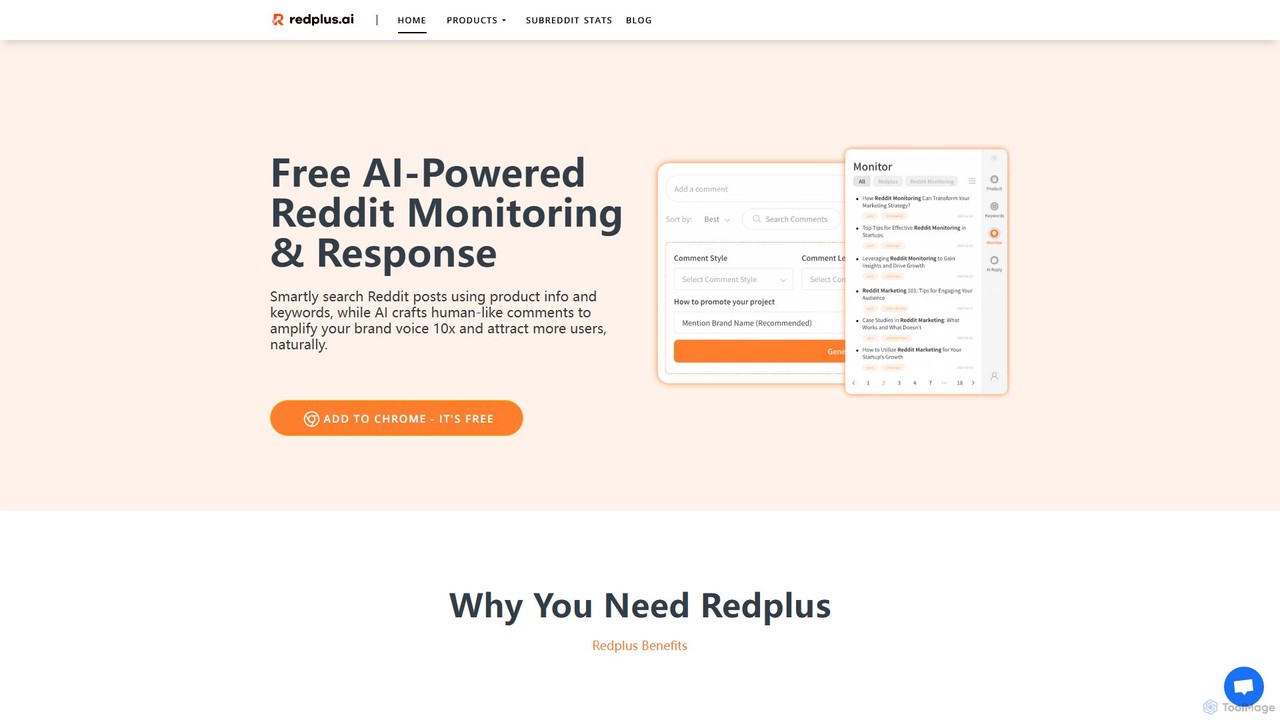
Redplus is an AI-powered Reddit marketing tool designed to automate monitoring and engagement. It tracks keywords across Reddit, generates context-aware comments to boost brand presence, and drives targeted traffic to your products or services. Ideal for marketers, SaaS founders, and e-commerce, it also includes a free, creative Reddit username generator. It operates as a convenient Chrome extension.

Social Media Engagement
Visits 8.4KFavorites 107Likes 125

About Social Media Engagement

Social Media Engagement tools are AI-powered platforms for monitoring, analyzing, and responding to user interactions across social networks. These tools leverage Natural Language Processing (NLP) to understand the sentiment and intent behind comments, mentions, and messages. They enable businesses to provide timely customer support, manage brand reputation, and foster community directly on social channels where customers are most active. By centralizing conversations, they transform scattered social interactions into structured support and engagement opportunities.

Core Features

  • Unified Social Inbox: Aggregates all comments, direct messages, and mentions from multiple social platforms into a single, manageable feed.
  • AI-Powered Sentiment Analysis: Automatically detects the emotional tone (positive, negative, neutral) of user messages to prioritize urgent issues.
  • Automated Response Suggestions: Generates context-aware reply suggestions to answer common questions quickly and maintain a consistent brand voice.
  • Real-time Mention Tracking: Monitors keywords, brand names, and hashtags in real-time to identify support requests or reputation risks instantly.
  • Intelligent Conversation Routing: Automatically assigns incoming messages to the appropriate agent or department based on content, language, or urgency.

Applicable Scenarios

These tools are essential for customer support teams, community managers, and digital marketing professionals. They are particularly effective for B2C brands in retail, hospitality, and tech, where managing high volumes of public-facing communication is critical for brand health. They are also used by PR agencies for crisis monitoring and reputation management.

Selection Criteria

When choosing a tool, evaluate the range of supported social media platforms and their integration with your existing CRM or helpdesk software. Assess the accuracy of the sentiment analysis and the flexibility of the automation rules. Also, consider the analytics capabilities for tracking response times, agent performance, and overall customer sentiment trends.

Social Media Engagement use cases

1

Manage High-Volume Support During a Product Launch

An e-commerce brand launching a new gadget anticipates a surge of questions on Instagram and Facebook. Using a social engagement tool, their support team manages thousands of comments and DMs from a unified inbox. The AI suggests replies for common questions about shipping, specs, and availability, allowing agents to respond 3x faster. Sentiment analysis flags frustrated customers for immediate, personalized attention, helping to prevent negative reviews and maintain a positive launch atmosphere.

2

Proactive Reputation Management via Social Listening

A national restaurant chain uses a social engagement tool to monitor un-tagged mentions of their brand name alongside keywords like "food poisoning" or "bad service." The AI immediately flags a negative tweet from a customer detailing a poor experience. The PR team is alerted within minutes, allowing them to publicly respond with an apology and an offer to resolve the issue offline. This rapid, proactive response mitigates a potential crisis and demonstrates a commitment to customer satisfaction.

3

Identify and Nurture Brand Advocates

A cosmetics company's community manager uses an engagement tool to track positive sentiment mentions. The tool surfaces a post from a micro-influencer praising their new foundation, which wasn't part of a paid campaign. The manager engages directly by thanking them and offering a personalized discount code. This interaction strengthens the relationship, encourages future organic content, and turns a happy customer into a vocal brand advocate, all managed and tracked within a single platform.

4

Automate Responses to Frequently Asked Questions

A telecommunications company is constantly asked "Is there a service outage in my area?" on Twitter. Their social engagement tool is configured with automation rules. When the AI detects this question, it automatically replies with a link to the company's real-time service status map and creates a support ticket. This frees up human agents to focus on complex technical issues, reduces response times for common queries, and ensures customers receive accurate information instantly, 24/7.

5

Gather Product Feedback from Social Conversations

A software development company tracks mentions of their product on Reddit and developer forums. Their engagement tool's AI identifies a thread where users are discussing a potential new feature. The tool categorizes these conversations as 'Feature Request' and automatically forwards a summary to the product team's Slack channel. This creates a direct feedback loop, allowing developers to understand user needs without manually sifting through hundreds of posts, ensuring product development is customer-centric.

6

Route Technical Questions to Specialized Agents

A SaaS company receives a mix of sales, billing, and technical questions via their social media DMs. Their engagement tool uses keyword detection to analyze incoming messages. A message containing "API error" or "server integration" is automatically routed from the general marketing inbox to the Tier 2 technical support queue. This ensures that complex issues are handled by the most qualified agents immediately, improving first-contact resolution rates and overall customer satisfaction.

Social Media Engagement FAQ

What are AI Social Media Engagement tools?

AI Social Media Engagement tools are software platforms designed to help businesses manage conversations with their audience on social media. Unlike simple scheduling tools, they focus on the interactive aspect of social media. They use artificial intelligence, particularly Natural Language Processing (NLP), to analyze incoming messages for sentiment and intent, suggest relevant replies, and automatically route conversations to the right support agent. The primary goal is to enable faster, more consistent, and more insightful customer support and community management directly on platforms like Facebook, Twitter, and Instagram.

How do engagement tools differ from social media scheduling tools?

The primary difference lies in their core function: scheduling tools are for outbound communication, while engagement tools are for inbound and conversational management.

  • Scheduling Tools: Focus on planning, creating, and publishing content across multiple platforms. Their goal is to maintain a consistent posting schedule and manage content calendars.
  • Engagement Tools: Focus on listening and responding. They aggregate mentions, comments, and messages into a unified inbox, use AI to analyze them, and provide features to help teams respond efficiently. Their goal is to manage customer service, build community, and monitor brand reputation.
While some platforms offer both functions, they serve distinct purposes in a social media strategy.

What key features should I look for in a Social Media Engagement tool?

When selecting a tool, prioritize features that align with your support and community goals. Key features include:

  • Platform Integrations: Ensure it supports all the social networks where your audience is active.
  • Unified Inbox: A central dashboard to view and manage all interactions is crucial for efficiency.
  • Sentiment Analysis Accuracy: Check how well the AI can interpret nuance and sarcasm in your specific industry language.
  • Automation & Routing Rules: Look for flexible rules to tag, assign, and prioritize conversations automatically.
  • Analytics & Reporting: The tool should provide insights into team performance (e.g., response times) and audience sentiment trends.

How does AI improve social media engagement?

AI significantly enhances social media engagement by adding speed, scale, and intelligence to human efforts. It can instantly analyze thousands of comments to identify urgent support requests or negative sentiment that a human might miss. By suggesting relevant replies, AI helps teams maintain a consistent tone and reduce response times. Furthermore, it automates repetitive tasks like tagging messages or routing them to the correct department, freeing up community managers to focus on high-value interactions like building relationships and strategic planning.

Who benefits most from using Social Media Engagement tools?

While many roles can benefit, these tools are most valuable for:

  • Social Media Customer Support Teams: They can manage high volumes of inquiries efficiently and track performance metrics like response time.
  • Community Managers: They use these tools to monitor community health, engage with members, identify advocates, and gather feedback.
  • Brand and PR Managers: They rely on real-time monitoring and sentiment analysis to manage brand reputation and respond to potential crises quickly.
  • Digital Marketers: They can gain insights into audience sentiment, identify user-generated content, and understand customer pain points to inform marketing strategy.