Cybersecurity Best in category 1 results Personal Security AI Tool

Popular AI tools in the Personal Security field of Cybersecurity include CyberIQ, etc., helping you quickly improve efficiency.

CyberIQ

CyberIQ

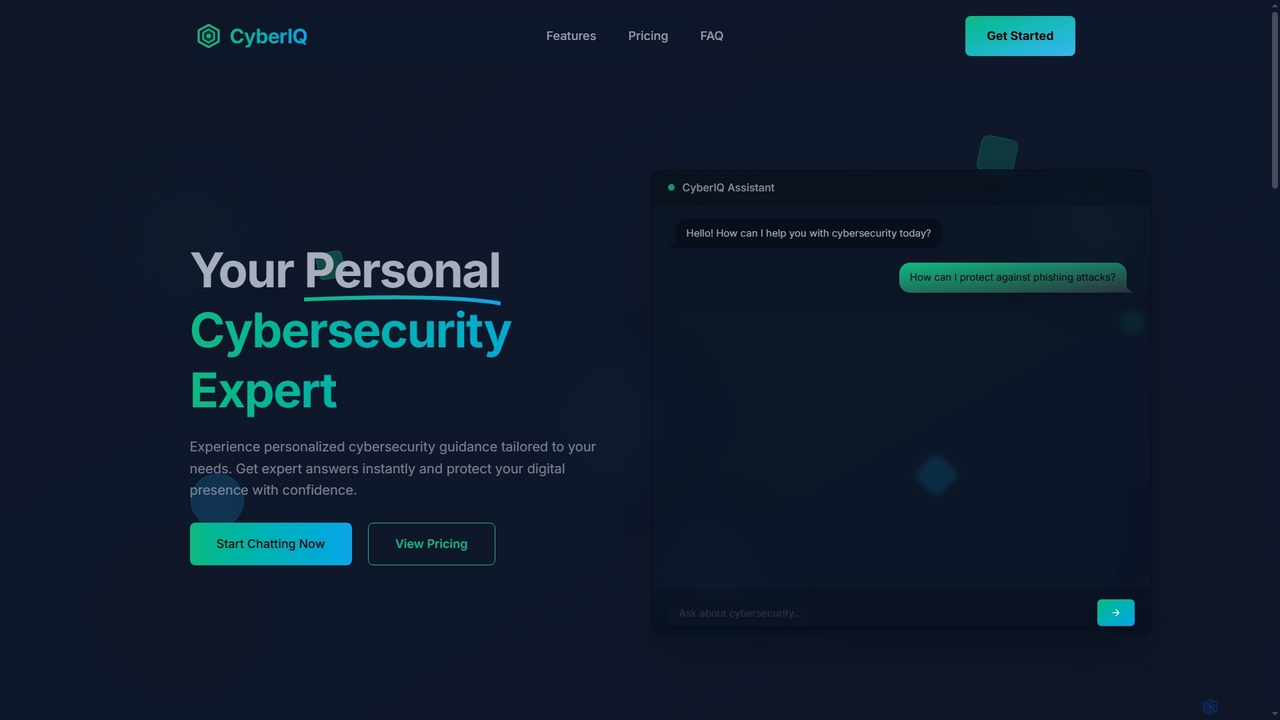
CyberIQ is your personal AI-powered cybersecurity assistant, offering tailored guidance and instant expert answers to protect your digital …

3.3K

About Personal Security

Personal Security AI tools are a specialized category within cybersecurity that leverage artificial intelligence to protect individuals from digital threats. These tools employ advanced algorithms for real-time threat detection, identity verification, and data privacy management. Their primary value lies in proactively safeguarding personal information, devices, and online activities against evolving cyber risks, offering a more intelligent and adaptive layer of protection for everyday users.

Core Features

  • Real-time Threat Detection: Identifies and alerts users to phishing attempts, malware, and suspicious activities across devices and networks.
  • Identity Theft Protection: Monitors personal data on the dark web and alerts users to potential identity compromises, offering recovery assistance.
  • Advanced Password Management: Generates strong, unique passwords, securely stores them, and provides biometric authentication options for enhanced access control.
  • Privacy Management & Data Masking: Helps users control their digital footprint, manage app permissions, and mask sensitive data during online interactions.
  • Secure Communication & Browsing: Encrypts messages, secures video calls, and provides safe browsing environments to prevent tracking and data interception.

Applicable Scenarios

Individuals concerned about their digital footprint, remote workers handling sensitive information, and families seeking to protect children online frequently utilize these tools. They are crucial for preventing financial fraud, securing personal communications, and maintaining privacy in an increasingly interconnected world.

How to Choose

When selecting Personal Security AI tools, consider the breadth of protection (e.g., identity, data, device), the accuracy of AI detection, ease of use for non-technical users, and compatibility across various devices and operating systems. Evaluate the vendor's reputation for privacy and data handling, as well as the responsiveness of their support services.

Personal SecurityUse Cases

1

Protecting Digital Identity from Theft

Individuals use AI tools to continuously monitor their personal information (like email, SSN, credit card numbers) across the internet and dark web. The AI detects potential breaches or unauthorized use, alerting the user instantly to take preventative action, thereby minimizing the risk and impact of identity theft.

2

Securing Online Banking and Transactions

Users deploy AI-powered security browsers or extensions that analyze website legitimacy and transaction patterns in real-time. These tools identify phishing sites, detect unusual login attempts, and flag suspicious financial activities, providing an extra layer of defense against fraud during online banking and shopping.

3

Managing and Securing Personal Passwords

An AI-driven password manager generates complex, unique passwords for every online account and securely stores them using encryption. It also offers biometric login options and alerts users to weak or reused passwords, significantly reducing the vulnerability of accounts to brute-force attacks or credential stuffing.

4

Enhancing Privacy in Online Communications

Individuals utilize AI-enhanced secure messaging apps that employ end-to-end encryption and analyze message content for potential privacy risks or data leaks. These tools can also mask IP addresses and metadata, ensuring conversations remain confidential and protected from surveillance or data mining.

5

Safeguarding Children's Online Activities

Parents use AI-powered parental control software to monitor and filter internet content, manage screen time, and detect cyberbullying or inappropriate interactions on social media. The AI learns from online behavior patterns to identify risks and alert parents, creating a safer digital environment for children.

6

Preventing Malware and Phishing Attacks

Everyday users install AI-driven antivirus and anti-phishing software that proactively scans emails, downloads, and websites for malicious content. The AI's behavioral analysis capabilities detect new and evolving threats that signature-based systems might miss, providing robust protection against sophisticated cyberattacks.

Personal SecurityFrequently Asked Questions