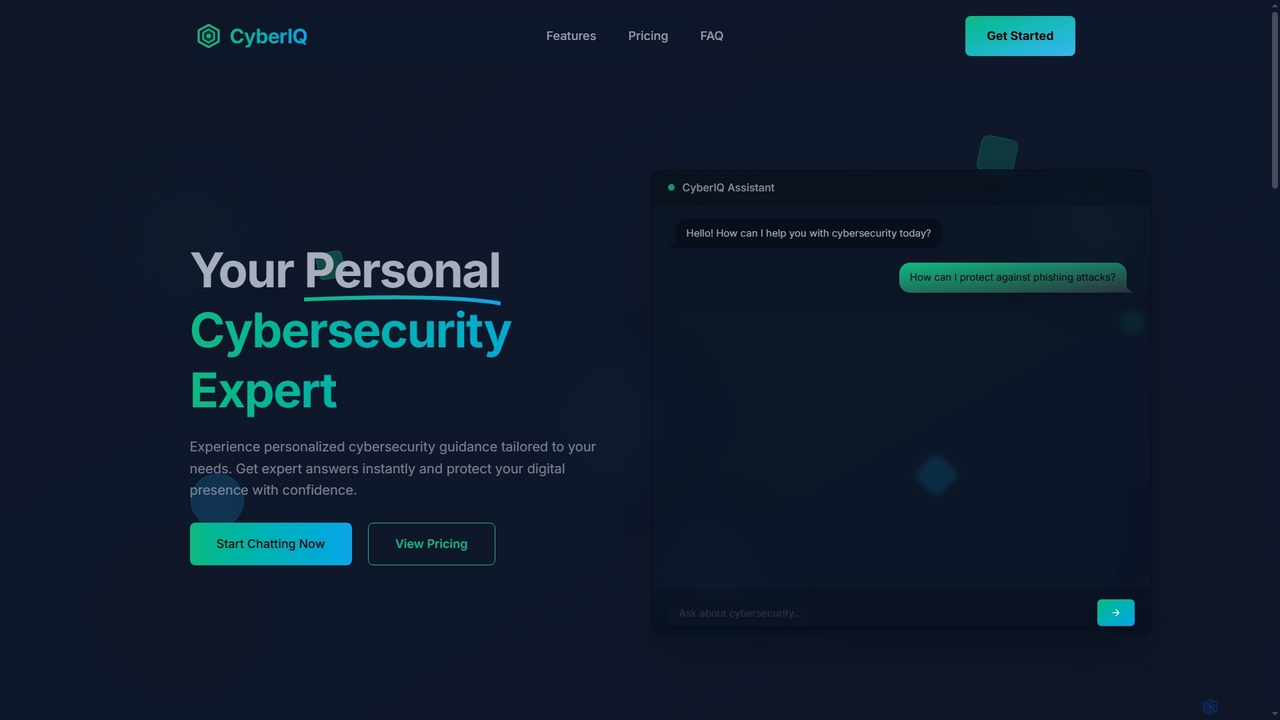
Personal Security AI tools are a specialized category within cybersecurity that leverage artificial intelligence to protect individuals from digital threats. These tools employ advanced algorithms for real-time threat detection, identity verification, and data privacy management. Their primary value lies in proactively safeguarding personal information, devices, and online activities against evolving cyber risks, offering a more intelligent and adaptive layer of protection for everyday users.
Core Features
- Real-time Threat Detection: Identifies and alerts users to phishing attempts, malware, and suspicious activities across devices and networks.
- Identity Theft Protection: Monitors personal data on the dark web and alerts users to potential identity compromises, offering recovery assistance.
- Advanced Password Management: Generates strong, unique passwords, securely stores them, and provides biometric authentication options for enhanced access control.
- Privacy Management & Data Masking: Helps users control their digital footprint, manage app permissions, and mask sensitive data during online interactions.
- Secure Communication & Browsing: Encrypts messages, secures video calls, and provides safe browsing environments to prevent tracking and data interception.
Applicable Scenarios
Individuals concerned about their digital footprint, remote workers handling sensitive information, and families seeking to protect children online frequently utilize these tools. They are crucial for preventing financial fraud, securing personal communications, and maintaining privacy in an increasingly interconnected world.
How to Choose
When selecting Personal Security AI tools, consider the breadth of protection (e.g., identity, data, device), the accuracy of AI detection, ease of use for non-technical users, and compatibility across various devices and operating systems. Evaluate the vendor's reputation for privacy and data handling, as well as the responsiveness of their support services.