StratosIQ
StratosIQ is an AI-powered assistant designed for product managers, startups, and researchers. It streamlines market research and product …
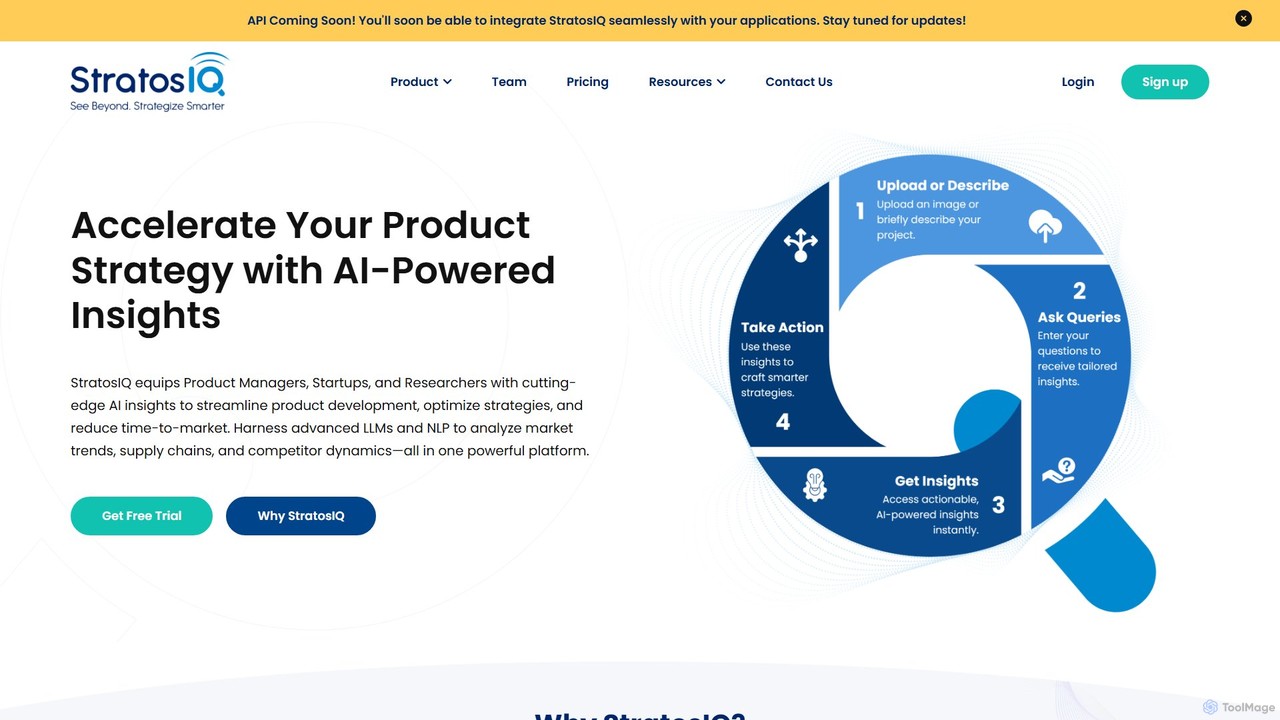
StratosIQ is an AI-powered assistant designed for product managers, startups, and researchers. It streamlines market research and product development by analyzing market trends, competitor dynamics, and supply chains. The platform transforms complex data into actionable, visualized insights to accelerate decision-making and reduce time-to-market.
About Competitive Intelligence
Competitive Intelligence tools are a specialized category of data analysis software that uses AI to automatically gather, process, and analyze information about business rivals. These tools monitor a wide range of data sources, including websites, social media, ad campaigns, and customer reviews, to uncover competitor strategies and market trends. By providing actionable insights on everything from pricing changes to marketing tactics, they empower businesses to make informed strategic decisions and maintain a competitive edge. This proactive approach helps identify opportunities and mitigate risks before they impact the bottom line.
Core Features
- Real-time Competitor Tracking: Automatically monitor competitors' website changes, product launches, pricing updates, and social media activity.
- SEO & Ad Strategy Analysis: Deconstruct competitors' keyword rankings, backlink profiles, top-performing content, and paid ad campaigns.
- Market & Sentiment Analysis: Identify emerging market trends and gauge public sentiment towards competitor brands and products.
- Feature & Pricing Benchmarking: Systematically compare your product features and pricing models against key rivals to identify gaps and opportunities.
Use Cases
Primarily used by marketing, product, and strategy teams in competitive industries like e-commerce, SaaS, and digital agencies. Marketing managers use these tools to refine their SEO and content strategies, while product managers benchmark features to guide their development roadmap. Business strategists rely on them for market positioning and identifying potential acquisition targets.
How to Choose
When selecting a tool, first consider the specific data sources you need to monitor (e.g., social media, ad networks, app stores). Evaluate the depth of analysis provided—some tools excel at SEO, while others focus on product intelligence. Also, assess the platform's alerting capabilities, reporting customization, and its ability to integrate with your existing marketing or sales stack.
Competitive IntelligenceUse Cases
Uncovering Competitor SEO Strategies
A digital marketing manager at an e-commerce company uses a competitive intelligence tool to analyze a top competitor's organic keywords, backlink sources, and highest-traffic pages. The AI identifies 'keyword gaps' where the competitor ranks highly but their own company does not. This insight allows the manager to create targeted content and build specific backlinks, aiming to capture a share of that valuable search traffic and increase organic sales.
Monitoring Competitor Pricing and Promotions
A pricing analyst at a SaaS company sets up real-time alerts to track competitors' pricing page changes, new discount offers, or special promotions mentioned on social media. When a key rival launches a '20% off annual plan' campaign, the tool immediately sends a notification. This allows the analyst to quickly assess the impact and recommend a counter-strategy, preventing potential customer churn and maintaining market share.
Benchmarking Product Features for Roadmapping
A product manager developing a new mobile app uses the tool to aggregate and analyze user reviews for competing apps from various app stores. The AI categorizes feedback into feature requests, bug reports, and points of frustration. This data provides a clear, evidence-based guide for prioritizing the product roadmap, ensuring the new app addresses key market needs that competitors are failing to meet, thereby creating a stronger product-market fit from launch.
Tracking Competitor Social Media Campaigns
A social media strategist at a creative agency monitors competitors' channels to identify their most engaging posts, campaign themes, and influencer collaborations. The tool analyzes metrics like engagement rate, share of voice, and audience sentiment. This helps the strategist understand what resonates with the target audience, avoid ineffective tactics, and design more impactful campaigns for their clients, backed by data on what is currently succeeding in the market.
Identifying Emerging Market Trends
A business strategist at a large corporation uses the tool to scan news articles, industry reports, and startup funding announcements related to their market. The AI identifies recurring themes and new technologies being adopted by emerging competitors. This early-warning system helps the strategist spot disruptive trends and advise leadership on potential investments or strategic pivots before the market shifts significantly, ensuring the company stays ahead of the curve.
Enhancing Sales Battle Cards
A sales enablement manager uses a competitive intelligence tool to provide up-to-date information on competitors' strengths, weaknesses, and recent customer wins or losses. This information is automatically synthesized into concise points. The manager uses these insights to create and maintain dynamic 'battle cards' for the sales team, equipping them with accurate, timely information to handle objections and position their product more effectively during client calls.