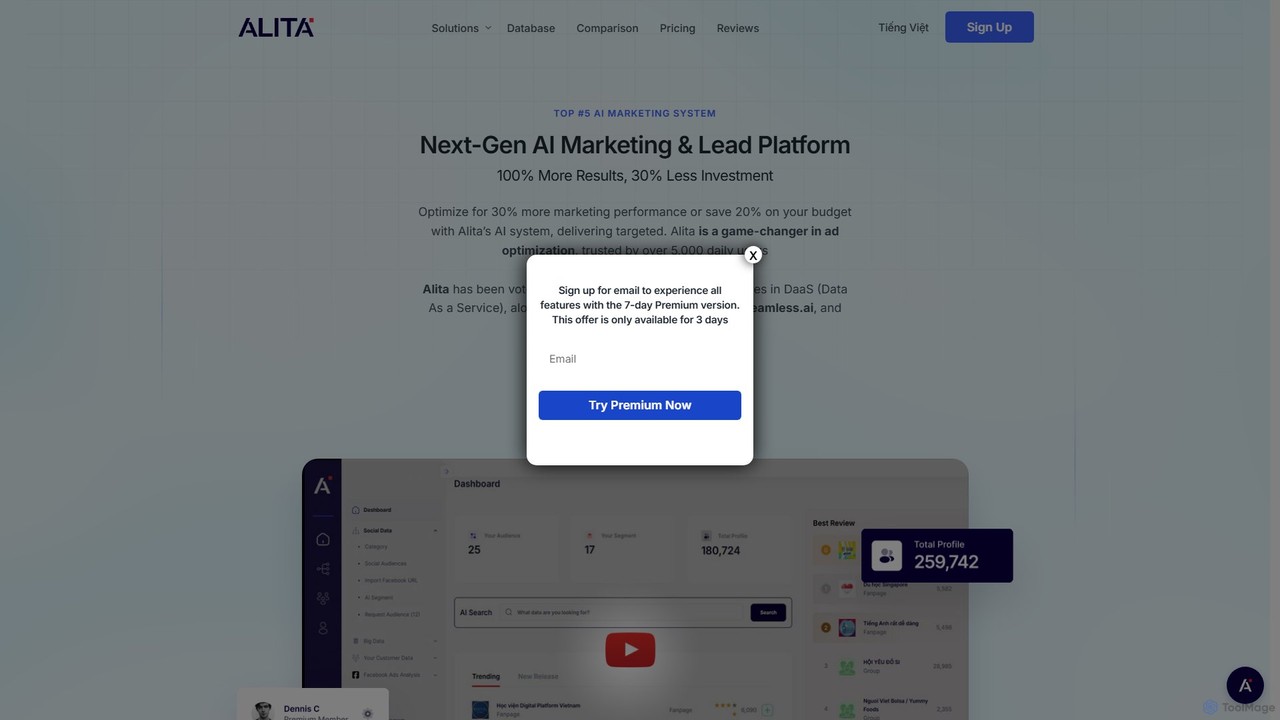
Data As A Service (DaaS) are AI-powered tools that provide on-demand access to curated, high-quality data sets, delivered directly to users or applications. These services abstract away the complexities of data collection, storage, and maintenance, offering ready-to-use information via APIs or integrated platforms. DaaS empowers businesses to leverage external and internal data for enhanced analytics, decision-making, and application development without significant infrastructure investment. It streamlines data acquisition, ensuring timely and reliable access to critical insights.
Core Features
- On-Demand Data Access: Provides real-time or near real-time access to diverse data sets through APIs, feeds, or direct integrations.
- Data Curation & Quality: Includes processes for data cleansing, validation, enrichment, and standardization to ensure accuracy and reliability.
- Scalable Infrastructure: Offers a robust and scalable backend to handle large volumes of data and varying user demands without performance degradation.
- Data Governance & Security: Implements strict protocols for data privacy, compliance (e.g., GDPR, CCPA), access control, and encryption.
- Diverse Data Sources: Aggregates and delivers data from various origins, including market intelligence, social media, geospatial, financial, and industry-specific data.
Applicable Scenarios
DaaS is crucial for organizations seeking to augment their internal data with external insights or to offload the burden of data management. It's widely adopted in sectors like finance for market analysis, retail for customer segmentation, and logistics for supply chain optimization. Businesses can quickly integrate specialized data into their existing systems, accelerating product development and strategic planning.
How to Choose
When selecting a DaaS provider, evaluate the breadth and depth of their data offerings, ensuring it aligns with your specific needs. Consider data quality, refresh rates, and the flexibility of their API or integration methods. Assess their security measures, compliance certifications, and pricing model, including scalability options. Finally, review their support and documentation to ensure ease of use and reliable assistance.