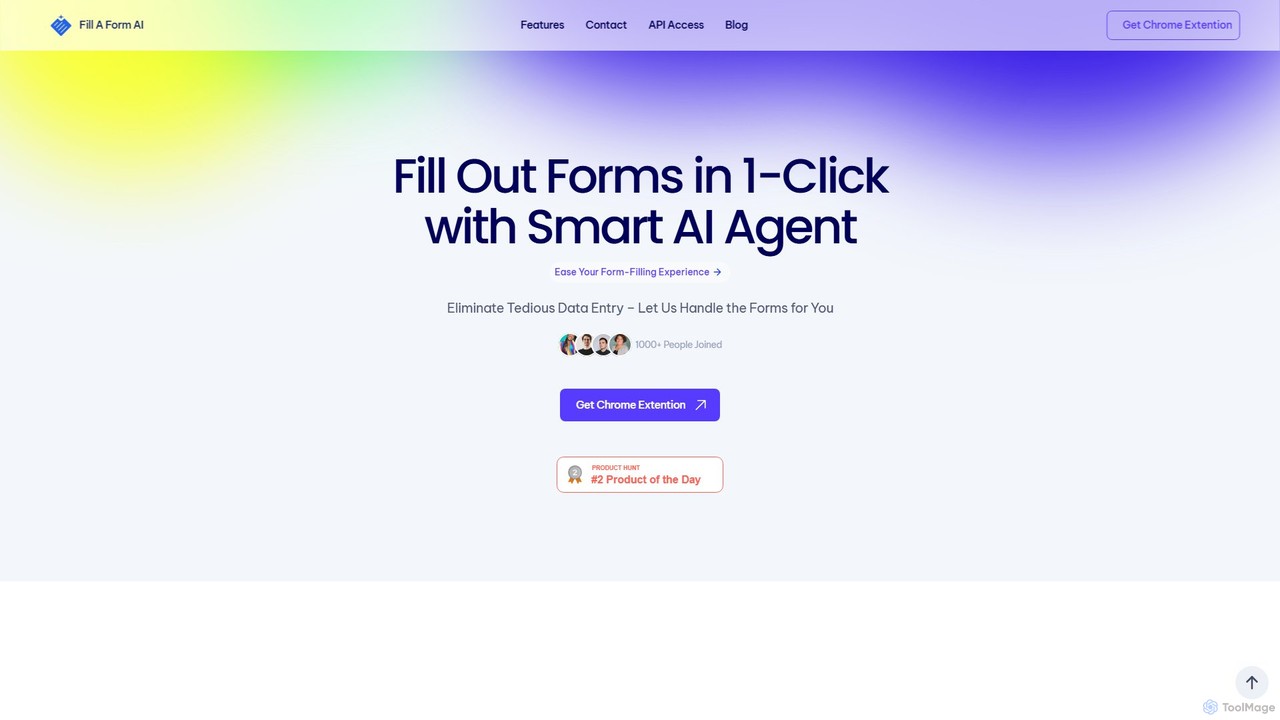
fillaform.ai
fillaform.ai is an AI-powered Chrome extension that automates form filling with a single click. It intelligently learns from …
fillaform.ai is an AI-powered Chrome extension that automates form filling with a single click. It intelligently learns from your past entries and data libraries to accurately populate web forms, saving you time and eliminating tedious data entry. Ideal for online shoppers, business professionals, and HR managers, it streamlines workflows and boosts productivity by making online forms effortless.
About Data Entry
AI Data Entry tools are applications that automate the extraction, transcription, and input of information from various sources into digital systems. These tools utilize technologies like Optical Character Recognition (OCR) and Natural Language Processing (NLP) to accurately recognize and interpret data from documents, images, and forms. By automating these repetitive tasks, they significantly reduce manual labor, minimize human error, and accelerate data processing workflows. Advanced platforms can also handle unstructured data, learn from user corrections, and integrate seamlessly with existing business software.
Core Features
- Automated Data Extraction: Uses OCR and AI to pull specific fields like names, dates, and amounts from invoices, receipts, and forms.
- Data Validation & Cleansing: Automatically checks data for accuracy, corrects formatting inconsistencies, and flags potential duplicates.
- Multi-Format Support: Processes information from diverse sources including scanned PDFs, images (JPG, PNG), emails, and even handwritten notes.
- Workflow Integration: Connects directly with CRMs, ERPs, and databases to input extracted data without manual intervention.
Use Cases
AI Data Entry tools are widely used in industries like finance for invoice processing, healthcare for digitizing patient records, logistics for managing shipping documents, and retail for inventory control. Roles such as accountants, administrative assistants, and data analysts leverage these tools to streamline information management and focus on higher-value activities.
How to Choose
When selecting an AI Data Entry tool, consider its accuracy rate for your specific document types. Evaluate its integration capabilities with your existing software stack (e.g., Salesforce, QuickBooks). Also, assess its ability to handle various data formats and whether its pricing model aligns with your data volume and budget.
Data EntryUse Cases
Automate Invoice Processing for Finance Teams
An accounts payable specialist in a mid-sized company receives dozens of PDF invoices from vendors daily. Instead of manually typing invoice numbers, dates, line items, and totals into their accounting software, they use an AI Data Entry tool. The tool automatically scans each invoice from an email inbox, extracts the required data with high accuracy, validates it against existing purchase orders, and pushes the verified information directly into QuickBooks. This process reduces the time spent per invoice from minutes to seconds, minimizes payment errors, and allows the finance team to focus on financial analysis rather than clerical work.
Digitize Customer Onboarding Forms
A financial institution needs to process thousands of handwritten new account applications. An administrative officer uses an AI Data Entry tool equipped with advanced handwriting recognition (ICR). They scan stacks of forms, and the AI digitizes all fields, including names, addresses, and identification numbers. The tool flags any illegible entries or inconsistencies for manual review, ensuring a 99% accuracy rate. This automation accelerates the onboarding process by over 80%, improves data quality in the CRM, and enhances the overall customer experience by reducing processing delays.
Extract Data from Logistics Documents
A logistics company manages hundreds of shipments daily, each with a corresponding Bill of Lading (BOL) and packing slip. A logistics coordinator uses an AI data entry platform to process these documents. The AI extracts key information such as shipper/consignee details, container numbers, product descriptions, and quantities. This data is then automatically used to update the warehouse management system (WMS) and tracking portals. This eliminates manual data entry, reduces shipping errors caused by incorrect data, and provides real-time visibility into the supply chain for all stakeholders.
Convert Business Cards into CRM Leads
After attending a trade show, a sales representative has a stack of over 100 business cards. Instead of spending hours manually creating new contacts in their CRM, they use a mobile AI data entry app. They simply take photos of the cards, and the app's OCR technology instantly extracts names, titles, companies, phone numbers, and email addresses. The app then allows them to directly create new lead records in Salesforce with a single tap, complete with all the extracted information. This saves significant administrative time, ensuring prompt follow-up and preventing potential leads from being lost.
Process Patient Registration and Insurance Forms
A hospital's administrative staff is tasked with digitizing patient intake forms and insurance cards. They use a secure, HIPAA-compliant AI data entry solution. The system scans the documents and accurately extracts patient demographics, medical history, and insurance policy details. It validates insurance information against a database in real-time and flags any discrepancies. This automation reduces patient wait times, ensures data accuracy in the Electronic Health Record (EHR) system, and streamlines the billing and claims process, leading to faster reimbursements.
Extract Information from Research Papers
A university researcher needs to compile a literature review from hundreds of academic papers in PDF format. They use an AI data entry tool to automatically extract key information such as titles, authors, abstracts, publication years, and citations from each paper. The tool can also identify and extract specific data points, tables, and charts mentioned in the text. All extracted information is organized into a structured spreadsheet, saving the researcher weeks of manual work and allowing them to quickly identify trends and synthesize findings for their study.