Starbase
Starbase by Metorial is a comprehensive platform designed to centralize the browsing, exploration, and management of various popular …
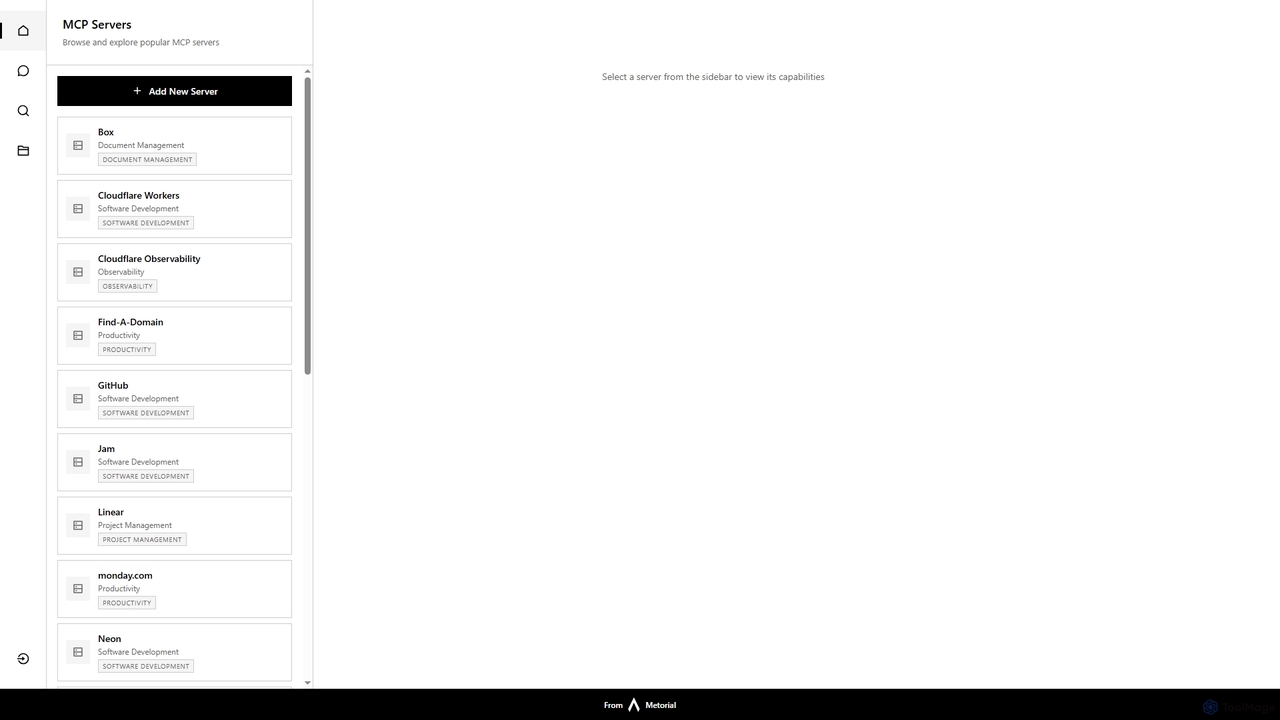
Starbase by Metorial is a comprehensive platform designed to centralize the browsing, exploration, and management of various popular software services. It integrates a wide array of tools across software development, project management, productivity, and infrastructure, offering a unified dashboard to view and interact with their capabilities.
About Data Management
AI Data Management tools are a specialized class of software that uses artificial intelligence to automate and enhance the organization, cleaning, and governance of data within database systems. These tools leverage machine learning algorithms to identify patterns, correct inconsistencies, and enrich datasets automatically. Their primary value lies in transforming raw data into reliable, analysis-ready assets, significantly reducing manual effort and improving data quality. This enables organizations to make more accurate, data-driven decisions with greater speed and confidence.
Core Features
- Automated Data Cleansing: Uses AI to detect and correct errors, duplicates, and formatting inconsistencies in datasets.
- Intelligent Data Cataloging: Automatically scans, classifies, and tags data, creating a searchable and understandable inventory of data assets.
- Anomaly Detection: Continuously monitors data streams to identify unusual patterns or outliers that could indicate errors or security threats.
- AI-Powered Governance: Helps enforce data privacy and compliance policies by automatically identifying and masking sensitive information (PII).
- Natural Language Querying: Allows users to retrieve information from databases using conversational English instead of complex SQL code.
Use Cases
AI Data Management tools are crucial in data-intensive industries like finance, e-commerce, and healthcare. Data engineers and analysts use them to automate data preparation pipelines for business intelligence. Compliance officers in regulated sectors rely on these tools to manage data privacy risks, while marketing teams use them to build clean, unified customer data platforms.
How to Choose
When selecting an AI Data Management tool, consider its integration capabilities with your existing databases and data sources. Evaluate the sophistication of its AI models and whether they can be customized for your specific needs. Assess its scalability to handle your data volume and velocity. Finally, review its security features and compliance certifications (e.g., GDPR, HIPAA) to ensure it meets your regulatory requirements.

Data ManagementUse Cases
Automating Customer Data Platform (CDP) Cleansing
A marketing operations manager for an e-commerce company needs to create a single, reliable view of each customer. They use an AI Data Management tool to process customer data from multiple sources like their website, mobile app, and CRM. The AI automatically merges duplicate profiles, standardizes addresses, corrects typos in names, and flags incomplete records. This process, which previously took weeks of manual work, is now completed overnight, ensuring marketing campaigns are targeted accurately and personalization efforts are based on high-quality data.
Real-time Financial Transaction Anomaly Detection
A data scientist at a fintech company is tasked with preventing fraudulent transactions. They deploy an AI Data Management tool that connects to their live transaction database. The tool's machine learning model learns the normal patterns of user behavior. When a transaction occurs that deviates significantly from these patterns—such as a large purchase from an unusual location—the system immediately flags it for review. This proactive monitoring helps detect and stop fraud in real-time, protecting both the company and its customers from financial loss.
Automated PII Detection for GDPR Compliance
A compliance officer at a multinational corporation is responsible for ensuring GDPR compliance across all company databases. Manually searching for Personally Identifiable Information (PII) is impossible. They use an AI Data Management tool to scan structured and unstructured data sources. The AI identifies sensitive data like names, email addresses, national ID numbers, and credit card details. It then automatically applies masking or redaction rules based on company policy, generates a compliance report, and alerts the officer to any high-risk data exposures, simplifying audits and reducing regulatory risk.
Streamlining Data Preparation for Business Intelligence
A data analyst needs to create a quarterly sales report using data from five different systems. Before using an AI tool, they spent 80% of their time manually cleaning, transforming, and joining data in spreadsheets. Now, they use an AI Data Management tool to create an automated workflow. The tool ingests data from all sources, uses AI to standardize column names and data formats, and automatically joins the tables. The analyst can now focus their time on analyzing the clean, prepared data and generating insights, rather than on tedious data wrangling.
Intelligent Product Information Management (PIM)
An e-commerce catalog manager oversees thousands of products with inconsistent data from various suppliers. They implement an AI Data Management tool to automate their PIM process. As new product data arrives, the AI automatically categorizes items, extracts key attributes like color and size from unstructured descriptions, standardizes units of measurement, and identifies products with missing images or incomplete specifications. This ensures a consistent and high-quality customer experience on the website and significantly speeds up the time-to-market for new products.
Querying Databases with Natural Language
A business executive without SQL knowledge needs to quickly understand sales trends. Instead of waiting for a report from the data team, they use an AI Data Management tool with a natural language query interface. They simply type questions like "Show me the top 5 selling products in Germany last quarter" or "Compare sales growth between Q1 and Q2 this year." The AI translates these questions into complex SQL queries, executes them against the database, and returns the results in an easy-to-understand format, such as a chart or a table, empowering non-technical users to perform self-service analytics.